
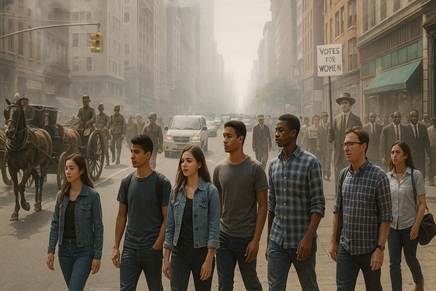
Recently I was reading an article about the poor state of historical knowledge in the United States, and I decided to repost my first article from when I started blogging almost five years ago. It seems very little has changed.
“Study the past if you would define the future,”—Confucius. I particularly like this quotation. It is similar to the more modern version: Those who don’t learn from the past are doomed to repeat it. However, I much prefer the former because it seems to be more in the form of advice or instruction. The latter seems to be more of a dire warning. Though I suspect, given the current state of the world, a dire warning is in order.
But regardless of whether it comes in the form of advice or warning, people today do not seem to heed the importance of studying the past. The knowledge of history in our country is woeful. The lack of emphasis on the teaching of history in general and specifically American history, is shameful. While it is tempting to blame it on the lack of interest on the part of the younger generation, I find people my own age also have very little appreciation of the events that shaped our nation, the world, and their lives. Without this understanding, how can we evaluate what is currently happening and understand what we must do to come together as a nation and as a world.
I have always found history to be a fascinating subject. Biographies and nonfiction historical books remain among my favorite reading. In college I always added one or two history courses every semester to raise my grade point average. Even in college I found it strange that many of my friends hated history courses and took only the minimum. At the time, I didn’t realize just how serious this lack of historical perspective was to become.
Several years ago, I became aware of just how little historical knowledge most people possess. At the time, Jay Leno was still doing his late-night show, and he had a segment called jaywalking. During that segment he would ask people in the street questions that were somewhat obscure and to which he could expect to get unusual and generally humorous answers. On one show, on the 4th of July, he asked people “From what country did the United States declare independence on the 4th of July?” and of course no one knew the answer.
My first response was he must have gone through dozens of people to find the four or five people who did not know the answer to his question. The next day at work, the 5th of July, I decided to ask several people, all of whom were college graduates, the same question. I got not one single correct answer. Although, one person at least realized “I think I should know this”. When I told my wife, a retired teacher, she wasn’t surprised. For a long time, she had been concerned about the lack of emphasis on social studies and the arts in school curriculums. I too was now becoming seriously concerned about the direction of education in our country.
A lot of people are probably thinking “So what, who really cares what a bunch of dead people did 250 years ago?” If we don’t know what they did and why they did it how can we understand its relevance today? We have no way to judge what actions may support the best interests of society and what will ultimately be detrimental.
Failure to learn from and understand the past results in a me-centric view of everything. If you fail to understand how and why things have developed, then you certainly cannot understand what the best course forward will be. Attempting to judge all people and events of the past through your own personal prejudices leads only to continued and worsening conflict.
If you study the past, you will see that there has never general agreement on anything. There were many disagreements, debates and even a civil war over differences of opinion. It helps us to understand that there are no perfect people who always do everything the right way and at the right time. It helps us to appreciate the good that people do while understanding the human weaknesses that led to the things that we consider faults today. In other words, we cannot expect anyone to be a 100% perfect person. They may have accomplished many good and meaningful things, and those good and meaningful things should not be discarded because the person was also a human being with human flaws.
Understanding the past does not mean approving of everything that occurred but it also means not condemning everything that does not fit into twenty-first century mores. Only by recognizing this and seeing what led to the disasters of the past can we hope to avoid repetition of the worst aspects of our history. History teaches lessons in compromise, involvement and understanding. Failure to recognize that leads to strident argument and an unwillingness to cooperate with those who may differ in even the slightest way. Rather than creating the hoped-for perfect society, it simply leads to a new set of problems and a new group of grievances.
In sum, failure to study history is failure to prepare for the future. We owe it to ourselves and future generations to understand where we came from and how we can best prepare our country and the world we leave for them. They deserve nothing less than a full understanding of the past and a rational way forward.
I’m going to close with a quote I recently came across:
“Indifference to history isn’t just ignorant, it’s rude.”
—David McCollum
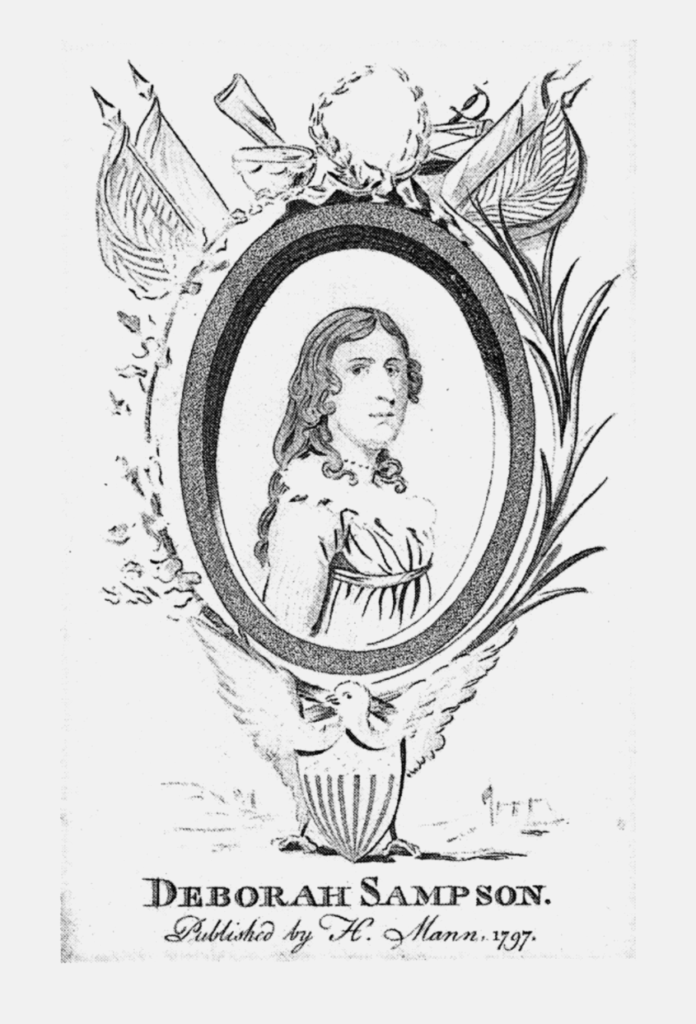
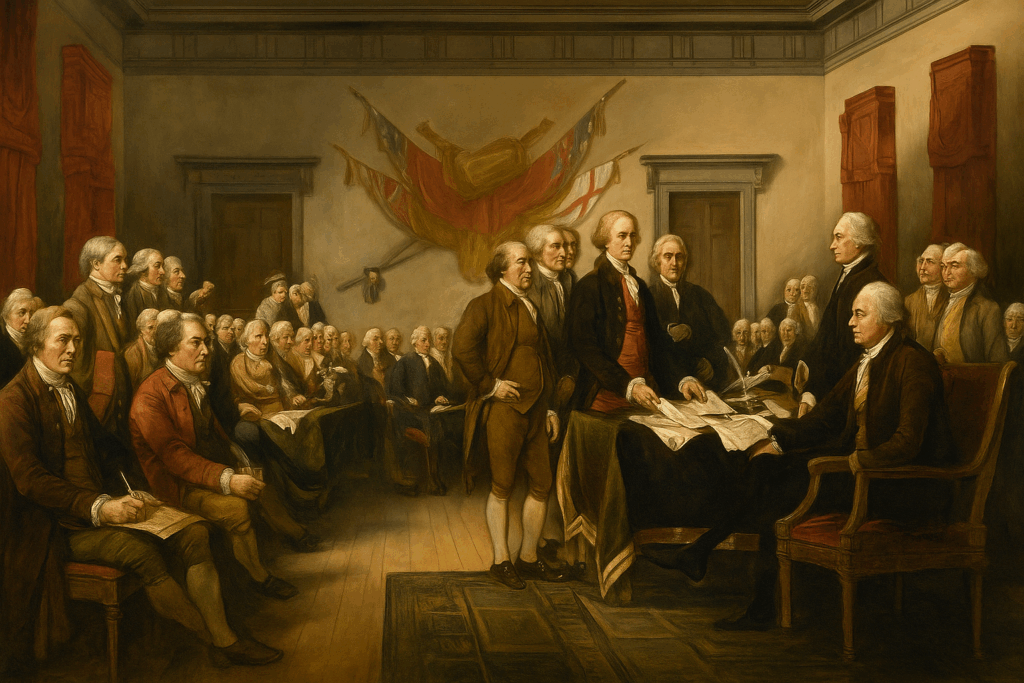
“America at 250: A Revolution Remembered… or Forgotten?”
By John Turley
On May 10, 2025
In Commentary, History
I’m old enough to remember the 200th anniversary of the American Revolution. Bicentennial symbols were everywhere. Liberty Bells, eagles, and the ubiquitous Bicentennial logo of the red, white and blue stylized five-point star. They could be found on hats, T-shirts, socks, soft drink cups, beer cans, and even a special “Spirit of ‘76” edition of the Ford Mustang II. Commemorative events and celebrations were being planned everywhere and people had “bicentennial fever”.
But the 250th anniversary is not attracting that same kind of attention or interest. I wonder why that is. Perhaps it’s that the name for a 250th anniversary, Semiquincentennial, doesn’t seem to roll off the tongue the way Bicentennial does. But I suspect it’s far more than just a tongue twisting name.
The Bicentennial came after a decade of national trauma. The Vietnam War, Watergate, and the civil rights struggles had all roiled the country. By 1976, most Americans wanted to feel good about the country again. It became a giant, colorful celebration of “American resilience.”
While the 250th anniversary of the American Revolution is being marked by numerous events, commemorations, and official proclamations, most are local, and it has not yet captured widespread public attention or generated the scale of national excitement seen during previous milestone anniversaries.
The anniversary arrives at a time of deep political polarization, which has complicated celebration plans. There is an ongoing debate within the group tasked with planning the celebration, the U.S. Semiquincentennial Commission, about how to present American history. Some members advocate for a traditional, celebratory approach focusing on the Founding Fathers and patriotic themes. Others push for a more inclusive narrative that acknowledges the complexities of American history, including the experiences of women, enslaved people, Indigenous communities, and other marginalized groups
Beyond the commission itself, some historians note that the “history wars”—ongoing disputes throughout society over how U.S. history should be taught and remembered—have made it harder to generate broad, enthusiastic buy-in for the anniversary among the general public.
Commemorations in places like Lexington and Concord have seen anti-Trump protesters carrying signs such as “Resist Like It’s 1775” and “No Kings,” explicitly drawing parallels between opposition to King George III and contemporary resistance to what they perceive as autocratic tendencies in current leadership. At the reenactment of Patrick Henry’s “Give Me Liberty or Give Me Death” speech, Virginia Governor Glenn Youngkin was met with boos and protest chants, highlighting how the Revolution’s legacy is being invoked in current political struggles.
While some organizers and historians hope the anniversary can serve as a unifying moment—emphasizing that “patriotism should not be a partisan issue”—the reality is that commemorations have often become forums for expressing contemporary political grievances and anxieties. The presence of both celebratory and dissenting voices at these events reflects the enduring debate over what it means to be American and who gets to define that identity. The complexity and messiness of American history, combined with current societal tensions, may dampen the celebratory mood and make it harder for people to connect emotionally with the anniversary.
Even the 250th logo has become a source of dispute, although it is one of the few areas of disagreement that is nonpartisan and tends to be about stylistic and artistic merits of the logo. Proponents of the new logo appreciate its modern and inclusive design emphasizing that the flowing ribbon represents “unity, cooperation, and harmony,” and reflects the nation’s aspirations as it commemorates this milestone. Detractors are concerned about the legibility of the “250” and the lack of traditional American symbols, such as stars, which could have reinforced its patriotic theme.
Surveys by history related organizations suggest that most Americans are not yet thinking about the 250th anniversary. The run-up to 2026 may see increased attention, but as of now, the anniversary has not broken through as a major topic of national conversation. If the anniversary continues to be viewed as a contentious partisan undertaking, it may never gain widespread popularity, and the general public may choose to stay away.
A friend who is a member of the West Virginia 250th committee told me that they had an initial meeting at which nothing was accomplished, and they have had no meeting since. It seems to me, this is up to us, the citizens, to ensure that the 250th anniversary of the American Revolution is appropriately remembered. We don’t have to live in an area where a Revolutionary War event occurred for us to recognize its events. Here in West Virginia, in October of 2024 we commemorated the 250th anniversary of the battle of Point Pleasant which many consider a precursor to the American Revolution. This event was not organized by any state or national group. It was the result of efforts on the part of the City of Point Pleasant and the West Virginia Sons of the American Revolution.
We do not need to depend on the government; we the people can hold local commemorations of revolutionary events that occurred in other areas. We can hold commemorations of the Battle of Bunker Hill, the signing of the Declaration of Independence, the Battle of Saratoga and many other events. It will take the initiative of local people to organize these events.
It will be our great shame if we allow this the commemoration of an event so significant in both American and world history to be turned into something that divides us rather unites us and strengthens our common bond.