In July 2025 when Trump descended that famous escalator to announce his candidacy for the Republican presidential nomination, I thought he was just a fading reality TV star trying to increase his brand. I never suspected he would be a serious candidate, but I hoped that he would bring some entertainment to what appeared to be a large but otherwise boring field of Republican candidates. I just hoped he wouldn’t drop out too soon. I never expected nor could even have imagined that this would be the beginning of more than a decade of turmoil, the least of which is Trump‘s relationship to the media.
Interestingly, Trump’s love-hate relationship with the media didn’t begin with his presidential campaign. In the 1970s and 80s when he was a real estate developer, he began courting the press. Like most things in his life, it was transactional. He would trade gossip and insider information about the real estate business in return for favorable publicity about himself and his businesses. He was even known to call reporters using a fake name to praise himself and try to curry more favorable coverage.
Even then he was not above criticizing the press, laying the early groundwork for his much later claims of “fake news “. If a news article listed his net worth as being less than what he claimed or would criticize a real estate project, he would respond with unfailing criticism. He filed a $500 million lawsuit against the Chicago Tribune after an article criticized his 150-story Manhattan skyscraper project as being “one of the silliest things anyone could inflict on New York “. He also filed a $5 billion lawsuit against journalist Timothy O’Brien for his 2005 book Trump Nation which estimated his net worth in between $150 million and $250 million, far below the billions that Trump had claimed. Both of these lawsuits were dismissed. This may have set the stage for Trump’s litigative interaction with the news media. He didn’t have to win to get the attention he was seeking. Later, as president he would have the additional leverage to almost force settlement by the news media who needed his approval for their larger projects.
Trump’s relationship with the media changed with the premiere of The Apprentice in 2004. The show presented Trump as an exceptionally successful and decisive businessman. Since it wasn’t journalism, but was instead entertainment, it was given a factual pass. The Apprentice left him accustomed to mostly favorable coverage, making the media response to his campaign that much more surprising to him.
Back to the escalator.
At first, most of the media treated him as a curiosity, and an entertaining one as well. He could be counted on for a colorful quote or a timely soundbite. Some thought it was a publicity stunt designed to increase his reality TV brand. But early in his campaign for the nomination, his tone turned dark, attacking immigrants, liberals, and his opponents for the nomination. He no longer seemed as amusing.
As reporters began to dig into his finances and business practices and to question the credibility of many of his claims, Trump went on the attack.
He quickly learned that he could dominate a news cycle with provocative statements, outrageous claims, and personal insults. While the coverage was not always positive, it always satisfied his need for attention. He was beginning to refine his persecution narrative that would become a central theme in his personal political brand.
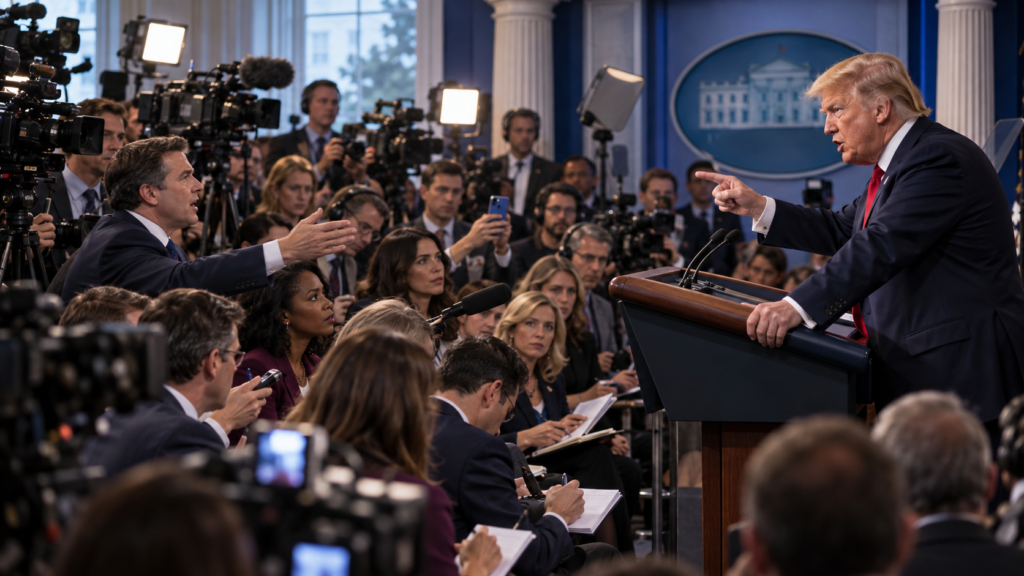
Trump’s first use of his now iconic phrase “fake news” was on December 10th, 2016, in a tweet about a month after he won election. In a January 11th, 2017, news conference Trump refused to answer a question from CNN correspondent Jim Acosta saying, “You are fake news.” He rapidly incorporated that phrase for anything that was critical or with which he disagreed. He went so far as to call much of the media “enemies of the American people”. He was attempting to claim the news outlet critical to him were in fact hostile to the country.
Trump claimed to have invented the term “fake news,” but like many other things associated with him it did not stand up to scrutiny. The Oxford English Dictionary identifies the earliest use of the term as a story in the Milwaukee Daily Journal in 1890. The term “fake news” appeared in numerous newspapers throughout the 1890s and early 1900s. Even earlier, newspapers had used a term “false news” for stories they felt were obviously untrue. This usage was limited to stories that were believed to have been fabricated. Trump morphed it into a criticism of anything he didn’t like.
Trump’s battle with Jim Acosta continued until November 2018 when he revoked Acosta’s White House press credentials. This is the first time that a president’s press office has ever cancelled a reporter’s credentials for anything other than a security or conduct issue.
His battle with the press continued in his second term. He developed a new strategy and began to file defamation and related lawsuits against major news outlets. He filed multiple lawsuits, both against broadcast organizations and the print media, including CBS News, ABC News, the Wall Street Journal, the New York Times, and BBC.
Despite the fact that most legal observers found the suits to be baseless, ABC News and Paramount, the parent company of CBS, settled with Trump almost exclusively on his terms. Many observers thought that this was largely because of his threats, both direct and implied, to their broadcast licenses.
The battle with the media reached its high point in September of 2026 when he announced that CNN, Politico, and MS NOW would be barred from the White House press pool and their reporters’ credentials were cancelled. Those organizations filed suit alleging the administration had violated their 1st and 5th Amendment rights.
Because of the limited space available in the White House pressroom, news organizations have typically rotated to cover news conferences forming a “pool” that will then share information with the other news agencies. News networks, including Fox News, canceled pool television coverage of some events. The New York Times and the Washington Post temporarily stopped photographing White House events.
This dispute is ongoing. All three organizations have regained access to the White House grounds but still find themselves limited in coverage of presidential events.
To be fair, not all of Trump’s complaints were without basis. During his first campaign and subsequent presidential term some stories were based on anonymous sources that later proved incorrect or overstated. Investigation into Russian election interference in 2016 was often based on speculation and political commentary was not always kept separate from news reporting.
Trump has a more cordial relationship with the conservative media, particularly Fox News. Although it is not without its rough patches. When Fox News announced on election night in 2020 that Joe Biden had won in Arizona, Trump reacted angrily. He encouraged his supporters to turn to Newsmax, and One America News Network because they supported him unconditionally and and were willing to accept his unfounded claim of election fraud. Trump often failed to distinguish between Fox’s conventional news operations and its openly partisan opinion programming, believing that any criticism of him, even factual, was fake news.
Even during his battles with mainstream media organizations Trump had an advantage that no other president previously had. He understood social media like no one else before him. Other candidates had assumed that social media was a way just to reach younger voters. Trump realized it could be used to reach across all ages, social and economic classes, and political affiliations. He used social media, particularly Twitter, to attack his enemies, make outrageous statements, and to fire up his supporters.
Trump’s Twitter account was suspended on January 8, 2021, because the company believed his posts posed a “risk of further excitement of violence“ following the January 6 attack on the capital. Twitter said the post violated its policy against glorifying violence. Facebook, Instagram, YouTube, and Snapchat quickly followed suit.
Following his suspension from Twitter, Trump was instrumental in forming his own social media outlet, Truth Social. Even though Trump’s Twitter, now X, account was restored in November 2022, Truth Social remains his principle social media outlet.
Trump turned increasingly to social media as he discovered it freed him from editors, publishers, and most importantly, fact checkers. He began to release policy statements, discuss pending legislation and even fire administration officials via social media. Many of his posts were made obviously without review by advisors, administration officials or attorneys. At times, such as tweets about tariff rates, transgender military personnel, Obama wiretapping Trump Tower, and the now infamous memes, the White House found itself having to give elaborate, sometimes convoluted, explanations of what Trump really meant.
Trump was far from the first president to have difficulties or complaints about the press. George Washington was frequently angered by newspaper attacks. John Adams signed the sedition act of 1798 and used it to prosecute journalists critical of him and the federal government. Abraham Lincoln’s administration put restrictions on some newspapers during the civil war. John Kennedy was publicly friendly with the press but was known to exert backchannel pressure to suppress stories of which he disapproved. Prior to Trump, no president had as hostile a relationship with the press as did Richard Nixon. He maintained an enemy’s list and used Vice President Spiro Agnew as a proxy to attack newspapers and television journalists.
Trump is part of a long history of presidents who were unhappy about their news coverage. What makes him different is his constant personal attacks, direct communication through social media, litigation against news organizations and attempts to directly control access to White House news events. His actions are not merely in response to controversial policies or bad coverage, they are part of his governing philosophy, reinforce the message that established news outlets cannot be trusted and that only he will provide the truth. Unfortunately, it seems to be working.
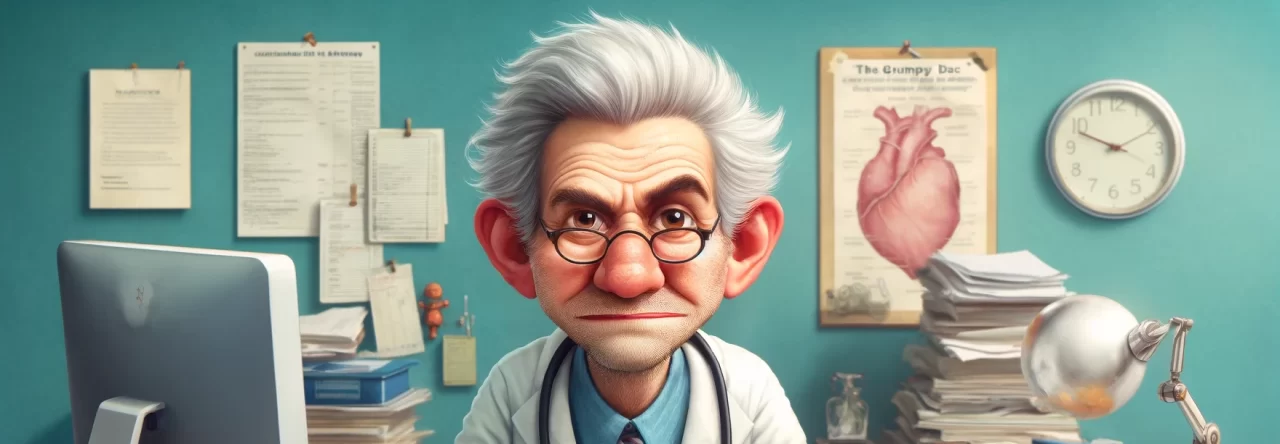
Image generated by author using ChatGPT.
Sources
1. History Hit, “Fake News, Donald Trump’s Relationship With It and Its Chilling Effects Explained” (background on the 2017–2018 Acosta press conferences and the rise of the term “fake news”): https://www.historyhit.com/fake-news-donald-trump/
2. CBS42/AP wire report on Trump’s January 2017 press conference exchange with Jim Acosta: https://digital-release.cbs42.com/?p=97787
3. Reporters Committee for Freedom of the Press, case tracker on Associated Press v. Budowich: https://www.rcfp.org/briefs-comments/associated-press-v-budowich/
4. Axios, “White House strikes back at AP, takes over press pool coverage from reporter group” (February 2025): https://www.axios.com/2025/02/25/white-house-trump-press-pool
5. Al Jazeera, “A ‘ban on the free press’: White House bars journalists from three outlets” (September 19, 2026): https://www.aljazeera.com/news/2026/9/19/a-ban-on-the-free-press-white-house-bars-journalists-from-three-outlets
6. CNN Business, “Major TV networks stand with CNN, decline to replace its White House pool crew” (September 20, 2026): https://www.cnn.com/2026/09/20/media/cnn-trump-white-house-pool-ban
7. CNBC, “White House pool suspends TV coverage of Trump after CNN ban” (September 21, 2026): https://www.cnbc.com/2026/09/21/trump-white-house-press-pool-cnn-ban.html
8. NBC News, “As Trump separates from Fox News, what’s next for both?” (background on Trump’s relationship with Fox, Newsmax, and OAN): https://www.nbcnews.com/business/business-news/trump-separates-fox-news-what-s-next-both-n1245549
9. The Christian Science Monitor, “Banned from Twitter, Trump launches a social media app” (February 2022): https://csmonitor.com/USA/Politics/2022/0221/Banned-from-Twitter-Trump-launches-a-social-media-app
10. Al Jazeera, “Paramount agrees to pay $16m to settle Trump lawsuit over CBS interview” (July 2025): https://www.aljazeera.com/amp/news/2025/7/2/paramount-agrees-to-pay-16m-to-settle-trump-lawsuit-over-cbs-interview
11. NewscastStudio, “ABC News will pay $16M to settle Trump defamation suit” (December 2024): https://www.newscaststudio.com/2024/12/15/abc-news-trump-settlement
12. The FIRE (Foundation for Individual Rights and Expression), Robert Corn-Revere, “Can the President Treat the Press as the Enemy of the People?” (historical background on the Sedition Act and Nixon): https://thefire.org/first-amendment-news-robert-corn-revere-can-the-president-treat-the-press-as-the-enemy
13. History News Network, review of Harold Holzer, “The Presidents vs. the Press” (historical comparisons involving Adams, Lincoln, T. Roosevelt, Wilson, and Nixon): https://hnn.us/article/177037
14. Inquirer.net (AP), “Remember Nixon? There’s history behind Trump’s press attacks” (February 2017): https://newsinfo.inquirer.net/872659/remember-nixon-theres-history-behind-trumps-press-attacks
15. The Bigfork Eagle, “Presidents vs. the Press” (background on FDR, the Kennedys, and the Obama administration’s dispute with Fox News): https://bigforkeagle.com/news/2018/nov/25/presidents-vs-the-press-15/
16. Wikipedia, “White House press corps” (timeline reference for the September 2026 CNN/MS NOW/Politico ban): https://en.wikipedia.org/wiki/White_House_press_corps

Who Will Cover City Hall Now? Democracy in the Age of News Deserts
By John Turley
On February 17, 2026
In Commentary, History, Politics
Were it left to me to decide whether we should have a government without newspapers, or newspapers without a government, I should not hesitate a moment to prefer the latter. But I should mean that every man should receive those papers and be capable of reading them. —Thomas Jefferson
I originally posted this article about a year and a half ago. I was concerned about the future of newspapers then and I’m even more concerned now. I’ve updated my original post to reflect recent losses of newspapers.
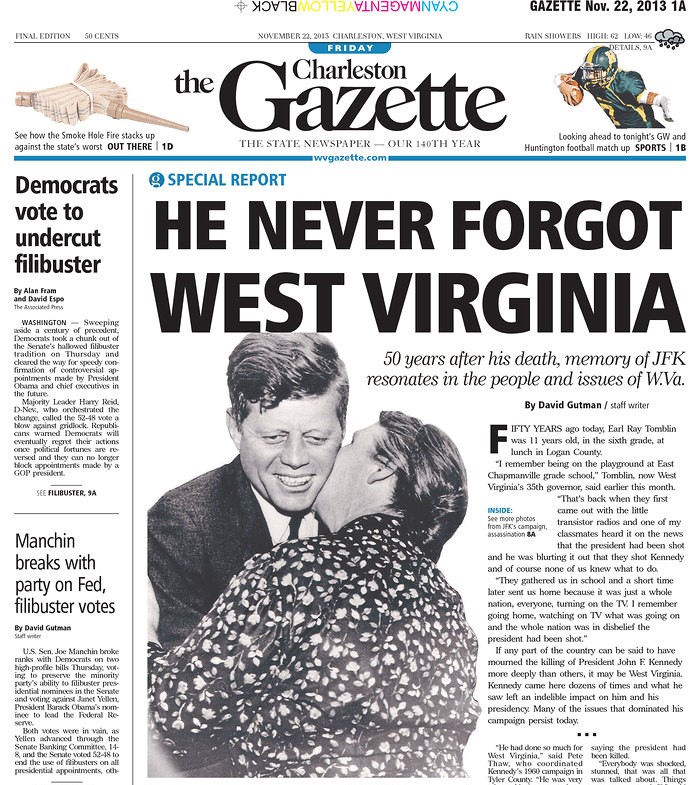
When I was growing up in Charleston WV in the 1950s and early 1960s, we had two daily newspapers. The Gazette was delivered in the morning and the Daily Mail was delivered in the afternoon. One of my first jobs as a boy was delivering The Gazette. It worked out to be about 50 cents an hour, but I was glad to have the job. (It was good money at the time.)
Ostensibly, the Gazette was a Democratic newspaper, and the Daily Mail was a Republican one. However, given the politics of the day there was not a significant difference between the two, and most people subscribed to both.
There weren’t a lot of options for news at the time. Of course, there were no 24-hour news channels. National news on the three networks was about 30 minutes an evening with local news at about 15 minutes. By the late 1960s national news had increased to 60 minutes and most local news to about 30 minutes. Although, given the limitations of time on the local stations, most of the broadcast was taken up with weather, sports, and human interest stories with little time left to expand on hard news stories.
We depended on our newspapers for news of our cities, counties, and states. And the newspapers delivered the news we needed. Almost everyone subscribed to and read the local papers. They kept us informed about our local politicians and government and provided local insight on national events. They were also our source for information about births, deaths, marriages, high school graduations and everything we wanted to know about our community.
In the 21st century there are many more supposed news options. There are 24-hour news networks as I’ve talked about in a previous post. And of course, there are Instagram, Facebook, X and the other online entities that claim to provide news.
There has been one positive development in television news. Local news, at least in Charleston, has expanded to two hours most evenings. There is some repetition between the first and second hour and it is still heavily weighted to sports, weather, and human interest, but there is some increased coverage of local hard news. However, this is somewhat akin to reading the headlines and the first paragraph in a newspaper story. It doesn’t provide in-depth coverage, but it is improved over what otherwise is available to those who don’t watch a dedicated news show. Hopefully, it motivates people to find out more about events that concern them.
The situation has become dire in recent months. The crisis that was building when I first wrote about newspapers has now reached catastrophic proportions. On December 31, 2025, the Atlanta Journal-Constitution published its last print edition after 157 years, making Atlanta the largest U.S. metro area without a printed daily newspaper. Think about that—a major American city, home to over six million people in its metro area, now has no physical newspaper you can hold in your hands.
Just weeks ago in February 2025, the Newark Star-Ledger, New Jersey’s largest newspaper, stopped printing after nearly 200 years. The Jersey Journal, which had served Hudson County for 157 years, closed entirely. These weren’t small-town weeklies—these were major metropolitan dailies that once served millions of readers. The Pittsburgh Post Gazette, founded in 1786, has announced that it will cease publication effective May 3, 2026.
Even more alarming is what just happened at the Washington Post. Just days ago, in early February 2026, owner Jeff Bezos ordered the elimination of roughly one-third of the newspaper’s workforce—approximately 300 journalists. The Post closed its entire sports section, shuttered its books department, gutted its foreign bureaus and metro desk, and canceled its flagship daily podcast. This is the same newspaper that brought down a presidency with its Watergate coverage and has won dozens of Pulitzer Prizes. The Post’s metro desk, which once had 40 reporters covering the nation’s capital, now has just a dozen. All the paper’s photojournalists were laid off. The entire Middle East team was eliminated.
Former Washington Post executive editor Martin Baron, who led the paper from 2013 to 2021, called the cuts devastating and blamed poor management decisions, including Bezos’s decision to spike the newspaper’s presidential endorsement in 2024, which led to the cancellation of hundreds of thousands of subscriptions. The Post lost an estimated $100 million in 2024.
The numbers tell a grim story. Since 2005, more than 3,200 newspapers have closed in the United States—that’s over one-third of all the newspapers that existed just twenty years ago. Newspapers continue to disappear at a rate of more than two per week. In the past year alone, 136 newspapers shut their doors.
Fewer than 5,600 newspapers now remain in America, and less than 1,000 of those are dailies. Even among those “dailies,” more than 80 percent print fewer than seven days a week. We now have 213 counties that are complete “news deserts”—places with no local news source at all. Another 1,524 counties have only one remaining news source, usually a struggling weekly newspaper. Taken together, about 50 million Americans now have limited or no access to local news.
Will TV news be able to provide the details about our community? The format of the newspaper allows for more detailed presentations and for a larger variety of stories. The reader can pick which stories to read, when to read them and how much of each to read. The very nature of broadcast news doesn’t allow these options.
I beg everyone to please subscribe to your local newspapers if you still have one. Though I still prefer the hands-on, physical newspaper, I understand many people want to keep up with the digital age. If you do, please subscribe to the digital editions of your local newspaper and don’t pretend that the other online sources, such as social media, will provide you with local news. More likely, you’ll just get gossip, or worse.
If we lose our local news, we are in danger of losing our freedom of information and if we lose that, we’re in danger of losing our country. For those of you who think I’m fear mongering, countries that have succumbed to dictatorship have first lost their free press.
I believe that broadcast news will never be the free press that print journalism is. The broadcast is an ethereal thing. You hear it and it’s gone. Of course, it is always possible to record it and play it back, but most people don’t. If you have a newspaper, you can read it, think about it, and read it again. There are times when on my second or third reading of an editorial or an op-ed article, I’ve changed my opinion about either the subject or the writer of the piece. I don’t think a news broadcast lends itself to this type of reflection. In fact, when listening to the broadcast news I often find my mind wandering as something that the broadcaster said sends me in a different direction.
In my opinion, broadcast news is controlled by advertising dollars and viewer ratings. News seems to be treated like any entertainment program, catering to what generates ratings rather than facts. I recognize that this can be the case with newspapers as well, but it seems to me that it’s much easier to detect bias in the written word than in the spoken word. Too often we can get caught up in the emotions of the presenter or in the graphics that accompany the story.
With that in mind, I recommend that if you want unbiased journalism, please support your local newspapers before we lose them. Once they are gone, we will never get them back and we will all be much the poorer as a result.
I will leave you with one last quote.
A free press is the unsleeping guardian of every other right that free men prize; it is the most dangerous foe of tyranny. —Winston Churchill
The only way to preserve freedom is to preserve the free press. Do your part! Subscribe!
And you can quote The Grumpy Doc on that!!!!
Sources
Fortune (August 29, 2025): “Atlanta becomes largest U.S. metro without a printed daily newspaper as Journal-Constitution goes digital”
https://fortune.com/2025/08/29/atlanta-largest-metro-without-printed-newpsaper-digital-journal-constitution/
Northwestern University Medill School (2025): “News deserts hit new high and 50 million have limited access to local news, study finds”
https://www.medill.northwestern.edu/news/2025/news-deserts-hit-new-high-and-50-million-have-limited-access-to-local-news-study-finds.html
NBC News (February 2026): “Washington Post lays off one-third of its newsroom”
https://www.nbcnews.com/business/media/washington-post-layoffs-sports-rcna257354
CNN Business (February 4, 2026): “Jeff Bezos-owned Washington Post conducts widespread layoffs, gutting a third of its staff”
https://www.cnn.com/2026/02/04/media/washington-post-layoffs
Northwestern University Medill Local News Initiative (2024): “The State of Local News Report 2024”
https://localnewsinitiative.northwestern.edu/projects/state-of-local-news/2024/report/
Northwestern University Medill School (2025): “News deserts hit new high and 50 million have limited access to local news, study finds”
https://www.medill.northwestern.edu/news/2025/news-deserts-hit-new-high-and-50-million-have-limited-access-to-local-news-study-finds.htm