

Of all the figures who populate Donald Trump’s second administration, few operate with less name recognition and more raw institutional power than Russell Vought. He does not command troops like the Secretary of Defense, he does not prosecute cases like the Attorney General, nor does he dominate health news like RFK Jr. Yet as director of the Office of Management and Budget (OMB), Vought sits astride the single path through which every dollar appropriated by Congress must pass before it reaches an agency, a court, a hospital, or a family. That chokepoint, combined with Vought’s explicit authorship of the government-dismantling blueprint known as Project 2025, has led critics to call him the “shadow president” and, more provocatively, the most destructive force in the administration. Whether you accept that label depends on what you take “destructive” to mean — destructive of the liberal vision of the administrative state, or destructive of the state’s basic capacity to function at all. Let’s look at Vought’s role, his authorship of Project 2025, and the specific programs and institutions he has targeted as OMB director, then weighs the case for and against the “most destructive” designation.
Who Is Russell Vought, and What Does He Control?
Vought is currently the Director of the OMB, the West Wing-adjacent agency that, on paper, sounds simply bureaucratic. It reviews agency budgets, writes regulations, and controls the timing of federal spending but in practice it functions as one of the most powerful levers in the executive branch. He held the same job at the end of Trump’s first term, from mid-2020 to January 2021, after serving as deputy director starting in 2018.
What’s unusual this time is how many hats he’s worn, most at the same time. Since being confirmed in February 2025, Vought has also served as acting director of the Consumer Financial Protection Bureau and, for several months in mid-to-late 2025, he was acting administrator of USAID while that agency was being dismantled. In practice, that means one person has simultaneously controlled the government’s checkbook, the main federal consumer-finance watchdog, and the country’s foreign aid apparatus.
Vought and Project 2025
Before returning to government, Vought ran a think tank called the Center for Renewing America, and in that role, he became one of the central figures behind Project 2025, the Heritage Foundation’s 900-plus-page transition blueprint for a second Trump term. He personally wrote the chapter on the Executive Office of the President, and by most accounts he was also deeply involved in a separate, less public “180-Day Playbook” designed to help the new administration move fast before opposition could organize.
Vought’s own language, captured on hidden camera by researchers with the Centre for Climate Reporting in 2024, is probably the most-quoted material about him. He described spending roughly 80 percent of his time on “destroying” the sense of independence exhibited by some executive branch agencies. He said he wanted federal employees to be “traumatically affected” by the changes he had planned. He referred to Trump’s public distancing from Project 2025 during the campaign as “graduate-level politics,” implying it wasn’t sincere. He has also spoken about reviving “Schedule F,” a first-term proposal that would strip job protections from a large swath of career civil servants and make it easier to them fire for political reasons.
None of that is speculation on my part; it’s drawn directly from his own recorded remarks and from the Project 2025 chapter he authored. Whether you read it as candid strategic planning or as something more alarming is a judgment call.
What He’s Cutting or Eliminating
This is the part of the story with the most concrete paper trail, because OMB’s decisions show up in court dockets, congressional hearings, and the government’s own funding apportionment documents.
Days before Vought’s confirmation, an OMB memo closely tied to him ordered a sweeping freeze on federal grants, loans, and cooperative agreements, citing a need to root out spending on “wokeness” and “Green New Deal social engineering.” The freeze briefly disrupted payment portals for Medicaid, Head Start, Meals on Wheels, and community health centers before a federal judge intervened and the memo was rescinded.
USAID and Foreign Aid
As acting USAID administrator, Vought oversaw the agency’s near-total shutdown, including a freeze on foreign assistance that a federal judge blocked in part in February 2025. House Democrats published a report attributing roughly 600,000 preventable deaths worldwide to the cuts, a figure Vought has disputed without offering his own count. In June 2026 Senate Democrats separately objected to OMB withholding another $3.2 billion in already-appropriated humanitarian and development aid.
The Education Department
Through 2026, OMB left roughly three dozen Education Department programs marked “unallocated” in official apportionment documents. This means the department technically wasn’t authorized to spend congressionally appropriated funds on them. That produced a lawsuit in June 2026 from Protect Democracy and several education groups, and a separate revolt from ten Republican senators over a summer-program funding freeze they said contradicted the president’s own stated goals.
The Consumer Financial Protection Bureau
As acting director, Vought moved almost immediately to halt CFPB operations, close its headquarters, and pursue mass layoffs. He targeted roughly 90 percent of the workforce, later scaled back to about two-thirds under court pressure. A federal judge blocked the initial plan, and litigation (National Treasury Employees Union v. Vought) was still working through the D.C. Circuit as of mid-2026. The bureau’s union president put it bluntly: “Everyone knows Vought doesn’t want CFPB to exist at all.” Vought has said the cuts follow directly from a roughly 50 percent reduction Congress made to the bureau’s funding cap in 2025’s reconciliation bill.
Climate, Environmental-justice, and Infrastructure Funding
Vought also announced the cancellation of nearly $8 billion in climate-related grants across 16 Democratic-leaning states, describing them on social media as “Green New Scam funding,” and placed a hold on roughly $18 billion in New York City infrastructure funding due to his objections to “unconstitutional DEI principles”.
Broader impoundment and “pocket rescissions”
The most structurally significant fight is over whether OMB can simply decline to spend money Congress has appropriated, a practice called impoundment that is prohibited by a 1974 law. Vought has argued publicly that many of these actions are “programmatic delays,” not impoundments, and that the Impoundment Control Act’s restrictions are unconstitutional. Critics, including House Appropriations Committee Democrats and two dozen state attorneys general, say OMB has used the apportionment process to delay the routine paperwork that releases funds to agencies creating a chokepoint to freeze billions in spending without following the law’s formal rescission procedure. A related, roughly $9 billion “pocket rescission” package targeting foreign aid and public broadcasting (including PBS and NPR funding) passed the Senate in 2026 after Vice President Vance broke a tie.
The Federal Workforce
Beyond any single agency, Vought’s OMB has pushed reductions in force across the government, including a September 2025 memo instructing agencies to use that fall’s government shutdown as an “opportunity” to eliminate programs. House Democrats on the Judiciary and the Appropriations committees called that a misuse of shutdown authority, and a court issued a temporary restraining order blocking some of the resulting layoffs.
The Case for the Defense
It’s worth noting that Vought and his allies don’t dispute most of these facts — they dispute the framing. Their argument is that OMB is doing what it’s statutorily supposed to do: enforce fiscal discipline, cut waste and duplication, and give the president control over an executive branch that Vought and others believe has become too autonomous. Senator John Cornyn, backing Vought’s 2025 confirmation, praised his first-term record of regulatory rollback and called him “the right choice” to get federal agencies “back on track.” Vought himself has repeatedly said these are the first of several planned rounds of cuts, framing the approach as accountability to taxpayers rather than sabotage of government functions.
A Closing Thought
History will ultimately judge which interpretation proves more accurate. What seems increasingly clear is that Russell Vought has become one of the defining figures of the second Trump administration. His influence extends well beyond annual budgets. Through Project 2025 and his leadership of the Office of Management and Budget, he has sought to redefine how the federal government operates, who exercises power within it, and what authority the federal government should exert over American society.
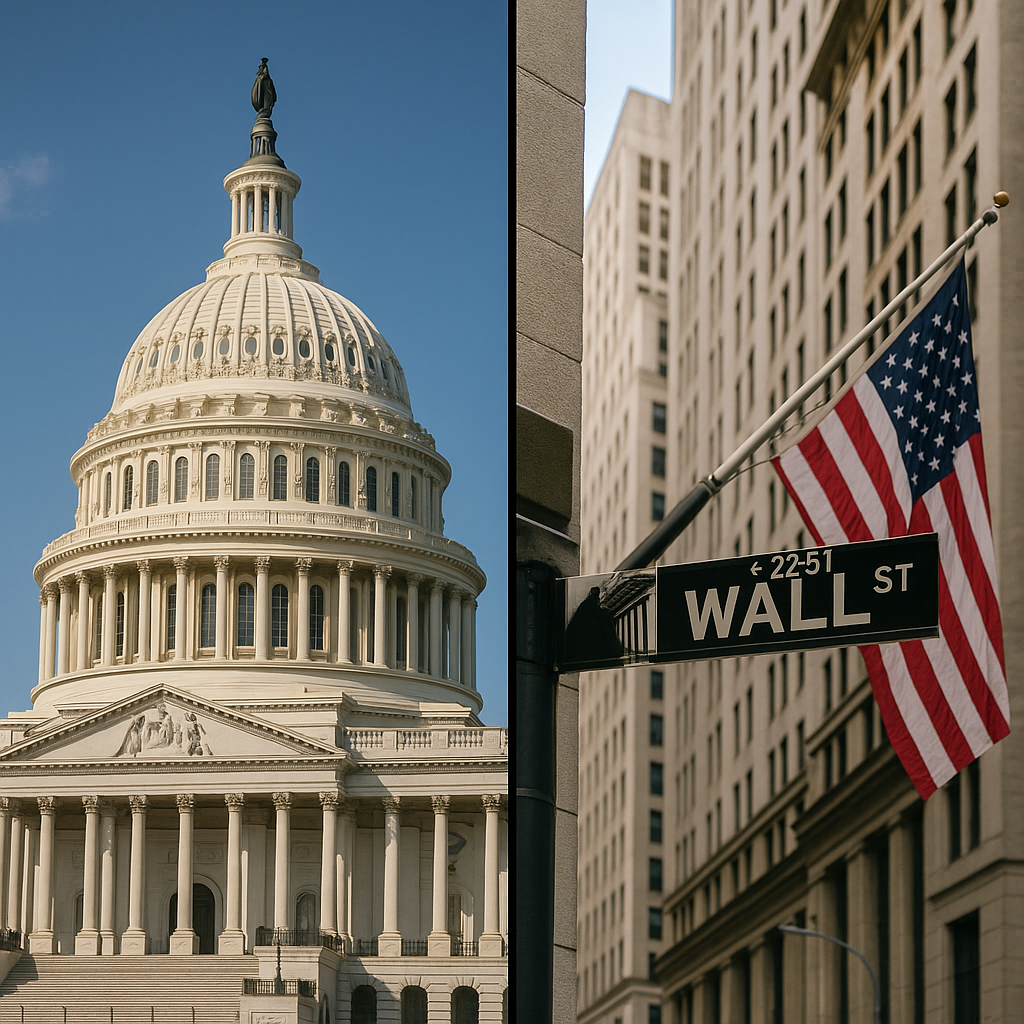
Image generated by the author using ChatGPT.
Sources
1. Ballotpedia — confirmation background and career timeline. https://ballotpedia.org/Confirmation_process_for_Russell_Vought_for_director_of_the_Office_of_Management_and_Budget
2. Wikipedia — Russell Vought, overview of concurrent roles (OMB, CFPB, USAID). https://en.wikipedia.org/wiki/Russell_Vought
3. ABC News — on Vought’s Project 2025 authorship and vetting. https://abcnews.com/US/trump-vetting-project-2025-architect-top-administration-post/story?id=115993180
4. Forbes — Vought’s Senate confirmation and Project 2025 ties. https://www.forbes.com/sites/alisondurkee/2025/02/06/project-2025-author-russell-vought-confirmed-by-senate-here-are-all-the-trump-officials-with-ties-to-policy-agenda/
5. Critical Resistance (Substack) — hidden-camera remarks and “radical constitutionalism.” https://criticalresistance.substack.com/p/russ-vought-and-the-paperwork-revolution
6. The Hill — House hearing on USAID cuts and preventable-deaths estimate. https://thehill.com/homenews/house/5947905-vought-clashes-democrats-spending-cuts/
7. The Hill — USAID close-out funds and withheld humanitarian aid. https://thehill.com/policy/international/5870587-usaid-funds-19b-closeout/
8. Education Week — frozen Education Department apportionments. https://www.edweek.org/policy-politics/white-house-blocks-2-billion-for-education-see-all-the-affected-programs/2026/05
9. Protect Democracy — lawsuit over withheld education funding. https://protectdemocracy.org/work/congressionally-mandated-education-programs/
10. Federal News Network — CFPB staffing-cut plan and union response. https://federalnewsnetwork.com/management/2026/04/white-house-scales-back-plan-to-dismantle-the-cfpb-but-still-wants-to-slash-staff-by-two-thirds/
11. HousingWire — CFPB layoffs update and Vought’s stated intent to eliminate the bureau. https://www.housingwire.com/articles/cfpb-vought-new-nomination/
12. House Appropriations Committee (Democrats) — background on impoundment and apportionment tactics. https://democrats-appropriations.house.gov/news/fact-sheets/background-unlawful-impoundment-president-trumps-executive-orders
13. The Conference Board — legal analysis of the Impoundment Control Act dispute. https://www.conference-board.org/research/ced-policy-backgrounders/adiministration-view-on-impoundment
14. House Judiciary Committee (Democrats) — letter on shutdown-era RIF memo. https://democrats-judiciary.house.gov/media-center/press-releases/litigation-task-force-leaders-raskin-neguse-delauro-and-garcia-slam-russell-vought-for-exploiting-republican-shutdown-to-implement-unlawful-purge-of-federal-workforce
15. Office of Rep. Kamlager-Dove — articles of impeachment and funding-freeze allegations. https://kamlager-dove.house.gov/media/press-releases/kamlager-dove-introduces-articles-impeachment-against-omb-director-russell
16. Office of Sen. Cornyn — statement supporting Vought’s confirmation. https://www.cornyn.senate.gov/news/cornyn-votes-to-confirm-russ-vought-for-omb-director


From Reagan Conservative to Social Democrat: A Political Evolution
By John Turley
On December 30, 2025
In Commentary, Politics, Uncategorized
Political beliefs rarely change overnight. Mine certainly didn’t. My journey from Reagan-era conservatism to social democracy unfolded slowly, shaped less by ideology than by lived experience and an accumulating body of evidence about what actually works.
Morning in America
Like many Americans of my generation, my political awakening came during the Reagan years. The message was optimistic and reassuring: limited government, free markets, individual responsibility, and a strong national defense would restore American greatness. Reagan’s charisma made complex economic ideas feel like common sense. Lower taxes would spur growth. Deregulation would unleash innovation. Markets would reward effort and discipline.
That worldview was personally affirming. Success was earned. Failure reflected poor choices. Government’s role should be narrow—defense, public order, and little else. Social programs, we were told, fostered dependency rather than opportunity. It was a coherent framework, and for a time, it seemed to fit the facts.
Cracks in the Foundation
By the 1990s, inconsistencies began to surface. Economic growth continued, but inequality widened. Entire industrial communities collapsed despite residents working hard and playing by the rules. The benefits of “trickle-down” economics were not trickling very far.
Personal experiences made the abstractions impossible to ignore. Families lost health insurance because of pre-existing conditions. Medical bills pushed insured households into bankruptcy. These outcomes weren’t failures of character; they were failures of systems.
The 2008 financial crisis shattered whatever illusions remained. Financial institutions that preached personal responsibility engaged in reckless speculation, then received massive government bailouts, while homeowners were left to face foreclosure. Like millions of others, I lost nearly half of my retirement savings. The contradiction was glaring: socialism for the wealthy, harsh market discipline for everyone else. Individual responsibility meant little when systemic risk brought down the entire economy.
A Turning Point
Job loss during the Great Recession completed the lesson. Despite qualifications and work history, employment opportunities vanished. Unemployment benefits—once easy to dismiss in theory as handouts—became essential in practice. The bootstrap mythology doesn’t hold up when the floor is pulled away.
This period also exposed the fragility of employer-based healthcare and retirement systems. COBRA coverage was unaffordable. 401(k)s evaporated. The safety net that once seemed excessive suddenly looked inadequate. Meanwhile, countries with stronger social protections weathered the recession better than the United States.
Seeing Other Models
Travel and research broadened my perspective further. Nations like Germany, Denmark, France, and Sweden paired market economies with robust social programs—and consistently outperformed the U.S. on measures of health, social mobility, and life satisfaction.
These were not stagnant, overregulated societies. They were thriving capitalist democracies that simply made different choices about public investment and risk-sharing.
Writers like Joseph Stiglitz and Thomas Piketty documented how concentrated wealth undermines both democracy and long-term growth. Historical evidence showed that America’s most prosperous era—the post-World War II boom—coincided with high marginal tax rates, strong unions, and major public investment.
Healthcare Changed Everything
Healthcare ultimately crystallized my shift. The U.S. spends far more per capita than any other nation yet produces worse outcomes on many basic measures.
As a physician, I watched patients struggle with insurance denials, opaque pricing, and medical debt. Healthcare markets don’t function like normal markets. You can’t comparison shop during a heart attack. When insurers profit by denying care, the system aligns against patients. Medical bankruptcy is virtually unknown in countries with universal coverage—for a reason. We have a system where the major goal of health insurance companies is making a profit for their investors—not providing affordable healthcare to their subscribers.
Climate and Collective Action
Climate change further exposed the limits of market fundamentalism. Individualism and laissez-faire policies have failed to account for shared environmental costs and long-term consequences. Markets alone cannot price long-term environmental harm or coordinate collective action at the necessary scale. Addressing climate risk requires regulation, public investment, and democratic planning.
What Social Democracy Is—and Isn’t
Social democracy is not the rejection of capitalism. It is regulated capitalism with guardrails—markets where they work well, public systems where markets fail. Healthcare, education, infrastructure, and basic income security perform better with strong public involvement.
This differs from democratic socialism, a distinction I’ve explored elsewhere. Social democracy embraces entrepreneurship and competition while preventing monopoly power, protecting workers, and taxing fairly to fund shared prosperity.
As sociologist Lane Kenworthy notes, the U.S. already has elements of social democracy—Social Security, Medicare, public education—we simply underfund them compared to European nations.
A Pragmatic Conclusion
My evolution wasn’t ideological betrayal; it was pragmatic learning. I adjusted my beliefs based on outcomes, not slogans. Countries with strong social democracies routinely outperform the U.S. on health, mobility, education, and even business competitiveness.
True prosperity requires both entrepreneurial freedom and collective investment. The choice isn’t markets or government—it’s how to balance them intelligently. This lesson took me decades to learn, but the evidence now feels hard to ignore.
References
Overview of causes, systemic failures, and economic consequences of the 2007–2009 financial crisis.
https://www.federalreservehistory.org/essays/great-recession
Comparative data on how countries with stronger social safety nets performed during economic downturns.
https://www.oecd.org/economy
Cross-national comparisons of well-being, social trust, and economic security.
https://worldhappiness.report
Analysis of how income concentration undermines long-term economic performance and democracy.
https://www.imf.org/en/Publications/fandd/issues/2019/09/inequality-and-economic-growth-stiglitz
Historical evidence on wealth concentration and taxation in advanced economies.
https://wid.world
U.S. tax rate history showing high marginal rates during the post-war economic boom.
https://www.taxpolicycenter.org/statistics/historical-highest-marginal-income-tax-rates
Comparative analysis of health spending, outcomes, and access across developed nations.
https://www.commonwealthfund.org/publications/issue-briefs/2023/jan/us-health-care-global-perspective-2022
International comparisons of healthcare costs, outcomes, and system performance.
https://www.oecd.org/health/health-data.htm
Scientific consensus on climate change risks and the need for coordinated public action.
https://www.ipcc.ch/report/ar6/syr
Comparative research on social democracy, public investment, and economic performance.
https://lanekenworthy.net