It seems that hardly a week goes by that I don’t see one or more articles about some aspect of the “generation gap”. Usually, they have something to do with old folks complaining about how the younger generation has no manners, respect, or work ethic and the younger people complaining about how the old fogeys—usually referred to as Boomers—just don’t understand technology, social media, or whatever the hot item of the day is. Of course, they expect us old folks to benefit from the vast experience gained in their two and a half decades of life. I’m always reminded of an old saying, “all old people were young once, but no young person has ever been old.” Of course, there I go again, another Boomer wandering back into the past.
But there is a real generation gap, and it is “bar soap versus shower gel.” It’s hard to believe, but somebody actually did a survey on this subject and found that 65% of older people prefer bar soap while about 75% of younger people preferred shower gel.
It actually surprised me to learn that all that soap in the squeeze bottles isn’t the same. There is shower gel and then there is body wash. Apparently, body wash is more moisturizing while gel is better for oily skin. I just know that I don’t care for either one of them and I always feel like they never get completely rinsed off.
My wife and I have been doing a lot of traveling this summer and it seems that hotels have almost all completed their transition from bar soap to that liquid stuff in a dispenser hanging on the wall. From what little research I’ve done, apparently this went into full swing during COVID. The claim was that the shower gel is less likely to transmit infection. Although I don’t understand how a dispenser that sits there all the time and is handled by everyone is less a threat of infection than an individually wrapped bar of soap that only I handle. I think it’s just cheaper.
I only ask one thing from a bar of soap and that’s to get me clean. It’s a pretty simple process. You pick it up. You use it. You put it down. You can hold it in one hand. You’re not trying to open a slippery bottle with wet hands. In between showers the soap just sits in a dish waiting for its next job.
It seems to me that life with shower gel is much more complicated. You can’t take a shower until you have a collection of bottles and a personal development plan. You must have one bottle for your hair, one bottle for your face, and another bottle for your body. You have your energizing body wash for the mornings and a calming body wash for evenings. You also have a body wash with botanical extracts for when you need to reconnect with nature. It’s important to have a selection of body washes to be sure that one will match your mood. And don’t even get me started on exfoliating.
If you ask, “Which one is soap?”, you get the answer “It’s not soap, it’s a hydrating shower gel.” You then ask, “Does it get you clean?” And the answer is “Yes.” You respond, “Then it’s soap.” Although I suppose that may be considered an insensitive line of questioning.
I know when my bar of soap is about to fade away, it keeps getting smaller. With shower gel you don’t discover the bottle is empty until you’re standing there soaking wet and trying to squeeze out the last little bit. Maybe it’s just me, but I’d prefer a little advance notice.
And then there’s the whole thing about fragrances. I prefer my soap to smell something like soap. With shower gel there is a whole range of everything from cedarwood to spice to cinnamon to coastal sage to citrus fruit. I can’t even begin to guess what Morning Breeze is supposed to smell like.
I suppose that there’s room for coexistence. I’ll keep my bar of soap, and they can keep their collection of squeezables. But it’s going to take a much larger soap dish. Just so no one expects me to try their brand new $20 bottle of eucalyptus body wash.
For much of the late twentieth century, “socialism” was almost a forbidden word in American politics. Republicans used it as an accusation, Democrats generally avoided it, and politicians who actually described themselves as socialists occupied a small place on the political fringe.
Things have changed dramatically. Today, politicians on both the right and the left talk about socialism—although they usually mean entirely different things.
On the right, “socialism” has become a broad warning label applied to proposals ranging from universal health insurance to government regulation and higher taxes. On the left, a growing number of politicians and activists have reclaimed the word, associating it with economic equality, stronger labor rights, universal public services, and restraints on corporate power.
The interesting question may be less whether America is becoming socialist than why Americans are suddenly arguing about the meaning of socialism.
Socialism Originally Meant Something Specific
Historically, socialism was not simply another word for government spending. It developed during the nineteenth century largely in response to industrial capitalism. Although socialist thinkers disagreed considerably among themselves, they generally believed that the production resources of society—factories, mines, transportation systems, land, and eventually large corporations—should be owned collectively or controlled by workers rather than by private investors.
Karl Marx advocated a transformation by revolution. Other socialists eventually pursued democratic and parliamentary approaches.
That distinction matters because many policies routinely described as “socialist” in American political debate do not meet the traditional definition at all. A government can tax corporations, regulate banks, provide health insurance, and maintain a generous welfare system while leaving most businesses privately owned. Economists would normally describe such a country as a mixed capitalist economy or social democracy, rather than a socialist economy.
What the American Right Means by Socialism
For many conservatives, socialism has acquired a much broader meaning. The term is frequently applied to policies that increase government involvement in the economy such as progressive taxation, environmental regulation, student-debt relief, subsidized health care, expanded welfare benefits, government-supported child care, or other programs that redistribute income or provide services collectively.
In this usage, socialism is less a precise economic system than a direction of travel. Conservatives argue that as government assumes greater responsibility for allocating resources and providing benefits, individual choice and private markets become less important.
There is a legitimate philosophical argument here. There has always been a debate over where the boundary should lie between private markets and collective responsibility.
But calling every government economic intervention “socialism” stretches the word almost beyond recognition. By that definition, nearly every modern industrial democracy—including the United States—has been partly socialist for generations.
The political usefulness of the word helps explain its persistence. For Americans who remember the Cold War, “socialism” may evoke the Soviet Union, communist Eastern Europe, Cuba, or more recently Venezuela. Calling an opponent socialist therefore does more than criticize a particular tax or health-care proposal. It associates that proposal with an entire political system many Americans regard as oppressive and economically unsuccessful.
Polling illustrates how powerful that association remains. Pew Research Center found in 2022 that only 14 percent of Republicans and Republican-leaning independents had a positive impression of socialism. Republicans were also much more likely than Democrats to associate socialism with restrictions on individual freedom.
What the American Left Means by Socialism
The situation on the left is considerably more complicated because there is no single left-wing definition of socialism.
Many Americans who describe themselves favorably toward “socialism” appear to mean something closer to social democracy: a basically capitalist economy combined with universal health care, stronger unions, affordable higher education, progressive taxation, extensive social insurance, and stronger regulation of corporations.
Their preferred models are often Scandinavian countries such as Denmark and Finland. Yet those countries retain private businesses, private property, financial markets, entrepreneurship, and international corporations. They are heavily regulated capitalist welfare states, not classical socialist economies.
Pew’s research demonstrates this ambiguity. When Americans favorable toward socialism were asked what they liked about it, many emphasized fairness, meeting basic needs, and combining elements of capitalism and socialism rather than eliminating capitalism altogether.
Other people on the American left mean something more substantial when they use the term. The Democratic Socialists of America, for example, explicitly says democratic socialism should go beyond merely regulating capitalism. The organization advocates greater democratic control of workplaces and collective ownership of important parts of the economy, including areas such as energy and transportation. That position is much closer to the traditional meaning of socialism.
Consequently, it is misleading to assume that a liberal Democrat supporting Medicare expansion and a democratic socialist advocating worker control of corporations necessarily have the same economic philosophy.
They may support some of the same immediate policies while disagreeing profoundly about the ultimate economic system they want.
Why Has Socialism Suddenly Returned?
First was the financial crisis of 2008. Younger Americans watched banks and financial institutions receive extraordinary government assistance while millions of ordinary Americans lost jobs, savings, and homes. That experience weakened the assumption that an essentially unregulated market produces fair outcomes.
Then came decades of concern about wage stagnation, college debt, housing affordability, medical expenses, and growing concentrations of wealth. For some younger Americans, “capitalism” increasingly came to mean not neighborhood businesses and entrepreneurship but enormous corporations, billionaires and now trillionaires, expensive housing, and economic insecurity.
Bernie Sanders accelerated the transformation during his presidential campaigns in 2016 and 2020. By openly calling himself a democratic socialist while attracting millions of votes, Sanders helped remove some of the Cold War stigma surrounding the word.
Generational change matters as well. Younger Americans did not experience the Cold War in the same way their parents and grandparents did. Pew found striking age differences in its 2022 survey. Americans under 30 were roughly as likely to have an exclusively positive view of socialism as an exclusively positive view of capitalism. Older Americans remained considerably more favorable toward capitalism.
The political right has responded by emphasizing the word even more strongly. That makes strategic sense. If progressive Democrats increasingly accept the socialist label—or propose policies Republicans can associate with it—Republicans have an incentive to connect those policies with a word that remains deeply unpopular among conservative and many older voters.
The result is a feedback loop: the left talks more about socialism because the word has become less frightening to some voters, while the right talks more about socialism precisely because it hopes to make the word frightening again.
Is America Already Partly Socialist?
The answer depends almost entirely upon our definition.
Under the traditional definition—collective ownership of the means of production—the United States is overwhelmingly capitalist. Most farms, factories, banks, hospitals, restaurants, stores, technology companies, media companies, and other productive enterprises are privately owned.
But America has never operated as a completely laissez-faire capitalist economy either.
The federal government operates Social Security, for example, which the Social Security Administration itself describes as a social insurance program. Workers and employers contribute through payroll taxes, and benefits provide partial income replacement after retirement, disability, or death. About 96 percent of American jobs are covered.
Medicare and Medicaid place government deeply into health-care financing while most hospitals, physician practices, pharmaceutical manufacturers, and medical suppliers remain private.
The government also insures private bank deposits through the FDIC. Deposits at insured banks are generally protected up to $250,000 per depositor, per bank, per ownership category, backed by the federal government.
Public schools, public universities, highways, libraries, police departments, fire departments, water systems, parks, and numerous municipal utilities provide goods and services collectively rather than through ordinary private markets.
The United States even owns or operates certain enterprises directly. The Postal Service, for example, is an independent establishment within the executive branch that provides a nationwide public service while simultaneously operating in a competitive marketplace.
These arrangements contain elements of collective provision, social insurance, public ownership, or economic regulation, but calling all of them “socialism” creates more confusion than clarity.
A public fire department is not evidence that America has adopted a socialist economic system any more than a privately owned grocery store proves that government has no role in the economy.
America Has a Mixed Economy—and Always Has
Perhaps the greatest problem with the current socialism debate is the assumption that capitalism and socialism exist as two completely separate boxes and that a country must choose one or the other. Modern economies rarely work that way.
The United States relies primarily on private ownership, competition, investment, and markets to produce goods and services. At the same time, Americans have repeatedly decided that certain risks and services should be handled collectively.
Even organized labor introduces an element of collective economic power into a capitalist system, although union membership has declined substantially. In 2025, 10 percent of American wage and salary workers belonged to unions, compared with 20.1 percent in 1983.
The real political disagreement is rarely capitalism versus socialism in their pure theoretical forms. It is about where to draw the line between the market and the community.
Should health insurance operate primarily as a commercial product or a public service? Should housing be left largely to market forces or should government intervene to make it more affordable? Should corporations answer primarily to shareholders, or should workers have greater influence over corporate decisions? How progressive should taxation be? Which industries, if any, should be publicly owned? How much inequality should society tolerate in exchange for the incentives created by private enterprise?
A surprising twist is that some of the loudest recent “socialism” accusations are coming from conservatives — aimed at their own president. Since returning to office, the Trump administration has taken direct equity stakes in Intel, secured a “golden share” in U.S. Steel, arranged profit-sharing with Nvidia and AMD on chip sales to China, imposed sweeping tariffs, and directed the Pentagon to prioritize coal — an unprecedented degree of direct federal involvement in private enterprise for a Republican administration. Commentators across the spectrum — from the Council on Foreign Relations to the Wall Street Journal — have reached for terms like “state capitalism” or “state capitalism with American characteristics,” an explicit echo of the Chinese Communist Party’s own “socialism with Chinese characteristics”. One economist with more than three decades of market-watching called it plainly “the most economically interventionist government of my lifetime”.
Those are legitimate political questions. Calling one side “capitalist” and the other “socialist” obscures more than it explains.
The Word May Matter Less Than the Argument
There is one particularly revealing finding in the polling. Americans do not necessarily treat capitalism and socialism as opposites. Pew found people who expressed favorable opinions of both, suggesting that many Americans interpret capitalism as representing markets and opportunity while interpreting socialism as representing economic security and fairness.
That may tell us something important about the current debate. It appears that Americans want the vitality of capitalism tempered by the compassion of socialism.
The renewed interest in socialism doesn’t indicate that millions of Americans suddenly want the government to seize factories and abolish private enterprise. Instead, it reflects dissatisfaction with how the existing economic system distributes opportunity, security, wealth, and political power.
Conservative warnings about socialism often reflect a genuine concern that expanding government responsibility can gradually reduce economic freedom, increase taxation, and shift decisions from individuals and markets toward political institutions.
Those are fundamentally different concerns—and both become difficult to discuss when the same word means entirely different things to the people using it.
The question is not whether America should become “socialist,” it is what kind of capitalism we want.
That argument has been with us throughout American history. Only the vocabulary has changed.
For an additional discussion of the elements of socialism, see my post Three Shades of Left, published on November 10th 2025.
I’ve been a member of the Sons of the American Revolution for quite some time now. At the beginning of April, I started looking around for a Memorial Day event that we could join. I had assumed that my hometown of Charleston WV, being the state capital, would surely have an event since it is the 250th anniversary of the Declaration of Independence. I was surprised to find that none was planned.
I believed that it was especially important that a Memorial Day service be held here because West Virginia has, since World War II, one of the highest per capita rates of military service and combat casualties in the country. So, another SAR member and I got together, and we planned our own event and arranged for it to be held on the state capitol grounds. At the end of our service, I looked out at the group that was gathered: there was no right or left, there was no red or blue, there was no conservative or liberal. There were only proud Americans who had come together to honor our country, its veterans and its history.
Americans disagree about almost everything these days. Politics, religion, education, history, and even the meaning of patriotism have all become subjects of bitter debate. Too often, we define ourselves more by the groups we oppose than by the country we share.
Yet there are still opportunities to remember that before we were Republicans or Democrats, conservatives or progressives, we were Americans. The ongoing 250th Anniversary of the Revolutionary Era offers one of those rare opportunities to express what we share, not how we differ.
The semiquincentennial should be far more than fireworks, parades, and historical reenactments. It should be an invitation to rediscover the remarkable story we all inherited. The American Revolution was not perfect. The nation it created was imperfect from the beginning, carrying the stain of slavery, denying women equal rights, and often failing to live up to its own ideals. Those shortcomings do not erase the extraordinary achievement of creating a republic founded on the revolutionary belief that legitimate government derives its authority from the consent of the governed.
The founders left us more than a nation. They left us a challenge. Every generation has been asked to move the country a little closer to the principles expressed in the Declaration of Independence—that all people are created equal and possess inherent rights that no government should take away. Those words have inspired abolitionists, suffragists, civil rights leaders, immigrants seeking freedom, and millions of ordinary citizens who believed America could become better than it was.
That is a heritage worth celebrating together.
Organizations devoted to civic life have an important role to play in that celebration. Groups such as the Sons of the American Revolution, the Daughters of the American Revolution, the American Legion, Rotary clubs, Civitan clubs, veterans’ organizations, scouting groups, historical societies, libraries, museums, churches, and countless other local groups have spent decades preserving history, encouraging volunteerism, supporting education, and strengthening their communities. While each has its own mission and traditions, they all remind us that citizenship is more than voting every few years. It is an ongoing commitment to serving neighbors and improving the places where we live.
These organizations also offer something increasingly rare in modern America: opportunities for people with different political views to work side by side on practical goals. A community service project, a scholarship program, a veterans’ memorial, a food drive, or a history program rarely asks participants how they voted. It asks only if they are willing to help.
That is a lesson our country desperately needs. Social media and cable television often reward outrage. Algorithms profit by convincing us that our fellow Americans are enemies rather than neighbors. It becomes easy to believe that our differences outweigh everything we have in common.
History tells a different story. Americans have survived fierce political battles before. We have argued over the Constitution, endured civil war, struggled through economic depression and assassinations, fought world wars, and confronted profound disagreements about civil rights and social change. Our history has never been one of perfect unity. Instead, it has been a continuing effort to find common purpose despite deep disagreements.
The Revolution itself offers an example. The thirteen colonies differed enormously in religion, economy, geography, and culture. New England merchants, Virginia planters, Pennsylvania farmers, and South Carolina traders often had conflicting interests. Yet they discovered that some principles were more important than their differences. Their unity was never complete, but it was sufficient to build a nation. We face no less important a challenge today.
The 250th anniversary should encourage every community to host public readings of the Declaration of Independence, historical lectures, concerts, service projects, naturalization ceremonies, veterans’ recognitions, student essay contests, and volunteer events that welcome everyone. These occasions should not become platforms for partisan speeches. They should remind us that our history belongs to all Americans.
Celebrating our shared heritage does not require us to ignore the darker chapters of our past. Mature patriotism is honest enough to acknowledge failures while remaining grateful for the ideals that allowed those failures to be challenged and corrected. A confident nation can tell its whole story without either whitewashing its mistakes or denying its accomplishments.
Perhaps that is the greatest gift the 250th anniversary can offer is reminding us that America has always been a work in progress. Each generation inherits both the nation’s achievements and its unfinished work. If we can gather to honor the courage, sacrifice, and aspirations of those who came before us, perhaps we can rediscover something that has become increasingly scarce — the ability to see one another first as fellow citizens.
Our common heritage cannot solve every political disagreement. It will not erase ideological differences or end heated debates about the country’s future. Nor should it. Democracy depends upon vigorous debate. But it also depends upon something deeper — a shared commitment to our republic and our active participation as citizens. We need to become informed participants in our society and we need to vote and encourage others to vote.
As we celebrate America’s 250th birthday, the greatest act of patriotism is not winning another political argument. It is remembering that despite our many differences, we remain participants in the same remarkable American experiment. If civic organizations, veterans’ groups, historical societies, schools, churches, and local communities can help us rediscover that simple truth, they will have performed one of the greatest public services imaginable.
The founders gave us a republic, and they challenged each generation to preserve it and to improve it. Two hundred and fifty years later, that responsibility belongs to all of us. We must not fail.
Donald Trump did not invent a new American bigotry. He did something more subtle—and perhaps more consequential. He transformed long-standing resentments into a political identity and gave many people permission to express views they had previously kept private.
The central question surrounding the Make America Great Again movement is: has it created a new ethical worldview, or has it simply exposed attitudes that have long existed beneath the surface of American society? The answer is probably: both.
The resentments themselves are not new. Long before Trump entered politics, historians and political scientists documented the enduring influence of racial resentment, nativism, religious nationalism, and cultural anxiety. Many Americans believed their country was changing too quickly and that immigration, globalization, and shifting social norms threatened a way of life they once took for granted.
American history offers countless examples. Anti-immigrant movements flourished in the nineteenth century. Segregation and white supremacy were embedded in law for generations. George Wallace’s “law and order” campaigns, Pat Buchanan’s culture-war speeches, and the Tea Party’s reaction to Barack Obama’s presidency all reflected recurring fears that “real America” was slipping away.
Obama’s election encouraged hopes that the nation had entered a post-racial era, yet research continued to show that racial and cultural anxieties remained powerful undercurrents. Trump did not create those sentiments. He recognized them, embraced them, and gave them a simple narrative.
“Make America Great Again” is more than a campaign slogan. It tells a story of loss, restoration, and retribution. It suggests that something valuable has been taken away and that reclaiming it is both necessary and morally justified. For many supporters, it became less about policy than identity.
Trump’s most significant innovation was not ideological but cultural. Previous politicians often relied on coded language while preserving at least the appearance of restraint. Trump discarded those conventions. He mocked opponents, encouraged inflammatory chants, proposed banning Muslims from entering the country, and described immigrants as “poisoning the blood” of America. Many supporters interpreted this not as recklessness but as authenticity—a rejection of what they viewed as the constraints of political correctness.
That shift changed more than political rhetoric. It altered the boundaries of acceptable public behavior. Conduct once viewed as disqualifying became, for many supporters, evidence of courage and honesty. Loyalty increasingly outweighed character. Offending critics became proof that one was willing to stand up to elite opinion.
Political scientists describe this process as norm erosion. Laws remain the same, but the unwritten rules governing public life gradually weaken. Loyalty becomes more important than truth, institutions are trusted only when they favor one’s own side, and democratic restraints come to be seen as obstacles rather than safeguards.
Trump did not invent this dynamic. Populist movements throughout history have divided society into virtuous insiders and corrupt outsiders. His contribution was to make that style of politics a daily spectacle. Political conflict became a struggle between patriots and traitors, real Americans and dangerous enemies. Once politics is framed in existential terms, compromise becomes betrayal and restraint begins to look like weakness.
It would be inaccurate to say Trump created prejudice from nothing. A more persuasive argument is that he reduced the social cost of expressing it. Social norms matter because they define the boundaries of acceptable conduct. When prominent public figures use inflammatory language or repeat conspiracy theories without losing support from their followers, those boundaries inevitably shift.
Supporters who might once have hesitated can now dismiss criticism as media bias or political correctness. The line between prejudice and plain speaking becomes increasingly blurred.
This may prove to be Trump’s most enduring legacy. Even if his personal political influence fades, the standards governing public discourse may not return to where they once were. Future politicians can imitate the style—its confrontation, norm-breaking, and appeals to grievance—even if they reject parts of Trump’s agenda.
That is why the distinction between creating prejudice and legitimizing it matters. If Trump merely invented these impulses, defeating one political leader might solve the problem. But if he tapped into deeper currents already present in American society, then the challenge extends far beyond one election.
Trump is best understood as both symptom and accelerant. He gave shape to existing resentments, transformed them into a powerful political identity, and lowered the barriers against openly expressing them. The prejudices themselves were not new. The confidence with which they could be publicly displayed—and sometimes celebrated—was.
Whether that change proves temporary or enduring may become one of the defining questions facing American democracy.
How the Myth of 1950s America Is Being Weaponized by the Modern Right
Not long ago, I was sitting in a waiting room waiting to get an X-ray done. They had MeTV on the television and Leave It To Beaver was playing. You know, the classic 1950s television show where dad went to work, mom stayed at home and did housework while wearing pearls, a dress and heels, and the kids were well behaved even though they may occasionally have been “scamps”. Few ideas exert a stronger pull on the American imagination than the belief that there was once a lost golden age—a time when the nation was more prosperous, more moral, more unified, and more secure than it is today.
Ask most Americans when the country was at its best and there’s a decent chance you’ll hear something like: ” the ’50s.” Clean neighborhoods. Stable families. Everyone going to church on Sunday. One income paying the bills. It’s a seductive image and it’s one that right-wing politicians and evangelical leaders have been selling hard for decades. The only problem is that it was never the whole truth. In 2025, the effort to resurrect that selective memory began the move from campaign rhetoric into actual governance.
Let’s take a close look at the mythology of postwar America and examine what the 1940s and 1950s actually looked like for the millions of Americans excluded from the postcard image and explore how modern conservative politicians and religious leaders are drawing on that mythology to reshape the country today.
The Legend: America’s Postwar Paradise
It’s easy to understand the emotional pull. After the trauma of World War II and the deprivation of the Great Depression, the late 1940s and 1950s did, for a particular slice of America, offer something genuinely new: suburban homes, new cars, television sets, and a sense of safety and prosperity that earlier generations couldn’t have imagined. For white, middle-class families in the northern and midwestern United States, the GI Bill opened the door to homeownership and college education. Real wages rose. Life expectancy improved. The birth rate climbed.
Televisions went from being owned by 12 percent of households in 1950 to over 90 percent by the end of the decade and beamed idealized domestic life straight into living rooms across the country. Programs like Father Knows Best and, of course, Leave It to Beaver were essentially aspirational advertising. Nobody was poor. Nobody was Black. Nobody was gay. Nobody was confused. Everyone’s lawn was neatly trimmed and their problems resolved in 22 minutes.
It is worth acknowledging that aspects of this nostalgia reflect real experience for a limited few. The cultural stability and sense of community that many Americans remember from the era were genuine features of daily life for some people in some places. Writer Alan Ehrenhalt, who wrote extensively about 1950s Chicago neighborhoods, documented the authentic bonds people formed and the coherent community life that anchored their lives. The nostalgia is not entirely manufactured. But the question is: whose nostalgia counts, and who pays the price for making it policy?
The Reality Check: Who Got Left Out
Here is what the postcard left out: the United States of the 1950s was a country of legally enforced racial segregation, economic exclusion, and profound gender inequality. It was, in many respects, a country operating an unofficial domestic system of apartheid.
Jim Crow laws governed daily life for Black Americans from the post-Reconstruction era through the mid-1960s. Schools, workplaces, public transportation, medical facilities, and parks were racially segregated across the South and informally segregated in much of the North. Poll taxes and literacy tests suppressed Black voting. Vagrancy laws effectively criminalized unemployment among Black men. Physical terror, including lynching and the threat of violence, was used as a tool of social control.
Black Americans in the 1950s faced a starkly different economic reality than white Americans. Discriminatory lending practices, including the federally sanctioned “redlining” that denied mortgages to Black families in certain zip codes, locked millions out of the very suburban prosperity that defines the nostalgic image of the era. The GI Bill, widely celebrated as the engine of postwar middle-class expansion, was administered locally and largely excluded Black veterans in the South through discriminatory implementation.
Women fared little better by today’s standards. The idealization of the 1950s housewife conceals the coercive nature of women’s domestic confinement in that era. Women were largely excluded from professional careers, could not obtain credit cards in their own names until 1974, and faced deeply limited legal recourse against workplace discrimination or domestic violence. The image of the contented housewife was, for many women, less a personal choice than the only option available to them.
The economy itself was more volatile than the mythology suggests. The United States suffered four recessions between 1949 and 1960. Average GDP growth during the Eisenhower years ran at about 2.5 percent — respectable, but hardly the sustained boom of legend. And when measured by real GDP per capita in today’s dollars, the average American is roughly 3.7 times better off financially now than in 1955, which complicates the argument that things were economically superior back then.
The period was also marked by intense Cold War anxiety. Americans conducted nuclear attack drills in schools and lived with the constant fear of atomic war. I can remember the “duck and cover” drills that we had in school, as if hiding under our desk would protect us from a nuclear blast. The era also witnessed the rise of McCarthyism, during which accusations of communist sympathies, most without proof, damaged careers and chilled political dissent.
In this version of history, America was once united, moral, prosperous, and respected. Something then went wrong—often identified as secularization, feminism, immigration, globalization, civil rights activism, cultural liberalism, or government expansion. The nation’s challenges are therefore attributed not to complex economic and social forces but to a departure from traditional values.
Building the Myth: The Role of Religion and Cold War Politics
One of the most significant and least understood aspects of 1950s nostalgia is how deliberately constructed it was at the time. The “Christian America” that modern evangelical conservatives point to as a foundational model was, in large part, a Cold War invention.
Historian Kevin Kruse, in his book “One Nation Under God,” documents in detail how business, political, and religious leaders worked during the 1940s and 1950s to fuse Christianity with American national identity in an explicit effort to distinguish the United States from “godless communism.” The phrase “under God” was inserted into the Pledge of Allegiance in 1954 following a lobbying campaign by the Knights of Columbus. “In God We Trust” was adopted as the national motto in 1956, replacing the unofficial but far more pluralistic “E Pluribus Unum” — “Out of Many, One.” Both initiatives had the explicit goal of defining American identity through religious contrast with the Soviet Union, not of recovering some ancient tradition.
President Eisenhower was the central political figure in this fusion of piety and patriotism. Though he had little religious affiliation for most of his life, in 1953 he was baptized in the Presbyterian Church and became active in what historians called the “religious revival” of 1950s America. He signed the National Association of Evangelicals’ “Statement of Seven Divine Freedoms” in 1953 and became what many regarded as a symbolic pastor-in-chief. The Advertising Council ran a nationwide “Religion in American Life” campaign encouraging church attendance. Corporate America joined in: Walt Disney incorporated explicitly patriotic and religious themes into his Anaheim park. The annual National Prayer Breakfast was institutionalized. Presidential speeches began ending with “God bless America” as a matter of course.
Kruse is careful to note that this represented something genuinely new, not the recovery of something original. The “Christian founding” narrative so beloved by modern evangelical conservatives is, in his assessment, more myth than history. What the 1950s actually produced was a strategic civil religion built for Cold War propaganda — a useful fiction that has since been mistaken for ancient truth.
For many voters, such appeals are less about historical accuracy than emotional reassurance. They promise stability amid rapid change and offer a sense of continuity in a world that often feels uncertain.
The Political Machinery: From Reagan to MAGA
“Make America Great Again” is not, as many people assume, a phrase that originated with Donald Trump. Ronald Reagan used it extensively during his 1980 presidential campaign. Its emotional logic — that there was a better time, that it was taken from us, that we can return to it — has been a structural feature of American right-wing politics for at least four decades.
What Trump did was amplify it and make the temporal reference more explicit. When pressed, Trump has pointed to the late 1940s and 1950s as the era he has in mind as a model of national greatness. And his supporters appear to share that view. A 2024 survey by the Public Religion Research Institute (PRRI) found that approximately 70 percent of Republicans believe that America’s culture and way of life has changed for the worse since the 1950s.
That survey finding is worth thinking about. Seven in ten members of one of the nation’s two major political parties believe the country was better when segregation was legal, women couldn’t get a credit card, and McCarthyism was destroying careers on the basis of rumor and suspicion. The longing is, of course, more selective than that, most of those respondents are thinking of the community, stability, and cultural coherence of the era, not its injustices. But the political machinery that exploits that nostalgia does not make those fine distinctions.
Project 2025, the 900-page policy blueprint produced by the Heritage Foundation and dozens of allied conservative organizations, is perhaps the most systematic expression of this restorationist project. Its stated goals include restoring “the family as the centerpiece of American life,” reducing federal government size, centralizing executive power, and returning to what it calls “foundational values.” The document explicitly frames the current moment as a crisis requiring urgent corrective action to restore something that has been lost: a rhetorical structure that assumes the loss of a golden past as its premise.
The Evangelical Revival: Reclaiming a Nation That Never Quite Was
For evangelical Christians in the MAGA coalition, the 1950s hold special significance because of the Eisenhower-era fusion of Christianity and national identity. The addition of “under God” to the Pledge and “In God We Trust” to the currency are treated as evidence of a deep historical tradition — proof that America has “always” been a Christian nation. As one analysis published in Mere Orthodoxy noted, among proponents of Christian nationalism, there is broad agreement that “the cultural Christianity of the Eisenhower era presents a model to which we should aspire.”
The political ambitions of this movement are not subtle. During the first year of Trump’s second term, a series of executive orders moved explicitly toward institutionalizing evangelical Christian priorities within the federal government. One established a task force to “eradicate Christian bias” from government. Another created a White House Faith Office. A third established a Religious Liberty Commission. The rhetorical framing was consistently restorative — “bringing back” religion, returning to foundational truths, recovering what was lost.
What this narrative omits, as historians of religion have carefully documented, is that the “Christian America” of the 1950s was itself a political construction, not an inherited tradition. The founders were, at best, a religiously mixed group whose Enlightenment-influenced constitutional framework was deliberately secular. As Americans United for Separation of Church and State ha noted, the Cold War-era religious symbols that Christian nationalists now treat as bedrock tradition would have been unfamiliar and to the actual founders.
The 1950s that evangelicals and Christian nationalists embrace as a Christian model was also the decade that ended with Supreme Court rulings in 1962 and 1963 prohibiting sponsored prayer and Bible reading in public schools. From the Christian nationalist perspective, those rulings mark the beginning of America’s moral decline. Which means the golden age they want to restore existed for, at most, a few years before it was, by their own account, already being dismantled.
Nostalgia as a Political Tool: The Psychology Behind the Appeal
None of this is to say that nostalgia is inherently dishonest or manipulative. Research in psychology consistently shows that people misremember the past by emphasizing positive personal experiences and filtering out context that complicates the picture. This is normal human cognition, not bad faith. For working-class white Americans who experienced the 1950s as a period of genuine stability and upward mobility, the memory is not false. The problem arises when personal memory is converted into universal history and then into policy prescription.
Political movements have always understood the emotional power of a remembered golden age. The appeal to restoration allows politicians to diagnose the present as fallen and to promise recovery without having to specify precisely what they’re recovering. It is a rhetorically flexible tool: it can mean lower taxes, stronger churches, tougher borders, whiter neighborhoods, or simply the vague sense that things made more sense once and someone took them away from you. The ambiguity is a feature, not a bug. It allows a coalition of people with different specific grievances to unite around a shared emotional posture.
What makes the current moment distinctive is the ambition and specificity of the institutional project. Earlier iterations of “Make America Great Again” were largely rhetorical. Project 2025, Christian nationalism’s White House offices, and the executive order campaign of Trump’s second term represent an attempt to translate nostalgic sentiment into durable structural change. The mythology is no longer just a campaign slogan. It is becoming, or attempting to become, a governing framework.
What Gets Left Out When We Go Back
The practical consequences of any serious attempt to restore something like 1950s governance deserve direct examination. The America of that era did not inadvertently exclude Black citizens, women, LGBTQ+ Americans, and religious minorities from full participation in public life. It excluded them by law and by deliberate institutional design. Any genuine “return” to the social order of that era would require actively undoing the legal and social progress of the intervening seven decades.
Some elements of the contemporary right’s agenda move explicitly in that direction: challenges to voting rights provisions, rollbacks of civil rights protections for LGBTQ+ Americans, attacks on DEI programs, restrictions on reproductive autonomy, and pressure on the constitutional separation of church and state. Whether these specific policies will achieve their stated goals is a matter of legitimate political debate. But the historical record of the 1950s for the Americans who were not white, male, heterosexual, and Protestant is not ambiguous. For them it was not a golden age, not even close.
Perhaps the most honest thing one can say about the 1950s is what the historical record shows: it was a complex, contradictory decade. For some Americans, it genuinely offered stability, community, and opportunity. For others, it was a system of legal oppression maintained by violence and economic exclusion. Both things are true. A serious engagement with the era requires recognizing that contradiction. A political mythology that acknowledges only one of those truths is not history. It is propaganda.
A Final Thought
The golden age of America is a powerful story. It has the great advantage of being partly true — enough to feel authentic to those who experienced it, enough to resonate with people who wish the present were simpler and more coherent. But it is a partial truth that has been shaped, amplified, and in some cases invented to serve political ends. The religious symbolism of the Eisenhower era was a Cold War construction, not an ancient tradition. The prosperity of the postwar years was real for some but radically unequal. The community stability that people remember was purchased, in part, through the enforced subordination of millions of Americans.
Understanding all of this doesn’t require abandoning the genuine good things of that era — community, stability, the importance of family and neighborhood. It requires being honest about the terms on which those good things were available and for whom. And it requires asking whether the politicians and religious leaders invoking that era’s memory are interested in what made it work for many Americans and extending those benefits to everyone, or whether they are more interested in what made it work specifically for white, Christian, heterosexual men.
History does not go backward. But it can be selectively remembered in ways that carry serious consequences for the present. That is worth thinking carefully about.
Sources
1. Petit, K. (2025). “The Myth of the American Golden Age.” Medium
2. Cochrane, J. H. (2026). “The 1950s: A Not-So-Golden Age.” Coolidge Review
3. Kabaservice, G. (2025). “Populism and Working-Class Nostalgia for the 1950s.” Niskanen Center
4. Americans United for Separation of Church and State. (2020). “Trapped in a Time Warp: Christian Nationalists Pine for the 1950s.” au.org
5. Fea, J. (2015). “One Nation Under God.” Review of Kruse, K., “One Nation Under God: How Corporate America Invented Christian America.” Christianity Today
6. Americans United for Separation of Church and State. (2025). “In God We Trust: Don’t Blame It on the Founders.” au.org
7. Baptist News Global. (2023). “Christian Nationalism: How Evangelical Christianity Became a Political Religion.” baptistnews.com
8. Homeaddict.io. (2025). “19 Myths About the 1950s.” homeaddict.io
If you thought book banning was a relic of the past, think again. The United States is experiencing the most intense wave of book challenges in modern memory. Over the last four years, thousands of books have been removed from school and library shelves, sparking a national debate about parental rights, free expression, education, and the role of government.
At the center of the controversy is a simple but powerful question: Who gets to decide what children and communities are allowed to read?
We were casually looking for books to read with our grandson this year. He loves baseball so we were looking for books on that topic. Somehow we got on a site about banned books and, yes, there was a baseball story on the list, curiosity got us. The book is Baseball Saved Us by Ken Mochizuki and Dom Lee. This is the story about a baseball field that was created in a Japanese internment camp in during World War II and the prejudice they faced when they returned home after the war. The story, written on a fourth grade reading level, is about how the boys played baseball during their internment and how it helped them to survive. This is a banned book?? Why??
This made us wonder what it means to be on a “banned book list”. Just because it’s on the list does every library or school have to ban it? The answer is no, thank goodness. Members of library boards and school boards and parents play an important role and they have a lot to consider. Here are some interesting details about book banning in its current evolution.
The Scale of the Movement
The numbers are striking. According to PEN America, nearly 23,000 book bans have occurred in public schools since 2021. During the 2023–24 school year alone, more than 10,000 individual book bans were recorded. The following year saw nearly 7,000 additional bans affecting more than 3,700 unique titles.
Florida has led the nation in book removals for three consecutive years, followed by Texas and Tennessee. The American Library Association (ALA) documented more than 4,200 unique titles challenged in 2025, making it one of the highest years ever recorded.
Not every challenge results in a permanent ban. Some books are removed temporarily while review committees evaluate complaints. Others are eventually restored to shelves. Yet the sheer volume of challenges has significantly reduced access to books for many students and library users.
Supporters argue these actions protect children from inappropriate material. Critics view them as a growing campaign of censorship.
Which Books Are Being Targeted?
The books most frequently challenged share common themes.
According to the ALA, many complaints focus on books that discuss race, racism, gender identity, sexuality, or LGBTQ+ experiences. Others involve sexual content, abuse, violence, or mental health issues.
Among the most challenged books in recent years are Gender Queer by Maia Kobabe, The Perks of Being a Wallflower by Stephen Chbosky, Looking for Alaska by John Green, and several novels by Sarah J. Maas.
Classic works have also been caught in the controversy. Schools and districts in several states have removed or restricted books such as The Bluest Eye by Toni Morrison, The Kite Runner by Khaled Hosseini, and even George Orwell’s 1984.
Critics of the banning movement note that many of these books have been available in schools for years or even decades. They argue that the current challenges are less about newly discovered concerns and more about broader cultural and political disagreements.
Who Is Driving the Challenges?
One of the most significant developments is the changing source of complaints.
The ALA reports that in 2025, 92 percent of book challenges originated from organized groups, government officials, or political activists rather than individual parents. Twenty years earlier, most challenges came from local citizens raising concerns about specific books.
This shift suggests that book challenges have become part of a larger political movement rather than isolated local disputes.
Among the most visible organizations is Moms for Liberty, founded in Florida in 2021. Originally focused on opposition to COVID-19 school policies, the group later turned its attention to curriculum issues and library books. It now claims chapters in dozens of states and has become a major force in school board elections and library controversies.
Other organizations, including No Left Turn in Education, Citizens Defending Freedom, and various state-based groups, have pursued similar goals. These organizations often share lists of books to challenge, provide guidance to local activists, and coordinate campaigns across multiple communities.
Supporters describe these efforts as parental advocacy. Critics see them as organized attempts to impose political and ideological restrictions on public education.
The Political Connection
The book-banning movement has become closely associated with broader conservative politics, particularly the MAGA movement.
Moms for Liberty has maintained ties with the Heritage Foundation, the conservative think tank that developed Project 2025. The Heritage Foundation has sponsored Moms for Liberty events and honored the organization with awards recognizing its activism.
The relationship became even more visible when Moms for Liberty co-founder Tiffany Justice left the organization to lead the Heritage Foundation’s parental-rights initiative.
Former President Donald Trump has also embraced many of the same themes. He appeared at a Moms for Liberty national summit and has frequently criticized educational institutions, libraries, and schools that he believes promote what he describes as inappropriate or politically biased material.
Supporters view these alliances as part of a broader effort to restore parental control over education. Opponents argue they demonstrate that book challenges have become deeply intertwined with national political agendas.
Project 2025 and Libraries
Much attention has focused on Project 2025, the policy blueprint produced by the Heritage Foundation.
The document calls for stronger action against what its authors characterize as inappropriate materials in schools and libraries. Critics have highlighted language suggesting that educators and librarians who provide access to certain materials could face legal consequences.
Supporters argue that such proposals are intended to protect children from explicit content. Opponents contend that they would create a chilling effect, discouraging educators and librarians from offering books dealing with controversial subjects.
The debate reflects a broader disagreement about where the line should be drawn between protecting minors and preserving intellectual freedom.
How Libraries and Schools Are Responding
Responses vary widely across the country.
Some school districts remove challenged books immediately. Others establish review committees consisting of teachers, librarians, administrators, parents, and sometimes students. These committees examine books in their entirety before making recommendations.
Public libraries have generally been more resistant to removing books. Most rely on formal collection-development policies and challenge procedures designed to balance community concerns with principles of intellectual freedom.
Many libraries have retained challenged books after review, arguing that public libraries serve diverse populations and that parents should make reading decisions for their own children without limiting access for others.
At the same time, librarians in some states report increasing pressure from elected officials and advocacy groups. Concerns about funding, employment consequences, and potential legal liability have led some libraries to avoid purchasing controversial titles altogether.
Critics refer to this phenomenon as “preemptive censorship” because books disappear before formal challenges even occur.
State Governments Enter the Fight
Several states have moved beyond local challenges and enacted statewide policies.
Utah, South Carolina, and Tennessee have adopted mechanisms that allow certain books to be removed from schools statewide. Florida has expanded parental authority over educational materials and library collections.
Supporters argue these measures provide consistency and protect children across entire states. Critics counter that statewide restrictions eliminate local decision-making and reduce access to books for students whose families may have no objections to the material.
The controversy has occasionally reached dramatic levels. In Randolph County, North Carolina, county commissioners dissolved the public library board after it refused to remove a children’s book featuring a transgender character.
Such disputes illustrate how library policy has become a flashpoint in cultural conflicts.
The Courts Push Back
Many of these policies have faced legal challenges and the results have been mixed.
In Iowa, a federal judge blocked portions of a state law that prohibited books containing descriptions of sexual activity, ruling that the restrictions likely violated First Amendment protections. In the Rutherford County, Tennessee case, the first legal challenge to that state’s expanded book statute — a federal judge declined to issue a preliminary injunction, writing that a school board “has not prohibited students from reading the books or acquiring them elsewhere; instead, it has merely opted not to carry them on school library bookshelves.”
Courts have often struggled to balance competing interests. School boards possess significant authority over educational materials, while students have constitutional protections related to access to information.
The legal outcomes remain uncertain, but the judiciary has become one of the primary battlegrounds in the debate.
Voters Respond
School board elections have become another arena for the conflict.
In several Texas districts during 2025, voters removed incumbents who had championed aggressive book-removal policies. Similar results appeared in other states, suggesting that many voters are uncomfortable with the scope of current restrictions. At the same time, candidates supporting stricter controls continue to win elections in other communities.
The mixed results indicate that Americans remain deeply divided on the issue.
A Growing Countermovement
Opposition to book bans has generated its own political response. Organizations such as PEN America, the Authors Guild, the ALA, and numerous local advocacy groups have organized campaigns defending intellectual freedom. Several states have considered legislation designed to make book removals more difficult.
Minnesota, for example, has considered legislation that would prohibit the removal of books based primarily on ideological objections and would place greater authority in the hands of professional librarians.
Supporters argue such laws protect access to information. Critics contend they diminish parental influence and local control.
The Bottom Line
The modern book-banning movement is unlike anything seen in recent decades. Its scale is unprecedented, its organization is sophisticated, and its connections to broader political movements are well documented.
Supporters view the effort as a legitimate exercise of parental rights and community standards. Critics see it as an organized campaign to restrict access to ideas, experiences, and viewpoints that some groups find objectionable.
The debate is unlikely to disappear anytime soon. It touches fundamental questions about education, democracy, free speech, and the role of public institutions.
Who should decide what belongs on library shelves? Parents? Librarians? Teachers? School boards? Legislatures? Courts?
Americans have not reached a consensus on those questions. Until they do, the battle over books is likely to remain one of the most visible fronts in the nation’s ongoing culture wars.
Source: Library of Congress via Wikimedia Commons, public domain
Few phrases in American history carry as much weight as Jim Crow. It is shorthand for a century of systematic racial oppression — separate schools, separate water fountains, disenfranchisement and even terror. But the term itself has an origin that is both surprising and telling: it began not in a courthouse or a legislature, but on a minstrel stage in the 1820s, as the punchline of a song-and-dance act performed by a white man in blackface.
Jump Jim Crow: The Birth of a Slur
The story starts with Thomas Dartmouth “Daddy” Rice, a struggling white actor from the Lower East Side of Manhattan who would go on to become one of the most famous entertainers of his era. Around 1828, Rice developed a stage character he called Jim Crow — a singing, dancing, shuffling caricature of a Black man, performed in blackface makeup made from burnt cork and wearing ragged clothes. The precise inspiration for the character is disputed and has, as historians put it, been lost to legend. Rice claimed to have based it on a disabled enslaved stableman he observed singing and dancing to amuse himself, though the time, place, and truth of this claim have never been verified.
What is not disputed is the impact. Rice’s “Jump Jim Crow” routine was a sensation. By 1832 he had turned the character into his signature act, touring from Louisville to Cincinnati to Philadelphia to New York, playing to sold-out houses. He eventually took the show to London and Dublin, where audiences were equally enthralled. Rice became known as “Jim Crow Rice,” the self-proclaimed “Father of American Minstrelsy.”
The character Rice created was deliberately degrading — a dim-witted, lazy, buffoonish caricature built to confirm the worst racial stereotypes white audiences held about Black Americans and to reinforce a racial hierarchy that portrayed Black people as naturally suited to servitude and exclusion from the rights of citizenship. He and his imitators spread these images across the country. By 1838, the term “Jim Crow” had crossed from the stage into everyday speech as a collective racial slur for Black people. The minstrel show had given American racism a catchy name.
It is worth pausing on the cultural mechanics of what minstrelsy did. It was not just entertainment — it was propaganda. Rice and his many imitators, including the wildly popular Christy Minstrels (for whom Stephen Foster wrote songs), systematically presented Black Americans as subhuman, unworthy of social participation, and fundamentally inferior and ridiculous figures. These depictions played to a stereotype that reinforced racial prejudice among white audiences and softened their moral resistance to segregation and violence long before those policies were ever written into law.
Reconstruction and Its Violent Undoing
The Civil War ended in 1865 with the abolition of slavery, and the Reconstruction era that followed was a genuine, if incomplete, experiment in racial equality. The 13th, 14th, and 15th Amendments abolished slavery, granted citizenship, and extended voting rights to Black men. For a brief window, Black Americans served in state legislatures and held federal office across the South.
That window slammed shut in 1877, when President Rutherford B. Hayes withdrew the last federal troops from the South as part of a political compromise. Southern white Democrats — calling themselves “Redeemers” — systematically retook their state legislatures using violence, voter fraud, and paramilitary terror groups like the Ku Klux Klan, the White League, and the Red Shirts. Republican officeholders were run out of town or worse. Black voters were lynched as a warning to others.
Once back in power, Southern legislatures began passing the laws that would become known as Jim Crow — a name borrowed directly from Rice’s minstrel slur. The term had traveled from the stage to common speech and then into the legal codebook and reflected the same racist assumptions embodied in the minstrel character: that Black Americans were inherently inferior and should occupy a subordinate social and legal position.
Beginning with Florida in 1887, states required railroads to maintain separate cars for Black and white passengers. Similar laws quickly spread segregation to schools, restaurants, hospitals, theaters, cemeteries, parks, waiting rooms, and virtually every other point of public contact between the races. Many facilities were marked with signs reading “White” and “Colored” to emphasize the exclusion of Black citizens. The laws varied by state but shared a common goal—racial separation and political exclusion.
Plessy v. Ferguson: The Supreme Court Blesses Segregation
In 1892, a group of Black and mixed-race citizens in New Orleans organized a deliberate legal challenge to Louisiana’s Separate Car Act. They recruited Homer Plessy — a man who was seven-eighths white but legally classified as Black under Louisiana law — to board a whites-only train car and refuse to move. He was arrested on cue, and his case wound its way through the court system to the United States Supreme Court.
In Plessy v. Ferguson (1896), the Court ruled 7-1 that racial segregation was constitutional as long as the separate facilities were nominally equal. The lone dissenter, Justice John Harlan, stated that the constitution should be color blind and warned prophetically that the decision would prove as pernicious as the Dred Scott ruling. He was right. The “separate but equal” doctrine became the legal foundation for a total apartheid system across the South — and, in many respects, well beyond it.
In practice, of course, the facilities were never equal. Black schools were chronically underfunded, with inferior buildings, used textbooks, and far lower teacher salaries. Black hospitals, where they existed at all, were understaffed and under-equipped. “Separate but equal” was a legal fiction that everyone understood as a polite cover for second-class citizenship.
Between 1890 and 1910, ten of the eleven former Confederate states rewrote constitutions or passed amendments to systematically disenfranchise Black voters through poll taxes, literacy tests administered by white registrars, grandfather clauses, and outright violent intimidation. African Americans who had briefly held political power during Reconstruction effectively disappeared from public life.
The Long Arm of Jim Crow: Life Under the System
For the better part of a century, Jim Crow was not merely a set of legal rules — it was a total social order enforced by custom, economic pressure, and the ever-present threat of violence. A Black man who looked a white man in the eye too long, or failed to step off the sidewalk, or was accused of anything at all, could find himself facing a lynch mob. Between Reconstruction and World War II, thousands of Black Americans — men, women and even children — were lynched, often publicly and festively, with onlookers smiling while posing for pictures with the victim. Law enforcement often did nothing and at times even actively participated.
The Great Migration — the mass movement of Black Americans from the South to Northern and Midwestern cities beginning around 1910 — was driven in large part by Jim Crow. Millions fled to Chicago, Detroit, New York, and Los Angeles in search of something approaching equal treatment. What they often found instead was a northern variant: informal segregation through redlining (systematic denial of mortgages in Black neighborhoods), discriminatory hiring, and residential segregation enforced by real estate covenants and social pressure.
The Legal Dismantling: Brown, the Civil Rights Act, and the Voting Rights Act
The legal edifice of Jim Crow began to crack in 1954, when the Supreme Court issued its unanimous decision in Brown v. Board of Education. Directly overturning Plessy, the Court held that segregated schools were inherently unequal and unconstitutional. The ruling did not end segregation — Southern states resisted fiercely, and desegregation proceeded at a glacial pace well into the 1970s — but Brown pulled the legal rug out from under “separate but equal.”
The civil rights movement of the late 1950s and early 1960s — marked by sit-ins, freedom rides, the Birmingham campaign, the March on Washington, and countless acts of individual courage in the face of brutal repression — built the political pressure that forced legislative action. The Civil Rights Act of 1964 prohibited discrimination in public accommodations and employment. The Voting Rights Act of 1965 dismantled the machinery of Black disenfranchisement in the South, sending federal examiners into states with histories of discrimination to ensure that Black citizens could actually register and vote. By 1965 the majority of the formal Jim Crow laws had been overturned.
The Vestiges: Jim Crow’s Long Shadow
Ending Jim Crow legally is not the same as ending its consequences — or, as some argue, its functional successors. Legal scholar Michelle Alexander, in her landmark 2010 book The New Jim Crow, argues that mass incarceration has emerged as a new system of racialized social control. Black Americans are incarcerated at roughly five times the rate of white Americans. A felony conviction — often stemming from drug offenses prosecuted far more aggressively in Black communities despite similar rates of drug use across races — carries a cascade of legal disabilities: loss of voting rights in most states, exclusion from public housing and many jobs, and ineligibility for certain federal benefits. Nearly 30% of Black men carry felony records.
The racial wealth gap stands as perhaps the most stubborn vestige of a century of legal exclusion. The median Black family holds roughly one-tenth the wealth of the median white family — a gap driven not by individual choices but by generations of legally enforced exclusion from homeownership, inheritance, and wealth-building opportunities. Redlining — the systematic denial of mortgages in Black neighborhoods by federally-backed banks — was official federal policy from the 1930s through the 1960s and left neighborhood segregation patterns that persist visibly today.
Voting rights remain contested territory. The Supreme Court’s 2013 ruling in Shelby County v. Holder gutted the preclearance requirement of the Voting Rights Act, which had required states with histories of discrimination to get federal approval before changing election laws. Since then, a wave of new restrictions — voter ID laws, aggressive voter roll purges, reduced polling locations, and aggressive felony disenfranchisement — has fallen disproportionately on Black, Latino, and Indigenous voters. As of April 2024, 19 states require photo identification to vote, a requirement critics note functions as a modern poll tax for those who lack access to the required documents.
Residential segregation, too, endures. American neighborhoods and, by extension, their schools remain largely segregated by race — a product not of individual choice but of policies like redlining, racially restrictive housing covenants, and “white flight” that were actively promoted by governments at every level. These patterns mean that school quality, which is largely tied to local property tax revenues, continues to diverge sharply by race.
Conclusion
The arc of Jim Crow runs from the absurd to the tragic: from a white comedian in burnt-cork makeup doing a shuffling dance routine, to a legal apparatus that stripped millions of Americans of their dignity, their rights, and their lives for a century. The name itself tells you what the architects of segregation thought of their project — it was always a contemptuous slap in the face of Black Americans.
While the formal system was legally dismantled between 1954 and 1965 — which is rightly understood as a profound achievement — the legal end of Jim Crow is not the same as justice, and it is not the same as equality. The wealth gap, the incarceration gap, the voting access gap, and the education gap all bear the fingerprints of a system that successfully kept Black Americans subordinate for generations.
Understanding Jim Crow fully requires tracing it from its shameful origins in a minstrel song, through its deadly flowering as a legal regime, to its present-day aftereffects. The name may have disappeared from the law books, but the consequences have not andsome critics of the current administration see the dismantling of DEI as an indirect form of Jim Crow revival or neo-segregation. They believe that race-neutral language is being used to reproduce racial inequality without openly naming race. This is sometimes described this as “Jim Crow 2.0” or “colorblind Jim Crow” and should be no more acceptable than its more blatant ancestor.
Sources
1. Wikipedia — Thomas D. Rice: https://en.wikipedia.org/wiki/Thomas_D._Rice
2. Wikipedia — Jim Crow (Character): https://en.wikipedia.org/wiki/Jim_Crow_(character)
3. Wikipedia — Jump Jim Crow: https://en.wikipedia.org/wiki/Jump_Jim_Crow
4. Jim Crow Museum, Ferris State University — Who Was Jim Crow?: https://jimcrowmuseum.ferris.edu/who/index.htm
5. Jim Crow Museum, Ferris State University — The Origins of Jim Crow: https://jimcrowmuseum.ferris.edu/origins.htm
6. Britannica — What Is the Origin of the Term “Jim Crow”?: https://www.britannica.com/story/what-is-the-origin-of-the-term-jim-crow
7. Britannica — Jim Crow Law: https://www.britannica.com/event/Jim-Crow-law
8. National Archives — Plessy v. Ferguson (1896): https://www.archives.gov/milestone-documents/plessy-v-ferguson
9. Wikipedia — Plessy v. Ferguson: https://en.wikipedia.org/wiki/Plessy_v._Ferguson
10. Wikipedia — Jim Crow Laws: https://en.wikipedia.org/wiki/Jim_Crow_laws
11. PBS — Jim Crow & Plessy v. Ferguson: https://www.pbs.org/tpt/slavery-by-another-name/themes/jim-crow/
12. Howard University School of Law — Reconstruction and Jim Crow Eras: https://library.law.howard.edu/civilrightshistory/blackrights/jimcrow
13. American Battlefield Trust — The Jim Crow Era: https://www.battlefields.org/learn/articles/jim-crow-era
14. Michelle Alexander — The New Jim Crow (Introduction Excerpt): https://newjimcrow.com/about/excerpt-from-the-introduction
15. Economic Policy Institute — Voter Suppression Rooted in Racism: https://www.epi.org/publication/rooted-racism-voter-suppression/
16. American Academy of Arts and Sciences — Somewhere Between Jim Crow and Post-Racialism: https://www.amacad.org/publication/daedalus/somewhere-between-jim-crow-post-racialism
17. Yale Macmillan — History of Minstrel Shows and Jim Crow: https://macmillan.yale.edu/glc/history-minstrel-shows-and-jim-crow
English is a beautifully messy language—shameless in its borrowing and relentless in its evolution. It resists the tidy logic that might make a grammarian’s life easier, and that resistance is part of what makes its history so compelling. The English we speak today is the product of centuries of invasion, migration, cultural collision, and literary ambition—a language built in layers, like geological strata laid down over time.
To see how English grew from an obscure Germanic dialect into a global lingua franca, it helps to trace three broad phases: Old English, Middle English, and Modern English. Each stage was shaped by different historical forces, from Germanic migration and Viking settlement to the Norman Conquest, the Renaissance, the printing press, and ultimately the worldwide reach of the British Empire and the United States.
Anglo-Saxon Foundations
The story begins on the European mainland. When Roman authority collapsed in Britain in the early fifth century, Germanic-speaking peoples from what is now northern Germany, Denmark, and the Netherlands moved into the island. The Angles, Saxons, and Jutes arrived in waves, bringing closely related West Germanic dialects that gradually developed into Old English, often called Anglo-Saxon.
Old English was thoroughly Germanic in both grammar and vocabulary. It was a highly inflected language: case endings marked whether a noun was subject, object, or possessive, and nouns had grammatical gender. Verbs were conjugated with a complexity that feels foreign to most modern English speakers. Much of the core vocabulary of modern English—words such as water, house, bread, child, earth, life, and death—dates back to this early period and still carries that Germanic stamp.
The language of Beowulf, composed between the eighth and early eleventh centuries, is virtually unreadable today without specialized training. Its famous opening line, “Hwæt! We Gardena in geardagum,” is technically English, but it feels closer to a foreign language. Old English used letters such as þ (thorn) and ð (eth) and relied on grammatical structures that later disappeared.
Nor was Old English a single uniform tongue. It existed as a cluster of regional dialects including Northumbrian, Mercian, Kentish, and West Saxon. Under King Alfred the Great in the late ninth century, Wessex became the leading political power in England and a center of learning. Alfred sponsored translations of important Latin works into Old English, most often in the West Saxon dialect. As a result, most surviving Old English texts come from that dialect, giving us only a partial view of the linguistic diversity of early England.
Latin and Celtic Influences
Even before the Anglo-Saxons arrived in Britain, Latin had begun to influence their speech through contact with the Roman world. Early Latin loanwords include street (from strata), wall (from vallum), and wine (from vinum).
A second wave of Latin influence arrived with the Christianization of England beginning in 597, when Augustine of Canterbury established a mission in Kent. Christianity introduced vocabulary connected with religion, learning, and administration—words such as church, bishop, monk, school, altar, and verse.
By contrast, the Celtic languages spoken by the native Britons left a surprisingly small mark on English vocabulary. Their influence survives most clearly in place names—for example Thames, Avon, and Dover—and in landscape terms such as combe (valley) and tor (rocky hill). Why Celtic languages left relatively few everyday words in English remains one of the lingering puzzles of linguistic history.
Vikings and the Norse Contribution
Beginning in the late eighth century, Scandinavian raiders and settlers—collectively known as Vikings—began attacking and eventually settling parts of England. By the ninth century much of northern and eastern England had become part of the Danelaw, where Old English speakers lived alongside speakers of Old Norse.
Because Old Norse and Old English were closely related Germanic languages, speakers could often roughly understand each other. Over time, however, sustained contact produced deep linguistic blending. English absorbed many Norse-derived words that now feel completely native, including sky, skin, skill, skirt, egg, leg, window, husband, call, take, give, get, want, and die.
Perhaps the most striking Norse contribution lies in the pronouns they, them, and their, which replaced earlier Old English forms. When a language adopts core pronouns from another language, it signals unusually intense and prolonged contact.
Many linguists also believe that contact with Norse speakers helped accelerate the simplification of English grammar. In bilingual communities, speakers often reduce complex inflectional endings that make communication difficult. As a result, English gradually moved away from the elaborate grammatical endings of Old English and toward a system that relied more heavily on word order.
The Norman Transformation
The Norman Conquest of 1066 transformed English more dramatically than any other single event in its history. When William of Normandy defeated King Harold at the Battle of Hastings and became king of England, he brought with him a French-speaking aristocracy.
For several centuries after the conquest, French dominated the language of power—the court, the law, the church hierarchy, and much of government administration. English remained the everyday language of the population but lost prestige in elite circles.
French vocabulary poured into English in areas associated with authority and culture. Law gained terms such as justice, court, judge, jury, prison, crime, and verdict. Government absorbed parliament, sovereign, minister, authority, tax, and treasury. Military language adopted army, navy, soldier, captain, defense, and siege.
Even the language of food reflects this social divide. The animals in the field kept their Old English names—cow, sheep, pig, and deer—while the meat served at noble tables took French names: beef, mutton, pork, and venison.
The Rise of Middle English
Over time, French dominance gradually weakened. The loss of Normandy in 1204 encouraged English nobles to identify more strongly with England itself. Later, the Black Death (1348–1350) reshaped English society by elevating the economic importance of English-speaking laborers and craftsmen.
During the fourteenth century, English returned as the language of all social classes. The language that emerged—Middle English—looked very different from Old English. Most grammatical endings disappeared, grammatical gender vanished, and sentence structure shifted toward the familiar subject-verb-object order.
At the same time, English vocabulary became a rich mixture of Germanic and Romance elements. This layering produced sets of near-synonyms with different levels of formality: ask (Germanic), question (French), and interrogate (Latin).
The most famous literary figure of this period was Geoffrey Chaucer, whose Canterbury Tales demonstrated that English could rival French and Latin as a vehicle for sophisticated literature. Chaucer wrote in the London dialect, which was gaining prominence due to the city’s political and commercial importance. Though not yet standardized, London English gradually became the foundation of later written English.
Printing and the Great Vowel Shift
William Caxton established England’s first printing press in 1476, and this technological revolution had far-reaching consequences for the language. Printing created a need for standardized spelling and grammar, since texts would now be distributed widely rather than copied by hand in local scriptoria. Caxton himself struggled with the problem of dialect variation, complaining about the difficulty of choosing forms that all English readers could understand. Over time, the conventions adopted by London printers became the de facto standard. Additionally, the need to create type for the printing press led to the dropping of the letters þ (thorn) and ð (eth) that were difficult to replicate in lead.
At the same time, English pronunciation underwent a dramatic change known as the Great Vowel Shift, which occurred roughly between 1400 and 1700. Long vowel sounds moved upward in the mouth, transforming the pronunciation of many common words. For example, “name” once sounded closer to nah-muh, while “mouse” sounded more like moose.
The causes of the Great Vowel Shift remain debated—theories range from the social upheaval following the Black Death to the influence of French-accented English—but its effects were enormous. The spellings had been largely fixed by printing before the vowel shift was complete, so that the written words reflected pronunciations that no longer existed such as knife and through.
Renaissance Expansion
The English Renaissance of the sixteenth and seventeenth centuries unleashed another flood of new vocabulary, much of it borrowed from Latin and Greek. Scholars and writers introduced thousands of words connected to science, philosophy, and literature, including democracy, encyclopedia, atmosphere, thermometer, criticism, and educate.
Critics derided the new coinages as “inkhorn terms”—pretentious, unnecessary words invented by scholars dipping their quills in inkhorns. Some of these attacked words, like “perpetrate” and “contemplate,” survived, others, like “ingent” (enormous), did not.
Two towering cultural works further shaped English during this era: Shakespeare’s plays and the King James Bible (1611). Shakespeare popularized countless words and expressions—among them assassination, lonely, eventful, and phrases like “break the ice” and “wild goose chase.” The King James Bible, widely read for centuries, left deep marks on English rhythm and idiom.
Dictionaries and Standardization
By the eighteenth century, many writers wanted to standardize and regulate English. The most influential effort was Samuel Johnson’s Dictionary of the English Language (1755), which became the dominant reference work of its era.
In the United States, Noah Webster’s American Dictionary of the English Language (1828) promoted simplified spellings such as color instead of colour and center instead of centre. Webster viewed spelling reform as part of America’s broader cultural independence from Britain.
English Goes Global
From the seventeenth through the early twentieth centuries, the British Empire spread English across the globe. Along the way, the language absorbed vocabulary from many other languages. Hindi contributed words such as jungle and shampoo, Arabic added algebra and alcohol, and Malay gave English bamboo and ketchup.
As English took root in different regions, new varieties emerged—American, Australian, Canadian, Indian, Nigerian, Singaporean, and many others. Linguists today increasingly recognize these as legitimate forms of English rather than deviations from a single standard.
English in the Digital Age
In the twentieth and twenty-first centuries, mass media and digital communication have accelerated linguistic change. Radio, film, television, and the internet spread slang, accents, and new expressions around the world with unprecedented speed.
English continues to absorb new words from science, technology, business, and online culture. Brand names become verbs; internet slang becomes everyday speech. Today more than a billion people speak English as a first or second language, making it the most widely used language in human history.
A Language Still Evolving
The history of English reminds us that language is not a fixed monument but a living system shaped by human interaction. Its vocabulary is like an archaeological site, where almost every common word carries traces of earlier eras.
English has never been “pure,” and attempts to purify it have always failed. Its strength lies in its openness—its ability to borrow, adapt, and reinvent itself. From the heroic poetry of Beowulf to Shakespeare’s theater, from the King James Bible to the language of the internet, English continues to grow through the voices of those who use it.
And if history is any guide, the English spoken a few centuries from now will sound just as surprising to us as Chaucer’s language once did.
Illustration generated by author using ChatGPT.
Sources
Baugh, Albert C. and Thomas Cable. A History of the English Language (6th edition). Routledge, 2012. This remains the standard academic textbook on the subject and covers every period and influence discussed above.
Crystal, David. The Cambridge Encyclopedia of the English Language (3rd edition). Cambridge University Press, 2019. An accessible and richly illustrated reference covering the structure and history of English.
McCrum, Robert, Robert MacNeil, and William Cran. The Story of English (3rd revised edition). Penguin, 2003. A popular history that accompanied the PBS television series, excellent for general readers.
Mugglestone, Lynda (ed.). The Oxford History of English (2nd edition). Oxford University Press, 2012. A collection of essays by specialists covering English from its earliest origins to the present day.
Bede, The Venerable. Ecclesiastical History of the English People. Penguin Classics, 1990 (translated by Leo Sherley-Price). The primary early source on the Anglo-Saxon migrations.
Townend, Matthew. “Contacts and Conflicts: Latin, Norse, and French.” In The Oxford History of English, edited by Lynda Mugglestone, 2012. A detailed treatment of the major external influences on English.
Online resource: The British Library’s “Evolving English” exhibit materials are available at https://www.bl.uk/learning/langlit/evolvingenglish/
Online resource: Durkin, Philip. “Borrowed Words: A History of Loanwords in English.” Oxford University Press, 2014. Summary and excerpts available at https://global.oup.com/academic/product/borrowed-words-9780199574995
There is a version of American history that looks spectacular. Founding Fathers on horseback, industrialists building steel empires from nothing, pioneers pushing west into open lands. It is the kind of history that gets carved into marble, hoisted onto pedestals, and taught as national mythology. Clean. Inspiring. Incomplete. And right now, there is a visible push by some politicians, curriculum reformers, and commentators to make that marble-statue version the only version — to scrub away what one American Historical Association report called the “inconvenient” truths that complicate the picture. What we lose in that scrubbing is not just accuracy. We lose the full human story of this country, and with it, the lessons that might be useful today.
The selective telling is not new, but its current form has new energy. In recent years, legislation has been introduced across multiple states to restrict how teachers discuss slavery, Indigenous displacement, immigration history, and the treatment of women and the poor. The argument is usually dressed up as national unity and pride. But the practical effect is something else: a history curriculum where triumph and innovation are permissible but suffering and exploitation are edited out.
Historians surveying American teachers in 2024 found this impulse reflected in the classroom as well — students arriving with what teachers described as a “marble statues” version of history absorbed from earlier grades, one that freezes the Founders and other heroes in idealized civic memory, stripped of contradiction. The pitch is usually framed as morale: kids need pride and self esteem, not “division.” But the practical effect is a kind of historical editing that turns real people—enslaved Americans, Native communities, women, immigrants, and the poor—into background scenery rather than participants with agency, suffering, and claims on the national memory.
You can see the argument playing out in education policy and curriculum fights. The “patriotic education” push associated with the federal 1776 Commission is a clear example: it cast some approaches to teaching slavery and racism as inherently “anti-American,” and it encouraged a narrative that stresses national ideals while softening the lived realities that contradicted those ideals.
Historians’ organizations have answered back that this kind of narrowing doesn’t create unity so much as it creates amnesia. At the state level, controversies over how to describe or contextualize slavery—down to euphemisms and selective framing—keep resurfacing, because controlling the vocabulary controls the moral takeaway. Florida’s education standards went so far as to compare slavery with job training.
The tension between celebratory and critical history also appears in how we interpret national symbols. The Statue of Liberty, now widely read as a welcoming beacon for immigrants, was originally conceived in significant part as a commemoration of the end of slavery in the United States and of the nation’s centennial. Over time, its antislavery meaning was overshadowed by a more comfortable story about voluntary immigration and opportunity as official imagery and public campaigns recast the statue to fit new national needs. This shift did not merely “add” an interpretation; it obscured the connection between American liberty and Black emancipation, pushing aside the reality that millions arrived in chains rather than by choice.
The deeper problem isn’t that Americans disagree about the past—healthy societies argue about meaning all the time. The problem is when disagreement becomes a one-way ratchet: complexity gets labeled “bias,” and only a feel-good storyline qualifies as “neutral.” That’s not neutral. That’s a choice to privilege certain experiences as representative and treat others as “inconvenient.”
Nowhere does this distortion show up more clearly than in how Americans tend to celebrate the industrialists of the late 19th and early 20th centuries — the Gilded Age titans who built railroads, steel mills, and oil empires. Andrew Carnegie, John D. Rockefeller, J.P. Morgan, Cornelius Vanderbilt: these men are frequently held up as models of American ambition and ingenuity, visionaries who transformed a post-Civil War nation into the world’s dominant industrial power. And they did do that. But the marble-statue version stops there, and stopping there is where the dishonesty begins.
Look at what powered that industrial machine: coal. And look at who powered coal. The men — and children — who went underground every day to dig it out of the earth under conditions that were, by any modern standard, a form of institutionalized violence. Between 1880 and 1923, more than 70,000 coal miners died on the job in the United States. That is not a rounding error; it is a small city’s worth of human lives, consumed by an industry that knew the dangers and chose profits over protection. Cave-ins, gas explosions, machinery accidents, and the slow suffocation of black lung took miners in ones and twos on ordinary days, and in mass casualties during what miners grimly called “explosion season” — when dry winter air made methane and coal dust especially volatile. Three major mine disasters in the first decade of the 1900s killed 201, 362, and 239 miners respectively, the latter two occurring within two weeks of each other.
And those were the adults. In the anthracite coal fields of Pennsylvania alone, an estimated 20,000 boys were working as “breaker boys” in 1880 — children as young as eight years old, perched above chutes and conveyor belts for ten hours a day, six days a week, picking slate and impurities out of rushing coal with bare hands. The coal dust was so thick at times it obscured their view. Photographer Lewis Hine documented these children in the early 1900s specifically because he understood that seeing them — their coal-blackened faces, their missing fingers, their flat eyes — was the only way to make comfortable Americans confront the total cost of the industrial miracle. Pennsylvania passed a law in 1885 banning children under twelve from working in coal breakers. The law was routinely ignored; employers forged age documents and desperate families went along with it because the wages, however meager, kept families from starving.
Coal mining is a representative case study because the work was both essential and punishing, and because the labor conflicts were not metaphorical—they were sometimes literally armed. In the coalfields, many miners lived in company towns where the company controlled the housing and the local economy. Some workers were paid in “scrip” redeemable only at the company store, a system that locked families into dependency and debt. When union organizing surged, the backlash could be violent. West Virginia’s Mine Wars culminated in the Battle of Blair Mountain in 1921—widely described as the largest labor uprising in U.S. history—where thousands of miners confronted company-aligned forces and state power. The mine owners deployed heavy machine guns and hired private pilots to drop arial bombs on the miners.
If you zoom out, this pattern wasn’t limited to coal. The Triangle Shirtwaist Factory fire in 1911 became infamous partly because locked doors and poor safety practices trapped workers—mostly young immigrant women—leading to 146 deaths in minutes.
When workers tried to organize for better pay and safer conditions, the response from the industrialists and their allies was not negotiation. It was force. Henry Clay Frick, chairman at Carnegie Steel, cut worker wages in half while increasing shifts to twelve hours, then hired the Pinkerton Detective Agency — effectively a private army — to break the strike that followed at Homestead, PA in 1892. During the Great Railroad Strike of 1877, when workers walked off the job across the country, state militias were called in. In Maryland, militia fired into a crowd of strikers, killing eleven. In Pittsburgh, twenty more were killed with bayonets and rifle fire. A railroad executive of the era, asked about hungry striking workers, reportedly suggested they be given “a rifle diet for a few days” to see how they liked it. Throughout this period the federal government largely sided with capital against labor.
This is the part of the story that the marble-statue version leaves out — and not because it is marginal. The labor movement that emerged from these battles shaped virtually every protection American workers have today: the eight-hour workday, child labor laws, workplace safety regulations, the right to organize. These were not gifts handed down by generous industrialists. They were won through strikes, suffering, and in some cases, death. Ignoring that history does not honor the industrialists. It dishonors the workers.
The same pattern runs through every thread of American history that is currently under pressure. The story of westward expansion is incomplete without the story of Native displacement and the deliberate destruction of Indigenous cultures. The story of American agriculture is incomplete without the story of enslaved labor and the systems of racial control that followed emancipation. The story of American prosperity is incomplete without the story of immigrant communities channeled into the most dangerous, lowest-paid work and then told to be grateful for the opportunity. Women’s history, for most of American history, was not considered history at all. In each case, leaving out the difficult chapter does not produce a cleaner story. It produces a false one.
The argument for the marble-statue version is usually that complexity is demoralizing — that children need heroes, that citizens need pride, that a nation cannot function if it is constantly relitigating its worst moments. There is something in that concern worth taking seriously. History taught purely as a catalog of grievances is not good history either. But the answer to that problem is not to swap one distortion for another. Good history holds both: the genuine achievement and the genuine cost. Mark Twain understood this when he coined “The Gilded Age” — a title that means literally covered in a thin layer of gold over something much cheaper underneath. That phrase has been in the American vocabulary for 150 years because it captures something true about how surfaces can deceive.
A country that cannot look honestly at its own history is a country that will keep repeating the parts it refuses to examine. The enslaved deserve to be in the story. Indigenous people deserve to be in the story. Women deserve to be in the story. The breaker boys deserve to be in the story. The miners killed by the thousands deserve to be in the story. The workers shot by militias while asking for a living wage deserve to be in the story. Not because the story should only be about suffering, but because they were there — and because understanding what they faced, and what they fought for, and what they eventually changed, is how the story makes sense.
Brewminate. “Replaceable Lives and Labor Abuse in the Gilded Age: Labor Exploitation and the Human Cost in America’s Gilded Age.” 2026. https://brewminate.com/replaceable-lives-and-labor-abuse-in-the-gilded-age/
Hannah-Jones, Nikole, et al. “A Brief History of Slavery That You Didn’t Learn in School.” New York Times Magazine. 2019. https://www.nytimes.com/interactive/2019/08/14/magazine/slavery-capitalism.html
Investopedia. “The Gilded Age Explained: An Era of Wealth and Inequality.” 2025. https://www.investopedia.com/terms/g/gilded-age.asp
Princeton School of Public and International Affairs. “Princeton SPIA Faculty Reflect on America’s Past as 250th Anniversary Approaches.” 2026. https://spia.princeton.edu/
USA Today. “Millions of Native People Were Enslaved in the Americas. Their Story Is Rarely Told.” 2025. https://www.usatoday.com/
America250 (U.S. Semiquincentennial Commission). “America250: The United States Semiquincentennial.” https://www.america250.org/
Bunk History (citing Washington Post reporting). “The Statue of Liberty Was Created to Celebrate Freed Slaves, Not Immigrants.” https://www.bunkhistory.org/
Upworthy. “The Statue of Liberty Is a Symbol of Welcoming Immigrants. That’s Not What She Was Originally Meant to Be.” 2026. https://www.upworthy.com/
Why everyone’s fighting over a word nobody agrees on
Okay, so you’ve probably heard “woke” thrown around about a million times, right? It’s in political debates, online arguments, your uncle’s Facebook rants—basically everywhere. And here’s the weird part: depending on who’s saying it, it either means you’re enlightened or you’re insufferable.
So let’s figure out what’s actually going on with this word.
Where It All Started
Here’s something most people don’t know: “woke” wasn’t invented by social media activists or liberal college students. It goes way back to the 1930s in Black communities, and it meant something straightforward—stay alert to racism and injustice.
The earliest solid example comes from blues musician Lead Belly. In his song “Scottsboro Boys” (about nine Black teenagers falsely accused of rape in Alabama in 1931), he told Black Americans to “stay woke”—basically meaning watch your back, because the system isn’t on your side. This wasn’t abstract philosophy; it was survival advice in the Jim Crow South.
The term hung around in Black culture for decades. It got a boost in 2008 when Erykah Badu used “I stay woke” in her song “Master Teacher,” where it meant something like staying self-aware and questioning the status quo.
But the big explosion happened around 2014 during the Ferguson protests after Michael Brown was killed. Black Lives Matter activists started using “stay woke” to talk about police brutality and systemic racism. It spread through Black Twitter, then got picked up by white progressives showing solidarity with social justice movements. By the late 2010s, it had expanded to cover sexism, LGBTQ+ issues, and pretty much any social inequality you can think of.
And that’s when conservatives started using it as an insult.
The Liberal Take: It’s About Giving a Damn
For progressives, “woke” still carries that original vibe of awareness. According to a 2023 Ipsos poll, 56% of Americans (and 78% of Democrats) said “woke” means “to be informed, educated, and aware of social injustices.”
From this angle, being woke just means you’re paying attention to how race, gender, sexuality, and class affect people’s lives—and you think we should try to make things fairer. It’s not about shaming people; it’s about understanding the experiences of others.
Liberals see it as continuing the work of the civil rights movement—expanding who we empathize with and include. That might mean supporting diversity programs, using inclusive language, or rethinking how we teach history. To them, it’s just what thoughtful people do in a diverse society.
Here’s the Progressive Argument in a Nutshell
The term literally started as self-defense. Progressives argue the problems are real. Being “woke” is about recognizing that bias, inequality, and discrimination still exist. The data back some of this up—there are documented disparities in policing, sentencing, healthcare, and economic opportunity across racial lines. From this view, pointing these things out isn’t being oversensitive; it’s just stating facts.
They also point out that conservatives weaponized the term. They took a word from Black communities about awareness and justice and turned it into an all-purpose insult for anything they don’t like about the left. Some activists call this a “racial dog whistle”—a way to attack justice movements without being explicitly racist.
The concept naturally expanded from racial justice to other inequalities—sexism, LGBTQ+ discrimination, other forms of unfairness. Supporters see this as logical: if you care about one group being treated badly, why wouldn’t you care about others?
And here’s their final point: what’s the alternative? When you dismiss “wokeness,” you’re often dismissing the underlying concerns. Denying that racism still affects American life can become just another way to ignore real problems.
Bottom line from the liberal side: being “woke” means you’ve opened your eyes to how society works differently for different people, and you think we can do better.
The Conservative Take: It’s About Going Too Far
Conservatives see it completely differently. To them, “woke” isn’t about awareness—it’s about excess and control.
They see “wokeness” as an ideology that forces moral conformity and punishes anyone who disagrees. What started as social awareness has turned into censorship and moral bullying. When a professor loses their job over an unpopular opinion or comedy shows get edited for “offensive” jokes, conservatives point and say: “See? This is exactly what we’re talking about.” To them, “woke” is just the new version of “politically correct”—except worse. It’s intolerance dressed up as virtue.
Here’s the conservative argument in a nutshell:
Wokeness has moved way beyond awareness into something harmful. They argue it creates a “victimhood culture” where status and that benefits come from claiming you’re oppressed rather than from merit or hard work. Instead of fixing injustice, they say it perpetuates it by elevating people based on identity rather than achievement.
They see it as “an intolerant and moralizing ideology” that threatens free speech. In their view, woke culture only allows viewpoints that align with progressive ideology and “cancels” dissenters or labels them “white supremacists.”
Many conservatives deny that structural racism or widespread discrimination still exists in modern America. They attribute unequal outcomes to factors other than bias. They believe America is fundamentally a great country and reject the idea that there is systematic racism or that capitalism can sometimes be unjust.
They also see real harm in certain progressive positions—like the idea that gender is principally a social construct or that children should self-determine their gender. They view these as threats to traditional values and biological reality.
Ultimately, conservatives argue that wokeness is about gaining power through moral intimidation rather than correcting injustice. In their view, the people rejecting wokeness are the real critical thinkers.
The Heart of the Clash
Here’s what makes this so messy: both sides genuinely believe they’re defending what’s right.
Liberals think “woke” means justice and empathy. Conservatives think it means judgment and control. The exact same thing—a company ad featuring diverse families, a school curriculum change, a social movement—can look like progress to one person and propaganda to another.
One person’s enlightenment is literally another person’s indoctrination.
The Word Nobody Wants Anymore
Here’s the ironic part: almost nobody calls themselves “woke” anymore. Like “politically correct” before it, the word has gotten so loaded that it’s frequently used as an insult—even by people who agree with the underlying ideas. The term has been stretched to cover everything from racial awareness to climate activism to gender identity debates, and the more it’s used, the less anyone knows what it truly means.
Recently though, some progressives have started reclaiming the term—you’re beginning to see “WOKE” on protest signs now.
So, Who’s Right?
Maybe both. Maybe neither.
If “woke” means staying aware of injustice and treating people fairly, that’s good. If it means acting morally superior and shutting down disagreement, that’s not. The truth is probably somewhere in the messy middle.
This whole debate tells us more about America than about the word itself. We’ve always struggled with how to balance freedom with fairness, justice with tolerance. “Woke” is just the latest word we’re using to have that same old argument.
The Bottom Line
Whether you love it or hate it, “woke” isn’t going anywhere soon. It captures our national struggle to figure out what awareness and fairness should look like today.
And honestly? Maybe we’d all be better off spending less time arguing about the word and more time talking about the actual values behind it—what’s fair, what’s free speech, what kind of society do we want?
Being “woke” originally meant recognizing systemic prejudices—racial injustice, discrimination, and social inequities many still experience daily. But the term’s become a cultural flashpoint. Here’s the thing: real progress requires acknowledging both perspectives exist and finding common ground. It’s not about who’s “right”—it’s about building bridges.
If being truly woke means staying alert to injustice while remaining open to dialogue with those who see things differently, seeking solutions that work for everyone, caring for others, being empathetic and charitable, then call me WOKE.



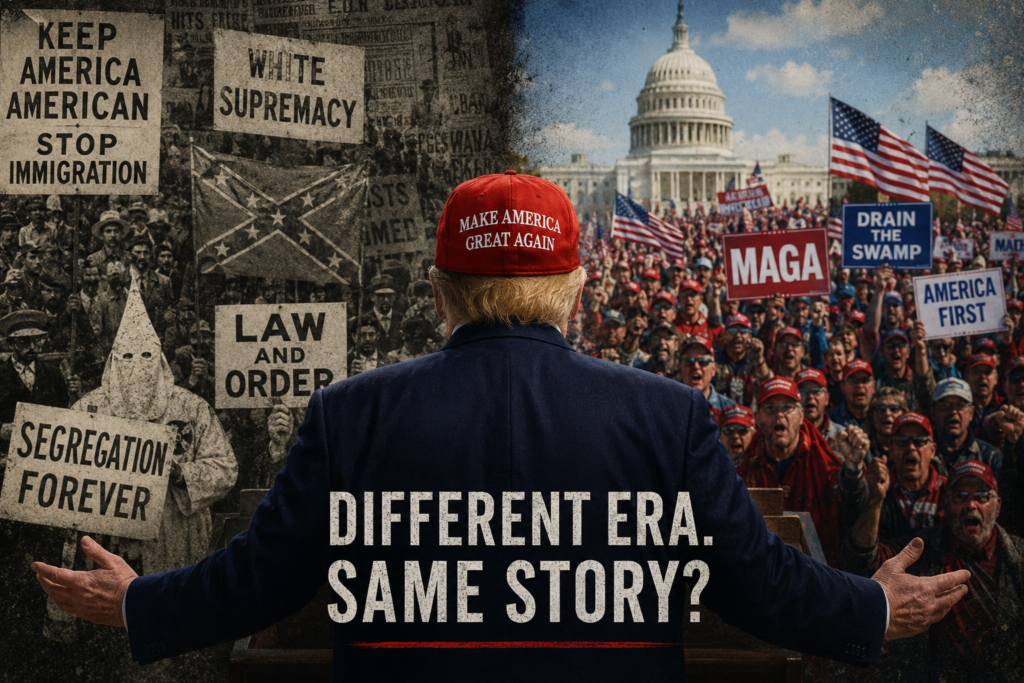

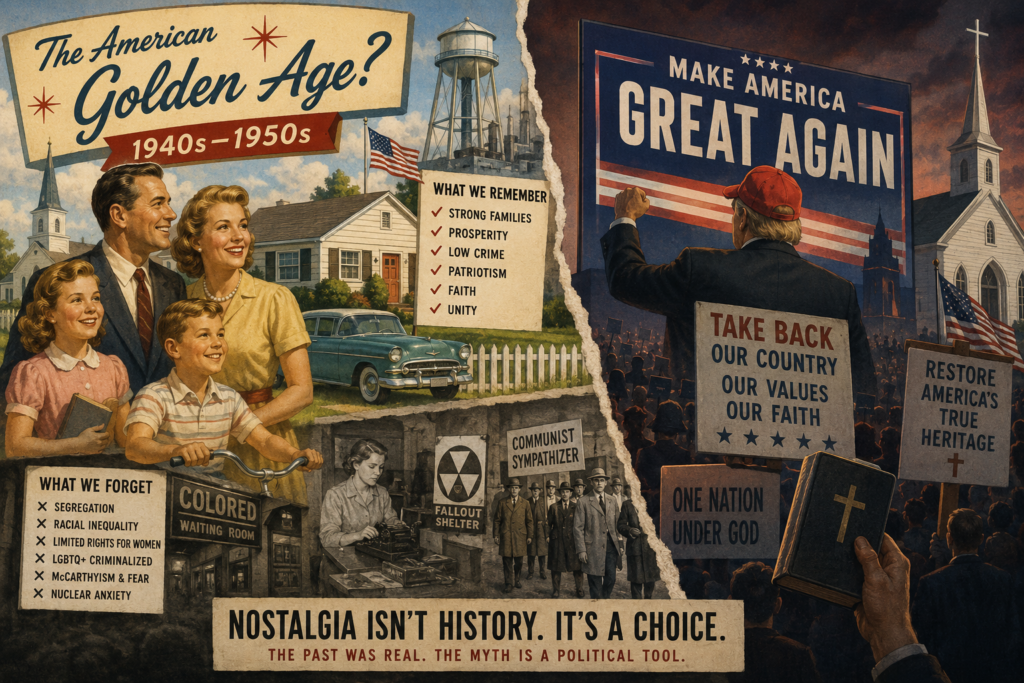

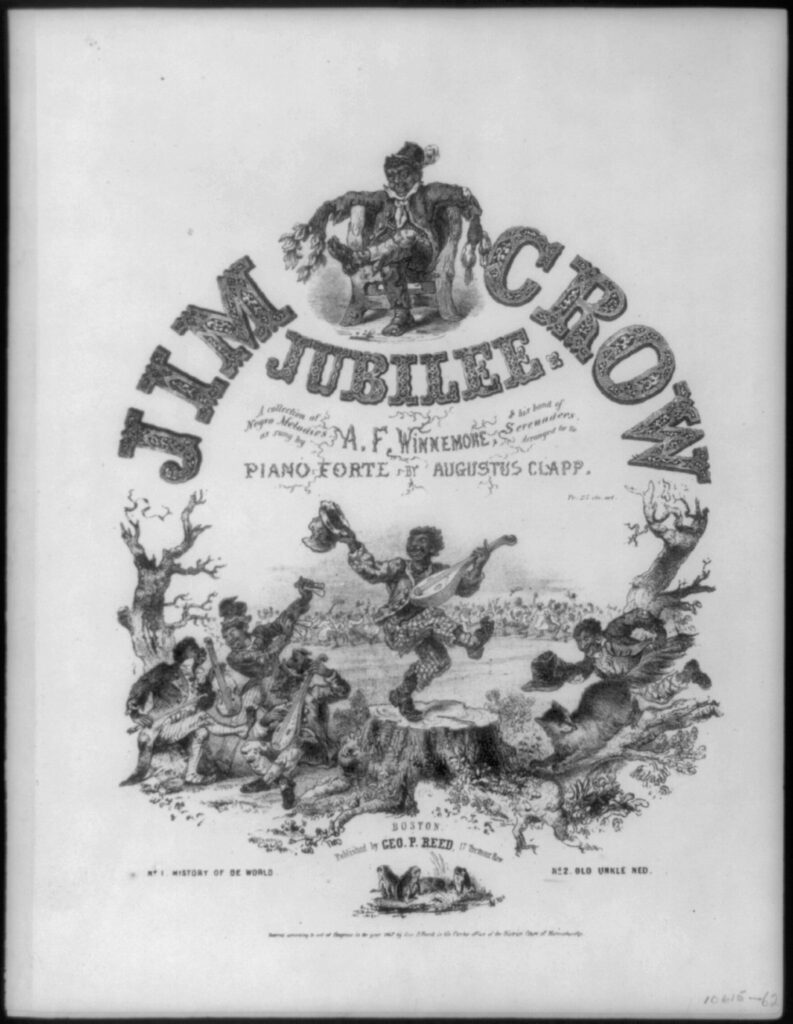
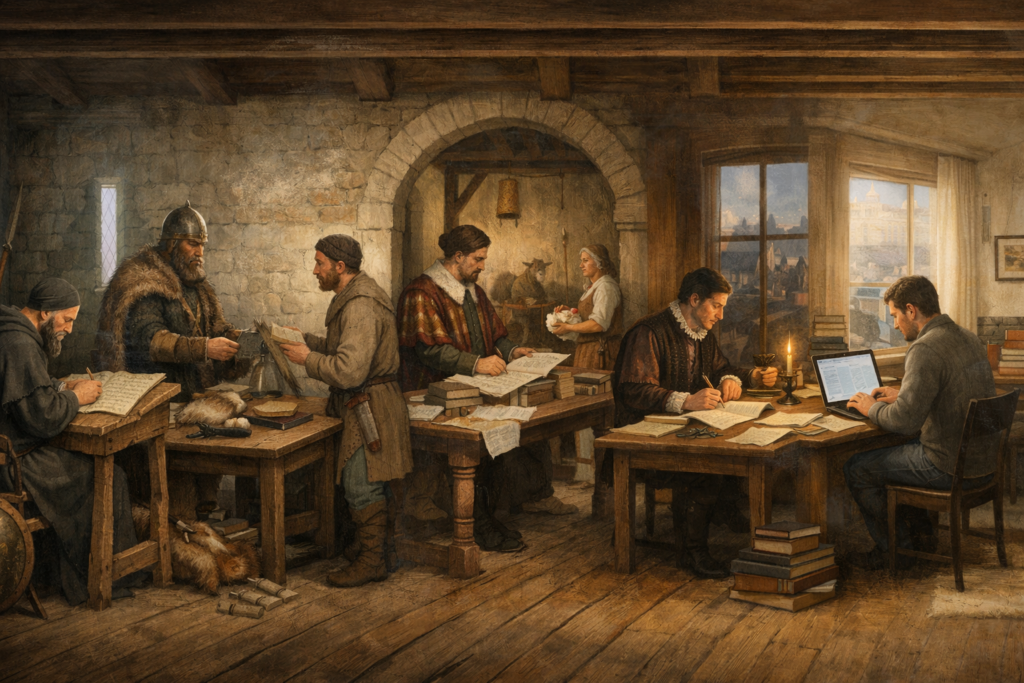

Why Is Everyone Talking About Socialism Again?
By John Turley
On August 22, 2026
In Commentary, Politics
For much of the late twentieth century, “socialism” was almost a forbidden word in American politics. Republicans used it as an accusation, Democrats generally avoided it, and politicians who actually described themselves as socialists occupied a small place on the political fringe.
Things have changed dramatically. Today, politicians on both the right and the left talk about socialism—although they usually mean entirely different things.
On the right, “socialism” has become a broad warning label applied to proposals ranging from universal health insurance to government regulation and higher taxes. On the left, a growing number of politicians and activists have reclaimed the word, associating it with economic equality, stronger labor rights, universal public services, and restraints on corporate power.
The interesting question may be less whether America is becoming socialist than why Americans are suddenly arguing about the meaning of socialism.
Socialism Originally Meant Something Specific
Historically, socialism was not simply another word for government spending. It developed during the nineteenth century largely in response to industrial capitalism. Although socialist thinkers disagreed considerably among themselves, they generally believed that the production resources of society—factories, mines, transportation systems, land, and eventually large corporations—should be owned collectively or controlled by workers rather than by private investors.
Karl Marx advocated a transformation by revolution. Other socialists eventually pursued democratic and parliamentary approaches.
That distinction matters because many policies routinely described as “socialist” in American political debate do not meet the traditional definition at all. A government can tax corporations, regulate banks, provide health insurance, and maintain a generous welfare system while leaving most businesses privately owned. Economists would normally describe such a country as a mixed capitalist economy or social democracy, rather than a socialist economy.
What the American Right Means by Socialism
For many conservatives, socialism has acquired a much broader meaning. The term is frequently applied to policies that increase government involvement in the economy such as progressive taxation, environmental regulation, student-debt relief, subsidized health care, expanded welfare benefits, government-supported child care, or other programs that redistribute income or provide services collectively.
In this usage, socialism is less a precise economic system than a direction of travel. Conservatives argue that as government assumes greater responsibility for allocating resources and providing benefits, individual choice and private markets become less important.
There is a legitimate philosophical argument here. There has always been a debate over where the boundary should lie between private markets and collective responsibility.
But calling every government economic intervention “socialism” stretches the word almost beyond recognition. By that definition, nearly every modern industrial democracy—including the United States—has been partly socialist for generations.
The political usefulness of the word helps explain its persistence. For Americans who remember the Cold War, “socialism” may evoke the Soviet Union, communist Eastern Europe, Cuba, or more recently Venezuela. Calling an opponent socialist therefore does more than criticize a particular tax or health-care proposal. It associates that proposal with an entire political system many Americans regard as oppressive and economically unsuccessful.
Polling illustrates how powerful that association remains. Pew Research Center found in 2022 that only 14 percent of Republicans and Republican-leaning independents had a positive impression of socialism. Republicans were also much more likely than Democrats to associate socialism with restrictions on individual freedom.
What the American Left Means by Socialism
The situation on the left is considerably more complicated because there is no single left-wing definition of socialism.
Many Americans who describe themselves favorably toward “socialism” appear to mean something closer to social democracy: a basically capitalist economy combined with universal health care, stronger unions, affordable higher education, progressive taxation, extensive social insurance, and stronger regulation of corporations.
Their preferred models are often Scandinavian countries such as Denmark and Finland. Yet those countries retain private businesses, private property, financial markets, entrepreneurship, and international corporations. They are heavily regulated capitalist welfare states, not classical socialist economies.
Pew’s research demonstrates this ambiguity. When Americans favorable toward socialism were asked what they liked about it, many emphasized fairness, meeting basic needs, and combining elements of capitalism and socialism rather than eliminating capitalism altogether.
Other people on the American left mean something more substantial when they use the term. The Democratic Socialists of America, for example, explicitly says democratic socialism should go beyond merely regulating capitalism. The organization advocates greater democratic control of workplaces and collective ownership of important parts of the economy, including areas such as energy and transportation. That position is much closer to the traditional meaning of socialism.
Consequently, it is misleading to assume that a liberal Democrat supporting Medicare expansion and a democratic socialist advocating worker control of corporations necessarily have the same economic philosophy.
They may support some of the same immediate policies while disagreeing profoundly about the ultimate economic system they want.
Why Has Socialism Suddenly Returned?
First was the financial crisis of 2008. Younger Americans watched banks and financial institutions receive extraordinary government assistance while millions of ordinary Americans lost jobs, savings, and homes. That experience weakened the assumption that an essentially unregulated market produces fair outcomes.
Then came decades of concern about wage stagnation, college debt, housing affordability, medical expenses, and growing concentrations of wealth. For some younger Americans, “capitalism” increasingly came to mean not neighborhood businesses and entrepreneurship but enormous corporations, billionaires and now trillionaires, expensive housing, and economic insecurity.
Bernie Sanders accelerated the transformation during his presidential campaigns in 2016 and 2020. By openly calling himself a democratic socialist while attracting millions of votes, Sanders helped remove some of the Cold War stigma surrounding the word.
Generational change matters as well. Younger Americans did not experience the Cold War in the same way their parents and grandparents did. Pew found striking age differences in its 2022 survey. Americans under 30 were roughly as likely to have an exclusively positive view of socialism as an exclusively positive view of capitalism. Older Americans remained considerably more favorable toward capitalism.
The political right has responded by emphasizing the word even more strongly. That makes strategic sense. If progressive Democrats increasingly accept the socialist label—or propose policies Republicans can associate with it—Republicans have an incentive to connect those policies with a word that remains deeply unpopular among conservative and many older voters.
The result is a feedback loop: the left talks more about socialism because the word has become less frightening to some voters, while the right talks more about socialism precisely because it hopes to make the word frightening again.
Is America Already Partly Socialist?
The answer depends almost entirely upon our definition.
Under the traditional definition—collective ownership of the means of production—the United States is overwhelmingly capitalist. Most farms, factories, banks, hospitals, restaurants, stores, technology companies, media companies, and other productive enterprises are privately owned.
But America has never operated as a completely laissez-faire capitalist economy either.
The federal government operates Social Security, for example, which the Social Security Administration itself describes as a social insurance program. Workers and employers contribute through payroll taxes, and benefits provide partial income replacement after retirement, disability, or death. About 96 percent of American jobs are covered.
Medicare and Medicaid place government deeply into health-care financing while most hospitals, physician practices, pharmaceutical manufacturers, and medical suppliers remain private.
The government also insures private bank deposits through the FDIC. Deposits at insured banks are generally protected up to $250,000 per depositor, per bank, per ownership category, backed by the federal government.
Public schools, public universities, highways, libraries, police departments, fire departments, water systems, parks, and numerous municipal utilities provide goods and services collectively rather than through ordinary private markets.
The United States even owns or operates certain enterprises directly. The Postal Service, for example, is an independent establishment within the executive branch that provides a nationwide public service while simultaneously operating in a competitive marketplace.
These arrangements contain elements of collective provision, social insurance, public ownership, or economic regulation, but calling all of them “socialism” creates more confusion than clarity.
A public fire department is not evidence that America has adopted a socialist economic system any more than a privately owned grocery store proves that government has no role in the economy.
America Has a Mixed Economy—and Always Has
Perhaps the greatest problem with the current socialism debate is the assumption that capitalism and socialism exist as two completely separate boxes and that a country must choose one or the other. Modern economies rarely work that way.
The United States relies primarily on private ownership, competition, investment, and markets to produce goods and services. At the same time, Americans have repeatedly decided that certain risks and services should be handled collectively.
Even organized labor introduces an element of collective economic power into a capitalist system, although union membership has declined substantially. In 2025, 10 percent of American wage and salary workers belonged to unions, compared with 20.1 percent in 1983.
The real political disagreement is rarely capitalism versus socialism in their pure theoretical forms. It is about where to draw the line between the market and the community.
Should health insurance operate primarily as a commercial product or a public service? Should housing be left largely to market forces or should government intervene to make it more affordable? Should corporations answer primarily to shareholders, or should workers have greater influence over corporate decisions? How progressive should taxation be? Which industries, if any, should be publicly owned? How much inequality should society tolerate in exchange for the incentives created by private enterprise?
A surprising twist is that some of the loudest recent “socialism” accusations are coming from conservatives — aimed at their own president. Since returning to office, the Trump administration has taken direct equity stakes in Intel, secured a “golden share” in U.S. Steel, arranged profit-sharing with Nvidia and AMD on chip sales to China, imposed sweeping tariffs, and directed the Pentagon to prioritize coal — an unprecedented degree of direct federal involvement in private enterprise for a Republican administration. Commentators across the spectrum — from the Council on Foreign Relations to the Wall Street Journal — have reached for terms like “state capitalism” or “state capitalism with American characteristics,” an explicit echo of the Chinese Communist Party’s own “socialism with Chinese characteristics”. One economist with more than three decades of market-watching called it plainly “the most economically interventionist government of my lifetime”.
Those are legitimate political questions. Calling one side “capitalist” and the other “socialist” obscures more than it explains.
The Word May Matter Less Than the Argument
There is one particularly revealing finding in the polling. Americans do not necessarily treat capitalism and socialism as opposites. Pew found people who expressed favorable opinions of both, suggesting that many Americans interpret capitalism as representing markets and opportunity while interpreting socialism as representing economic security and fairness.
That may tell us something important about the current debate. It appears that Americans want the vitality of capitalism tempered by the compassion of socialism.
The renewed interest in socialism doesn’t indicate that millions of Americans suddenly want the government to seize factories and abolish private enterprise. Instead, it reflects dissatisfaction with how the existing economic system distributes opportunity, security, wealth, and political power.
Conservative warnings about socialism often reflect a genuine concern that expanding government responsibility can gradually reduce economic freedom, increase taxation, and shift decisions from individuals and markets toward political institutions.
Those are fundamentally different concerns—and both become difficult to discuss when the same word means entirely different things to the people using it.
The question is not whether America should become “socialist,” it is what kind of capitalism we want.
That argument has been with us throughout American history. Only the vocabulary has changed.
For an additional discussion of the elements of socialism, see my post Three Shades of Left, published on November 10th 2025.
Image generated by author using ChatGPT.
Sources