
Prevention and Awareness
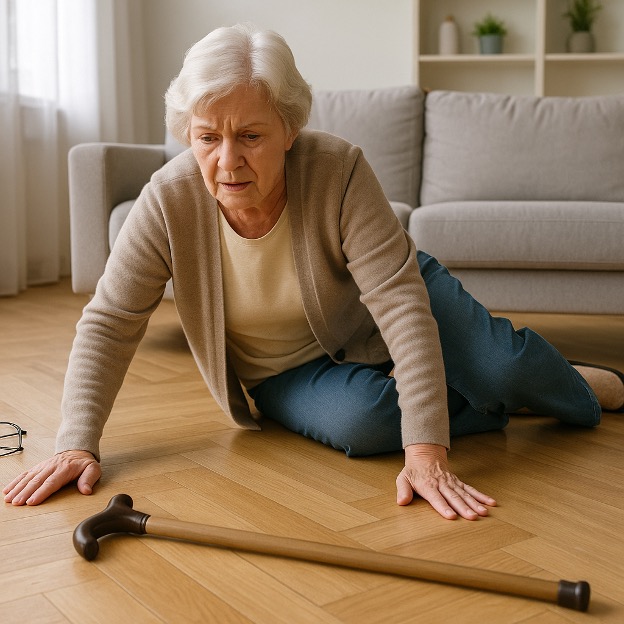
This topic is very personal to me. In the past three years I’ve had two major falls. The first put me on crutches for several weeks. The second resulted in shoulder replacement surgery. I now find myself constantly worried about stairs, curbs, broken pavement, holes and roots in the lawn and many other elements that may put me at risk for another fall. I constantly remind myself that gravity is unforgiving and concrete even less so.
Fortunately, I was wearing my Apple Watch when I fell. I had left my phone on my desk but was able to use my cellular connected watch to call for help. I strongly recommend all seniors to get and wear a smart watch with a fall detector. When you fall it will query you and if you are unable to respond it will send your location to 911. I hope that this article may help you, your family, or your friends understand the increased risk of falling as we age and what we can do to help prevent it.
Falls are one of the most serious and preventable health challenges facing older adults. As we age, the simple act of walking becomes increasingly complex, and what once seemed like a minor stumble can have life-altering consequences. Understanding why falls occur more often in older adults, and knowing how to prevent them, is crucial for maintaining independence and quality of life.
The Startling Statistics
The numbers surrounding elderly falls paint a sobering picture of this health crisis. According to the Centers for Disease Control and Prevention, falls are the leading cause of injury for adults ages 65 years and older. More than 14 million older adults—that’s 1 in 4—report falling every year. These aren’t just minor incidents; they result in significant medical consequences and tragically, often death. Each year, approximately 3 million emergency department visits are directly attributed to older adult falls. The age-adjusted mortality rate from falls has more than doubled from 1999 to 2020, rising from 29.4 to 69.4 per 100,000 adults aged 65 and older.
Here’s What We Can Do
Be Prepared
Never engage in any physical activity alone unless you have some way to summons help, be it a cell phone, a cellular connected smart watch, or best of all, an exercise companion.
Strength and Balance Training
Regular exercise is perhaps the most effective fall prevention strategy. Programs specifically designed for older adults, such as tai chi, yoga, chair aerobics, or structured balance training, can significantly improve stability and reduce fall risk. Strength training helps maintain muscle mass and bone density, while balance exercises enhance proprioception—the body’s awareness of its position in space.
Medication Management
Work closely with your healthcare providers to review all medications. Many falls occur due to medication side effects or interactions. Doctors can often adjust dosages, switch medications, or eliminate unnecessary drugs to reduce fall risk while maintaining treatment effectiveness.
Vision and Hearing Care
Regular eye exams ensure that vision problems are promptly addressed. Updating eyeglass prescriptions, treating cataracts, and managing conditions like glaucoma or macular degeneration can significantly improve safety. Similarly, hearing aids help maintain awareness of environmental sounds that can signal danger.
Check Your Overall Health
Properly managing chronic conditions reduces fall risk. This includes controlling blood sugar in diabetes, managing blood pressure, treating depression, and following treatment plans for neurological conditions. Regular medical check-ups help identify and address health issues before they contribute to falls. It is vitally important that you tell your doctor if you are experiencing falls.
Home Safety Assessment
A thorough home safety evaluation should examine every area where daily activities occur. This includes checking for adequate lighting, removing or securing loose rugs, ensuring stairways have proper handrails, and eliminating clutter from walkways. The bathroom requires special attention to reduce the risk associated with wet surfaces and awkward positioning.
Lighting Improvements
Poor lighting contributes to many falls. Installing brighter bulbs, adding motion-activated lights in hallways and bathrooms, and ensuring light switches are easily accessible can dramatically improve safety. Nightlights help with navigation during nighttime bathroom visits.
Assistive Devices
When mobility becomes compromised, assistive devices can provide crucial support. Canes, walkers, and wheelchairs should be properly fitted by healthcare professionals. Grab bars in bathrooms, raised toilet seats, and shower chairs can make daily activities safer. However, these devices are only effective when used correctly and consistently.
Footwear and Clothing
Proper footwear plays a significant role in fall prevention. Shoes should fit well, have non-slip soles, and provide adequate support. Slippers, socks without grips, and high heels increase fall risk. Clothing should fit properly to avoid tripping hazards while allowing for easy movement.
Pay Attention
Older adults should develop habits of scanning their environment before moving. This includes looking for obstacles, wet surfaces, uneven ground, or changes in lighting. Taking time to assess the safety of a situation before proceeding can prevent many falls. It is also important to avoid rushed movements, especially when hurrying to the bathroom or standing up quickly. Rapid activities may lower our sensitivity to the risk of falls. Take distinct steps; don’t shuffle your feet.
When you first get up in the morning, take a moment to sit on the edge of the bed before standing and then another moment to stand still before moving. This allows your blood pressure and heart rate to catch up with your change in body position. It prevents a drop in blood pressure that can sometimes accompany position change. This is known as orthostatic hypotension and can cause dizziness or even fainting.
Recognizing Personal Limitations
Understanding and accepting changes in physical capabilities are essential. This might mean asking for help with tasks that were once manageable, using assistive devices even when feeling capable, or avoiding activities during times of increased vulnerability, such as when feeling dizzy or tired. Experiencing a fall or even fearing one may cause reduced activity, in turn increasing weakness and instability, further increasing the risk of falls. By recognizing this fear, you can take steps to compensate rather than completely avoid activities or situations.
Alcohol affects elderly citizens more significantly than younger people. As we age, our liver function declines, meaning alcohol is metabolized more slowly, leading to higher blood alcohol concentrations that persist longer, even when the same amount of alcohol is consumed. Age-related changes in brain chemistry make older adults more sensitive to alcohol’s effects on coordination, judgment, and cognitive function, impairing balance and coordination.
Communication with Healthcare Providers
Despite the high incidence of falls, fewer than half of older adults who fall inform their doctor. I will plead guilty to this, after my first fall I was embarrassed to admit it. But I recognized my error and know that open communication about fall experiences, near-misses, and concerns about balance or mobility is crucial. Falling is not shameful; we would not be embarrassed to report chest pain. Healthcare providers can offer valuable insights, resources, and interventions when they are aware of our fall risks.
Conclusion
Falls among elderly adults represent a serious but preventable public health issue. The statistics are sobering, 1 in 4 older adults fall each year and thousands die from fall-related injuries—but the path forward is clear. Through a combination of physical conditioning, medical management, environmental modifications, and increased awareness, the risk of falls can be significantly reduced.
Remember, preventing falls isn’t just about avoiding injury—it’s about preserving the freedom to live life fully and safely. Every step taken toward fall prevention is a step toward a more secure and confident future.







The U.S. Public Health Service: Guardians of America’s Health
By John Turley
On July 3, 2025
In Commentary, History, Medicine
The United States Public Health Service (USPHS) has quietly served as the backbone of the nation’s public health infrastructure for over two centuries. From its beginnings as a maritime medical service to its current role as a comprehensive public health organization, the USPHS has evolved to meet the changing medical challenges facing Americans and to protect and promote the health of the nation.
Origins and Early History
The U.S. Public Health Service traces back to 1798, when President John Adams signed “An Act for the Relief of Sick and Disabled Seamen.” This legislation established the Marine Hospital Service and created a network of hospitals to care for the merchant sailors who served America’s growing maritime commerce. The act represented one of the first examples of federally mandated health insurance, as ship owners were required to pay 20 cents per month per sailor to fund medical care.
The Marine Hospital Service initially operated a series of hospitals in major port cities including Boston, New York, Philadelphia, and Charleston. These facilities served not only sick and injured sailors but also played a crucial role in preventing the spread of infectious diseases that could arrive on ships from foreign ports. This dual function of treatment and prevention would become a defining characteristic of the USPHS mission.
The transformation from the Marine Hospital Service to the modern Public Health Service began in the late 19th century. In 1889, the organization was restructured and placed under the supervision of Dr. John Maynard Woodworth as Supervising Surgeon—later Surgeon General—marking the beginning of its evolution into a more comprehensive public health agency. The name was officially changed to the Public Health and Marine Hospital Service in 1902, and finally to the U.S. Public Health Service in 1912, reflecting its expanded mandate beyond maritime health.
Evolution and Expansion
The early 20th century brought significant expansion to the USPHS mission. The 1906 Pure Food and Drug Act gave the service regulatory responsibilities, leading to the creation of what would eventually become the Food and Drug Administration. During World War I, the USPHS took on additional responsibilities for military health and epidemic control, establishing its role as a rapid response organization for national health emergencies.
The Great Depression and World War II further expanded the service’s scope. The Social Security Act of 1935 created new public health programs administered by the USPHS, while wartime demands led to increased focus on occupational health, environmental health hazards, and the health needs of defense workers. The post-war period saw the establishment of the National Institutes of Health—originally called the Laboratory of Hygiene—as part of the USPHS, cementing its role in medical research.
Major Functions and Modern Roles
Today’s U.S. Public Health Service operates as part of the Department of Health and Human Services and supports major agencies and functions. The service’s mission centers on protecting, promoting, and advancing the health and safety of the American people through several key areas.
Disease Prevention and Health Promotion are the core of USPHS activities. It works with the Centers for Disease Control and Prevention (CDC), to lead national efforts in the prevention and control of infectious and chronic diseases. From tracking disease outbreaks to promoting vaccination programs, the USPHS a part of America’s first line of defense against health threats.
Regulatory and Safety Functions represent other crucial areas. The USPHS coordinates with the Food and Drug Administration (FDA) to ensure the safety and efficacy of medications, medical devices, and food products. It works with the Agency for Toxic Substances and Disease Registry monitoring environmental health hazards. Other USPHS components are involved in regulating everything from clinical laboratories to health insurance portability.
Emergency Response and Preparedness has become increasingly important in recent decades. The USPHS maintains rapid response capabilities for natural disasters, disease outbreaks, and public health emergencies. This includes the deployment of Commissioned Corps officers to disaster zones and the maintenance of strategic national stockpiles of medical supplies.
Health Services for Underserved Populations continues the service’s historic mission of providing care where it’s most needed. The Health Resources and Services Administration oversees community health centers, rural health programs, and initiatives to address health disparities among vulnerable populations. The Indian Health Service is an important part of the USPHS, providing healthcare to often isolated communities.
The Commissioned Corps
One of the most distinctive features of the USPHS is its Commissioned Corps, a uniformed service of over 6,000 public health professionals. Established in 1889, the Corps operates as one of the eight uniformed services of the United States, alongside the armed forces, NOAA Corps, and Coast Guard. Officers hold military-style ranks and wear uniforms, but their mission focuses entirely on public health rather than defense.
The Commissioned Corps provides a ready reserve of highly trained health professionals who can be rapidly deployed to address public health emergencies. From hurricane and disaster relief to pandemic assessment and treatment, Corps officers have served on the front lines of America’s health challenges, providing everything from direct patient care to epidemiological investigation and public health program management.
Contemporary Challenges and Future Directions
The U.S. Public Health Service continues to evolve in response to emerging health challenges. Climate change, antimicrobial resistance, mental health crises, and health equity concerns represent current priorities. The COVID-19 pandemic demonstrated both the critical importance of robust public health infrastructure and the challenges of maintaining public trust in health authorities.
As America faces an increasingly complex health landscape, the USPHS mission of protecting and promoting the nation’s health remains as relevant as ever. From its origins serving sailors in port cities to its current role addressing global health threats, the U.S. Public Health Service continues its quiet but essential work of safeguarding American health, adapting its methods while maintaining its core commitment to serving the public good.
The service’s history shows that effective public health requires not just scientific expertise, but also the institutional ability to respond rapidly to emerging threats, the authority to implement necessary interventions, and the public trust to lead national health initiatives. As new challenges appear, the USPHS continues to build on its more than two-century legacy of service to the American people.