
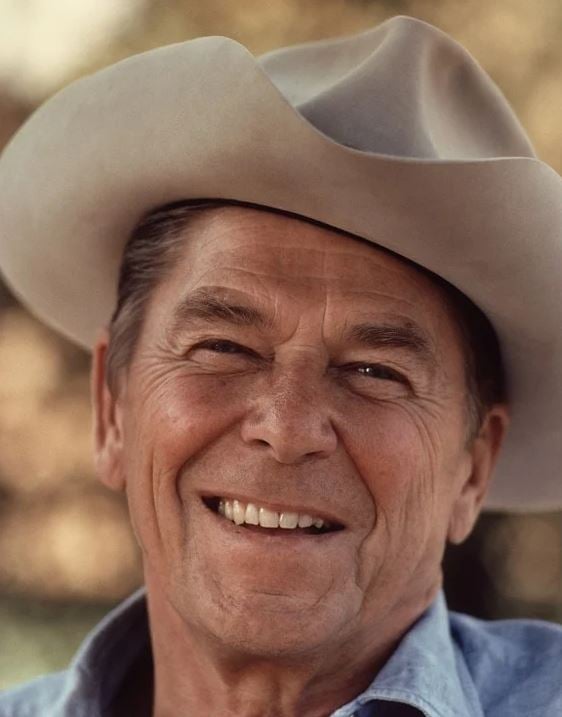
Thoughts on Ronald Reagan and the Current State of the Republican Party
I think Ronald Reagan may have been the best president of the modern era. I know that will make my liberal friends cringe. Additionally, I have recently gained new respect for Clinton and Obama, and I know that will likewise make my conservative friends cringe. I’ve always considered myself to be more conservative than liberal. But I just cannot support the current direction of the Republican Party and now consider myself to be a “Recovering Republican”. I didn’t leave the Republican Party. The Republican Party left me. And I wonder “What would Ronnie think?”
Speculating on what Ronald Reagan might think of the modern Republican Party is risky and involves consideration of his political philosophy, policies, and the values he championed during his presidency from 1981 to 1989.
Key Points of Reagan’s Ideology:
- Conservatism: Reagan was a proponent of traditional conservative values, emphasizing limited government, individual liberties, free markets, and a strong national defense. He likely would have been concerned about the confrontational form of conservativism espoused by many contemporary Republicans.
- Optimism: He often conveyed a sense of optimism about America’s future, believing in the ability of the American people to solve their problems. He would have been concerned about current rhetoric designed to pit Americans against one another.
- Bipartisanship: Reagan worked with Democrats on significant legislation, showcasing a willingness to compromise for the greater good. President Reagan and Tip O’Neill, Speaker of the House, believed that partisanship ended after 6:00 PM and should never be a barrier to friendship.
- Focus on Issues: His presidency was marked by a focus on economic issues, such as tax cuts, deregulation, and a strong anti-communist foreign policy. He likely would have been concerned by the Republican Party’s current often favorable response to the totalitarian governments in both Russia and China.
Speculation on His Views of Today’s GOP:
- Populism vs. Traditional Conservatism: Reagan might be concerned about the rise of populism within the party, which sometimes shifts focus away from traditional conservative principles. He valued ideological coherence over personality-driven politics.
- Divisive Rhetoric: The modern Republican Party has seen an increase in divisive and confrontational rhetoric. Reagan was known for his ability to unite people and might disapprove of the factionalism that can alienate moderate Republicans and independents.
- Economic Policies: Reagan’s foundational economic principles might resonate with today’s emphasis on tax cuts and deregulation. However, he also expressed concern over increasing national debt and the impact of tax cuts without corresponding spending reductions. He was a strong proponent of free trade and believed that it had benefitted the US economy by opening markets and encouraging competition and he played a significant role in establishing trade agreements that laid the basis for the North American Free Trade Act. In contrast, today’s Republican Party is more concerned with protectionist policies and tariffs and creating trade barriers which they believe will somehow benefit the country as a whole.
- Social Issues: Reagan had a more moderate stance on certain social issues than some factions of today’s GOP. He might find the current approach to issues like immigration and LGBTQ+ rights more contentious than his more inclusive positions. He was slow to respond to the AIDS crisis but was not as overtly hostile to the issues as the current GOP. Reagan advocated a restriction of federal funding for abortions but did not back a total ban on abortions.
- Foreign Policy: Given his strong anti-communist stance and emphasis on diplomacy, Reagan may critique some of the modern party’s more isolationist tendencies. He might also be concerned about the current positive approach towards totalitarian regimes.
- Immigration: Reagan had a different approach to immigration than the current GOP. He backed the Immigration Reform and Control Act of 1986 which provided emergency amnesty for approximately 3,000,000 undocumented immigrants. Many of today’s Republicans would label Reagan’s amnesty program as a failure and certainly not one that they would be willing to repeat. Reagan’s policies were aimed at addressing the historic realities of immigration and included provisions for legalization which is currently opposed by most Republicans.
In summary, while Reagan might appreciate certain aspects of the modern Republican Party, such as a commitment to conservative economic principles, he would likely be critical of the divisive politics, populism, and the lack of bipartisan cooperation that he valued. Reagan’s views might resonate with traditional conservatives who still value free market principles. Likely though, they would face pushback from factions within the party that prioritize the nationalist policies. Many Republicans today see Reagan’s approach as outdated or incompatible with their current priorities which emphasize immediate economic protection over long term global engagement. This assessment is speculative, of course, and based on my interpretation of his beliefs and leadership style.
For a deeper dive into Reagan’s legacy, consider reading more from the Ronald Reagan Presidential Foundation (www.reaganfoundation.org)
/



Government Efficiency or Personal Profit?
By John Turley
On December 7, 2024
In Commentary, Politics
I have been giving a lot of thought to the proposed Department of Government Efficiency (DOGE), to be led by Elon Musk and Vivek Ramaswamy. The stated objective is to streamline federal operations by cutting wasteful spending and reducing bureaucracy. Am I the only one who finds it incongruous that they’re going to create an entire bureaucracy to improve government efficiency? How anyone thinks that an entire new government department with all of its attendant rules, regulations, forms, reports and meetings can make things more efficient is beyond me. This reminds me of a project put in place in the late 1970s when I was still in the Marine Corps. Congress passed a law called the Paperwork Reduction Act. As part of that act, were required to submit monthly reports, you guessed it, on paper documenting our reduction in paperwork. I was an administrative plans officer for the Fleet Marine Force Pacific at the time, and the Paperwork Reduction Act generated more paper than any other project that crossed my desk.
One of the things that interests me most about this is the current “bromance” between Donald Trump and Elon Musk. Their personal relationship has had a series of ups and downs over the years. One must wonder how long the King of Trump World and the Center of the Musk Universe will continue to get along.
In 2016, Trump appointed Musk to his Manufacturing Jobs Initiative and Strategic and Policy Forum but within six months Musk resigned from these advisory roles in protest of Trump’s decision to withdraw the U.S. from the Paris Climate Agreement. By 2022, animosity increased when Trump labeled Musk a “bullshit artist,” alleging that Musk had falsely claimed to have voted for him in 2016. Musk responded by suggesting it was time for Trump to “hang up his hat & sail into the sunset.”
Despite past disagreements, their relationship improved significantly by 2024. Musk endorsed Trump’s presidential campaign and contributed tens of millions of dollars through America PAC. Leveraging his ownership of X (formerly Twitter), Musk used the platform to promote Trump’s candidacy and engage with supporters, enhancing the campaign’s digital presence. Following Trump’s election victory, he praised Musk, stating, “We have a new star, a star is born.”
Musk’s leadership of DOGE raises concerns about potential conflicts of interest, given his companies’ extensive dealings with the federal government.
Musk’s ventures, such as SpaceX and Tesla, have historically benefited from substantial government contracts and subsidies. For instance, SpaceX has secured numerous contracts with NASA and the Department of Defense, including a significant agreement with the National Reconnaissance Office to build a network of spy satellites. Additionally, SpaceX’s Starshield program, designed for government use, received its first contract from the U.S. Space Force in September 2023.
Musk has frequently criticized regulators for what he views as unnecessary investigations hindering his companies. His role in DOGE could help protect these contracts from potential budget cuts, ensuring they remain exempt from the initiative’s cost-cutting mission. DOGE’s focus on slashing “excess regulations” could lead to reduced oversight of Musk’s businesses, particularly in areas like Tesla’s self-driving technology safety, labor practices at his companies, and SpaceX’s rocket launch regulations
The very name “DOGE” is, perhaps, a nod to Dogecoin, a cryptocurrency Musk frequently promotes. Attention from this initiative has already caused Dogecoin’s price to increase, potentially benefiting Musk if he holds significant amounts of the currency.
Elon Musk has never been known for his philanthropic endeavors. Even his charitable giving is significantly directed towards his own business or personal enterprises through the Musk Foundation.
Given these existing relationships, Musk’s role in DOGE could potentially influence decisions that benefit his businesses, such as deregulation in sectors where his companies operate or the redirection of government funds toward projects aligned with his interests. However, it’s important to note that DOGE is proposed as an advisory body without direct authority to implement policies. Any recommendations from DOGE should require legislative approval, but that may be bypassed as Trump has indicated his willingness to govern by executive order.
In summary, while DOGE’s mission is to improve government efficiency, Musk’s involvement introduces the possibility of decisions that could favor his enterprises. Perhaps a better name for this organization would be the Department of More Money for Musk.