
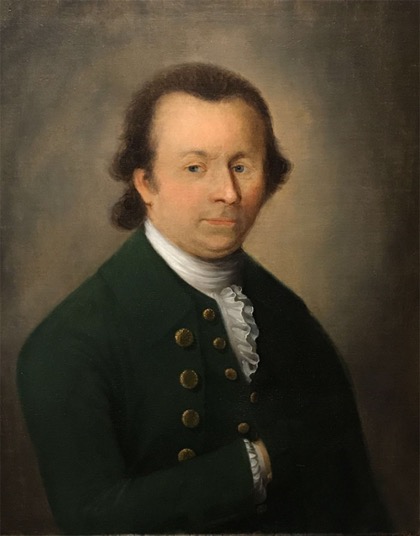
An Almost Forgotten Signer of the Declaration of Independence
History is full of people both little known and unknown who were present at important events. They may have participated, or they may simply have been observers. Understanding them, their lives and their involvement can help us to understand the human aspect of historical events. This is what I love most about history, the stories of average people.
Not long ago, I was looking at a copy of a broadside of the Declaration of Independence when I noticed an intriguing signature — Button Gwinnett. He is one of the lesser-known signers of the Declaration of Independence, yet he played a significant role in the early political landscape of Georgia. His life was a blend of ambition and political maneuvering. His dramatic rise and fall remain intriguing to historians. Even though Gwinnett is little remembered today, his story offers a glimpse into the turbulent period of America’s founding.
Early Life and Migration to America
Button Gwinnett was born in 1735 in Down Hatherley, Gloucestershire, England. He was the son of an Anglican vicar and was named after his mother’s cousin Barbara Button who was also his godmother.
While details about his early education are scarce, it is believed that he received a basic education typical of the English gentry. Gwinnett’s early adulthood was marked by modest success as a merchant. In the 1760s, facing limited opportunities in England and the promise of economic prosperity in the American colonies, Gwinnett and his wife, Ann, emigrated to the New World.
Initially, Gwinnett settled in Charleston, South Carolina, where he engaged in trade. However, he struggled financially, and by 1765, he had relocated to Savannah, Georgia. This move marked not only the beginning of his political career, but also a period of fluctuating fortune. Gwinnett purchased St. Catherine’s Island off the coast of Georgia, hoping to become a successful plantation owner. Unfortunately, he overextended himself financially, and his attempts to establish a profitable business met with failure. Despite his financial setbacks, Gwinnett’s status as a landowner and merchant allowed him to enter the local political scene.
Rise in Politics and Revolutionary Activity
Gwinnett’s involvement in politics grew as tensions between the American colonies and Britain escalated. By the early 1770s, he had become aligned with the growing revolutionary sentiment. In 1775, he was elected to Georgia’s Provincial Congress, where he quickly rose to prominence due to his vocal support for independence from British rule. Although Georgia had initially shown less enthusiasm for independence than colonies like Massachusetts or Virginia, a growing faction of Georgia patriots, including Gwinnett, began advocating for stronger opposition to British rule. By 1776, Gwinnett had become a delegate to the Second Continental Congress.
Continental Congress and the Declaration
On January 20, 1776, Gwinnett left Georgia for Philadelphia to represent the colony in Congress. This appointment marked the pinnacle of his political career and placed him at the center of the deliberations for American independence. His journey to Philadelphia came at a crucial moment when the Continental Congress was moving toward a formal declaration of independence.
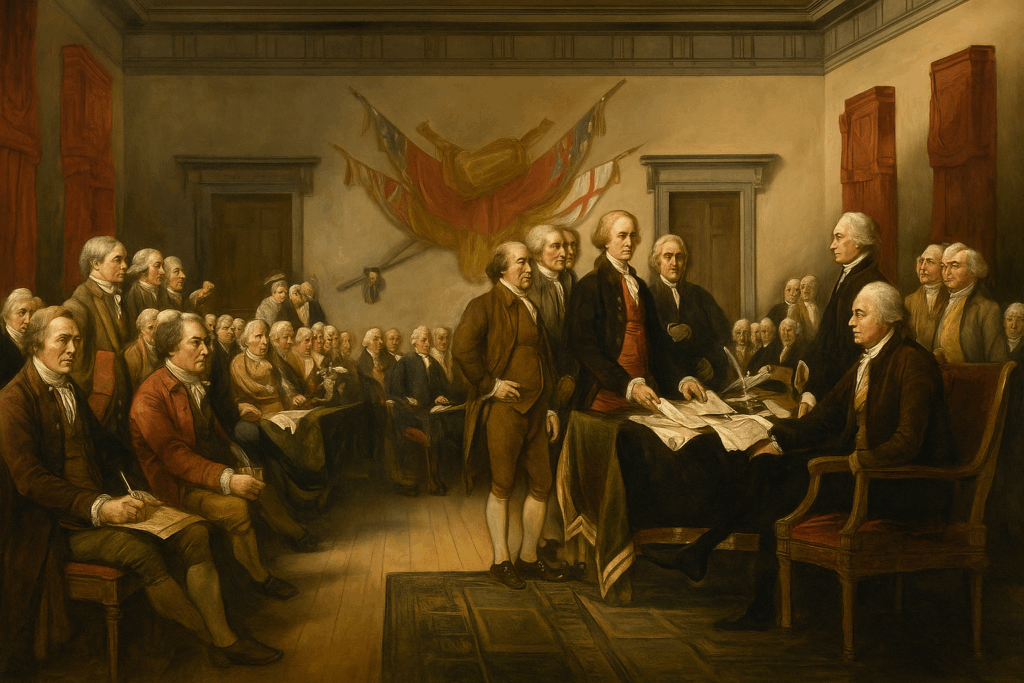
Gwinnett voted for independence on July 2, voted to approve the declaration on July 4, and signed his name to the parchment of the Declaration of Independence on August 2. Out of the 56 delegates who signed the Declaration, Button was one of only 8 who were born in Britain. His British birth added a unique perspective to his role as a Founding Father, representing the immigrant experience that was central to colonial American society.
His signing of the Declaration of Independence would later make his signature one of the most valuable autographs in American history. Gwinnett is known chiefly because his autographs are extremely rare and collectors have paid dearly to obtain one. (In 2001 one of his 36 known autographs sold at public auction for $110,000. Since then, several others have been documented.)
Conflict and Power Struggles in Georgia
Back in Georgia, Gwinnett became embroiled in a power struggle with General Lachlan McIntosh, a prominent figure in the colony’s revolutionary army. The conflict between Gwinnett and McIntosh was fueled by political rivalry and personal animosity. Gwinnett aspired to leadership positions within Georgia’s government and military, and in March 1777, he became acting president of Georgia’s Revolutionary Council after the sudden death of Governor Archibald Bulloch.
During his brief tenure as acting council president, Gwinnett’s leadership was controversial. He proposed a bold military expedition against British-controlled East Florida, intending to bolster his political standing and secure Georgia’s borders. However, the campaign was poorly executed, and it ended in failure. This debacle intensified the feud between Gwinnett and McIntosh, with each blaming the other for the military defeat.
Gwinnett’s promising political career was cut short by an ongoing personal conflict that became intertwined with the honor culture of the American South. The rivalry between Gwinnett and McIntosh reached its climax in May 1777. After a series of public insults—McIntosh called Gwinnett a “scoundrel and lying rascal,” Gwinnett responded by challenging him to a duel. Dueling, though technically illegal, was still a common way to resolve disputes among gentlemen of the period. On May 16, 1777, the two men faced each other with pistols in a pasture near Savannah. Both were wounded, but only Gwinnett’s injuries proved fatal. He died three days later, at age 42, and was buried in Savannah’s Colonial Park Cemetery, though the exact location of his grave is still unknown.
Legacy and Historical Significance
Gwinnett’s legacy is visible in his namesake Gwinnett County, one of Georgia’s most populous counties, a tribute to his contributions to the state’s early political history.
In recent decades, historians have taken a renewed interest in Button Gwinnett, examining his role beyond the narrow context of his duel and signature. While he lacked the fame of other founding fathers, Gwinnett’s political maneuvering and his role during the revolutionary period highlight the complexities of early American politics. His rivalry with McIntosh reflects the deep divisions and regional conflicts that existed even among those who supported independence.
Gwinnett’s life also underscores the risks faced by those who ventured into the revolutionary cause. Unlike many of his contemporaries who enjoyed long, celebrated careers, Gwinnett’s story is one of a meteoric rise and abrupt fall. His legacy, while overshadowed by more prominent figures, is a reminder of the many lesser-known men and women who played vital roles in America’s fight for independence.
Button Gwinnett’s life was marked by ambition, conflict, and an untimely death that left him as one of the more obscure figures of the American Revolution. His contributions to the independence movement in Georgia were significant, even if his political career was cut short. Today, Gwinnett’s name lives on in Georgia’s geography, and his autograph serves as a rare artifact of a fleeting yet impactful moment in history.
Sources:
· National Archives: Declaration of Independence Signers – https://www.archives.gov/founding-docs/signers
· The Georgia Historical Society: Biography of Button Gwinnett – https://georgiahistory.com
· Smithsonian Magazine: The Rare Autograph of Button Gwinnett – https://www.smithsonianmag.com
· Library of Congress: Early American Biographies – https://www.loc.gov





The U.S. Public Health Service: Guardians of America’s Health
By John Turley
On July 3, 2025
In Commentary, History, Medicine
The United States Public Health Service (USPHS) has quietly served as the backbone of the nation’s public health infrastructure for over two centuries. From its beginnings as a maritime medical service to its current role as a comprehensive public health organization, the USPHS has evolved to meet the changing medical challenges facing Americans and to protect and promote the health of the nation.
Origins and Early History
The U.S. Public Health Service traces back to 1798, when President John Adams signed “An Act for the Relief of Sick and Disabled Seamen.” This legislation established the Marine Hospital Service and created a network of hospitals to care for the merchant sailors who served America’s growing maritime commerce. The act represented one of the first examples of federally mandated health insurance, as ship owners were required to pay 20 cents per month per sailor to fund medical care.
The Marine Hospital Service initially operated a series of hospitals in major port cities including Boston, New York, Philadelphia, and Charleston. These facilities served not only sick and injured sailors but also played a crucial role in preventing the spread of infectious diseases that could arrive on ships from foreign ports. This dual function of treatment and prevention would become a defining characteristic of the USPHS mission.
The transformation from the Marine Hospital Service to the modern Public Health Service began in the late 19th century. In 1889, the organization was restructured and placed under the supervision of Dr. John Maynard Woodworth as Supervising Surgeon—later Surgeon General—marking the beginning of its evolution into a more comprehensive public health agency. The name was officially changed to the Public Health and Marine Hospital Service in 1902, and finally to the U.S. Public Health Service in 1912, reflecting its expanded mandate beyond maritime health.
Evolution and Expansion
The early 20th century brought significant expansion to the USPHS mission. The 1906 Pure Food and Drug Act gave the service regulatory responsibilities, leading to the creation of what would eventually become the Food and Drug Administration. During World War I, the USPHS took on additional responsibilities for military health and epidemic control, establishing its role as a rapid response organization for national health emergencies.
The Great Depression and World War II further expanded the service’s scope. The Social Security Act of 1935 created new public health programs administered by the USPHS, while wartime demands led to increased focus on occupational health, environmental health hazards, and the health needs of defense workers. The post-war period saw the establishment of the National Institutes of Health—originally called the Laboratory of Hygiene—as part of the USPHS, cementing its role in medical research.
Major Functions and Modern Roles
Today’s U.S. Public Health Service operates as part of the Department of Health and Human Services and supports major agencies and functions. The service’s mission centers on protecting, promoting, and advancing the health and safety of the American people through several key areas.
Disease Prevention and Health Promotion are the core of USPHS activities. It works with the Centers for Disease Control and Prevention (CDC), to lead national efforts in the prevention and control of infectious and chronic diseases. From tracking disease outbreaks to promoting vaccination programs, the USPHS a part of America’s first line of defense against health threats.
Regulatory and Safety Functions represent other crucial areas. The USPHS coordinates with the Food and Drug Administration (FDA) to ensure the safety and efficacy of medications, medical devices, and food products. It works with the Agency for Toxic Substances and Disease Registry monitoring environmental health hazards. Other USPHS components are involved in regulating everything from clinical laboratories to health insurance portability.
Emergency Response and Preparedness has become increasingly important in recent decades. The USPHS maintains rapid response capabilities for natural disasters, disease outbreaks, and public health emergencies. This includes the deployment of Commissioned Corps officers to disaster zones and the maintenance of strategic national stockpiles of medical supplies.
Health Services for Underserved Populations continues the service’s historic mission of providing care where it’s most needed. The Health Resources and Services Administration oversees community health centers, rural health programs, and initiatives to address health disparities among vulnerable populations. The Indian Health Service is an important part of the USPHS, providing healthcare to often isolated communities.
The Commissioned Corps
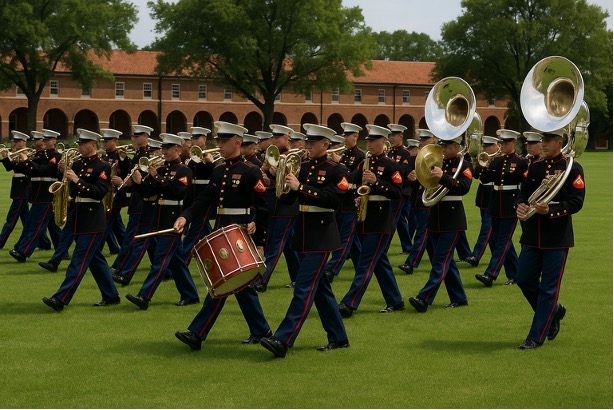
One of the most distinctive features of the USPHS is its Commissioned Corps, a uniformed service of over 6,000 public health professionals. Established in 1889, the Corps operates as one of the eight uniformed services of the United States, alongside the armed forces, NOAA Corps, and Coast Guard. Officers hold military-style ranks and wear uniforms, but their mission focuses entirely on public health rather than defense.
The Commissioned Corps provides a ready reserve of highly trained health professionals who can be rapidly deployed to address public health emergencies. From hurricane and disaster relief to pandemic assessment and treatment, Corps officers have served on the front lines of America’s health challenges, providing everything from direct patient care to epidemiological investigation and public health program management.
Contemporary Challenges and Future Directions
The U.S. Public Health Service continues to evolve in response to emerging health challenges. Climate change, antimicrobial resistance, mental health crises, and health equity concerns represent current priorities. The COVID-19 pandemic demonstrated both the critical importance of robust public health infrastructure and the challenges of maintaining public trust in health authorities.
As America faces an increasingly complex health landscape, the USPHS mission of protecting and promoting the nation’s health remains as relevant as ever. From its origins serving sailors in port cities to its current role addressing global health threats, the U.S. Public Health Service continues its quiet but essential work of safeguarding American health, adapting its methods while maintaining its core commitment to serving the public good.
The service’s history shows that effective public health requires not just scientific expertise, but also the institutional ability to respond rapidly to emerging threats, the authority to implement necessary interventions, and the public trust to lead national health initiatives. As new challenges appear, the USPHS continues to build on its more than two-century legacy of service to the American people.