There it sits in a climate-controlled room in Philadelphia, drawing roughly 1.5 million visitors a year — a 2,080-pound bronze bell with a crack running through it that everyone recognizes and almost no one fully understands. The Liberty Bell is arguably the most mythologized object in American history, which is saying something in a country that has turned its founding era into something close to civic religion.
But here’s the thing: the myths aren’t just harmless embellishments. Many of the most beloved stories about the Liberty Bell — when it rang, why it cracked, how it got its name — turn out to be products of 19th-century fiction writers, political activists, and the particular American genius for turning complicated history into a clean, inspirational tale about how a relatively obscure object became one of the most powerful symbols in American culture.
Before It Was the Liberty Bell
Let’s start with a basic fact that surprises most people: the bell wasn’t originally called the Liberty Bell at all. For the better part of a century, it went by the rather mundane name of the State House Bell, because that’s exactly what it was, the bell that hung in the steeple of the Pennsylvania State House, now known as Independence Hall.
The bell was commissioned in 1751 by the Pennsylvania Provincial Assembly to mark the 50th anniversary of William Penn’s 1701 Charter of Privileges, Pennsylvania’s founding constitutional document. It was cast by the Whitechapel Bell Foundry in London and arrived in Philadelphia in 1752. The inscription it carried — “Proclaim LIBERTY Throughout all the Land unto all the Inhabitants Thereof” — comes from Leviticus 25:10, a biblical passage about the Jubilee Year, during which debts were forgiven and slaves were freed. It was selected by Quaker Isaac Norris, speaker of the Assembly, as a fitting tribute to Penn’s legacy of religious tolerance.
The bell didn’t become the Liberty Bell until the 1830s, when anti-slavery activists seized on that Leviticus inscription as a powerful rallying cry. It first appeared as the “Liberty Bell” in an 1835 abolitionist publication, and the name was subsequently popularized through William Lloyd Garrison’s The Liberator. Ironically, the object that Americans associate most with the founding of a free nation earned its famous name not from the Revolution, but from the fight to end slavery, a cause the Revolution had conspicuously left unfinished.
Did It Actually Ring on July 4th?
Here’s the myth most Americans carry around: the Liberty Bell rang out joyfully on July 4, 1776, to announce the adoption of the Declaration of Independence. It’s a great image. Practically cinematic. And historians are fairly confident it didn’t happen.
The problem is straightforward: the Declaration wasn’t publicly announced on July 4th. The Continental Congress voted on independence, but the first public readings of the Declaration didn’t take place until four days later, on July 8, 1776. It was on that date that Philadelphians gathered to hear the document read aloud and yes, bells around the city were reportedly rung in celebration. Whether the State House Bell was among them is genuinely unknown.
There’s an additional wrinkle: historians believe the State House steeple was in poor condition at the time, possibly too deteriorated to support bell-ringing. As John C. Paige noted in a historical study for the National Park Service, there simply is no way to confirm whether the steeple was structurally sound enough to ring the bell that day.
So where did the famous image of the bell ringing on the Fourth come from? Mostly from one man: a journalist named George Lippard. In January 1847, he published a short story in the Saturday Courier depicting an elderly bellman waiting anxiously in the steeple, doubting that Congress would have the courage to declare independence, until his grandson bursts in crying “Ring, Grandfather! Ring!” It was fiction and was presented as fiction, but it was republished repeatedly, eventually winding up in history books and school primers as if it were fact. That’s how myths work.
The Mystery of the Crack
The crack is the bell’s most defining feature, and its origin is almost as murky as the ringing story. What we know for certain is that the bell has cracked multiple times.
The first crack came almost immediately — the bell cracked during its initial testing after arriving in Philadelphia in 1752. It was judged unusable and recast twice by local metalworkers John Pass and John Stow (whose names you can still see on the bell today). Their second casting is what we look at today.
The later, more famous crack, the wide fissure visible in every photograph, developed sometime in the first half of the 19th century after roughly 90 years of use. Popular tradition long held that the bell cracked in 1835 while tolling for the funeral of Chief Justice John Marshall. It’s a great story but historians largely reject it. The evidence points more convincingly to February 1846, when the bell was rung to celebrate Washington’s Birthday. In an attempt to prevent the crack from spreading, metalworkers widened it — a repair technique of the era and ironically created the wide, distinctive fissure we recognize today. The repair didn’t hold, and the bell has been silent ever since.
The Road Trip Nobody Talks About
This is the part of the Liberty Bell’s history that tends to get overlooked in favor of the Revolutionary founding mythology. Between 1885 and 1915, the cracked bell was loaded onto railroad cars and sent on seven separate tours around the United States, stopping in cities and towns so that ordinary Americans could see it up close.
The post-Civil War tours were explicitly about national healing. After the devastation of that war, the Liberty Bell became a symbol of unity: a reminder of something Americans had once fought for together. Crowds mobbed the bell at every stop. In Biloxi, Mississippi, Jefferson Davis, the former President of the Confederacy, visited the bell and gave a speech calling for national unity. That’s a remarkable image: the Confederacy’s leader paying homage to a symbol of American liberty. Whatever you make of his sincerity, it illustrates how powerfully the bell had been woven into the country’s emotional fabric.
The 1915 tour to San Francisco was the last. By then it was clear the bell’s condition couldn’t withstand further travel, and it has stayed in Philadelphia ever since.
Movements, Meanings, and the Justice Bell
One of the most interesting things about the Liberty Bell’s history is how many different movements claimed it as their own. After abolitionists gave it its name, suffragists were next. In 1915, the Pennsylvania Woman Suffrage Association commissioned a replica called the Justice Bell, with the same inscription as the Liberty Bell but two extra words — “establish justice” — borrowed from the Preamble to the Constitution. The clapper was chained so it couldn’t ring, symbolizing women’s silenced political voice. When the 19th Amendment passed in 1920, the Justice Bell finally rang at Independence Hall. It’s now at the Washington Memorial Chapel at Valley Forge.
Later in the 20th century, civil rights activists gathered at the Liberty Bell. It became a backdrop for Cold War messaging about American freedom. During the 1960s it was a site for protests of various kinds. The bell has proven remarkably elastic as a symbol — capable of representing almost any cause that frames itself in the language of liberty.
What’s Actually True
To be fair, some important facts about the Liberty Bell are both true and underappreciated. It did ring for significant events during its functional lifetime — not just vaguely, but for specific occasions: the signing of the Constitution, and the deaths of Benjamin Franklin, George Washington, Alexander Hamilton, and Thomas Jefferson. It was genuinely used for decades as a civic alarm clock, summoning legislators to session and citizens to public meetings.
And when the British occupied Philadelphia in 1777, Patriots really did smuggle the bell out of the city, along with other bells, and hide it in the floorboards of the Zion Reformed Church in Allentown, Pennsylvania. The concern was legitimate. British forces routinely seized metal church bells and melted them down for cannon shot. The Liberty Bell sat hidden there for nearly a year before returning to Philadelphia after the British withdrew.
The Bell We Deserve
The real lesson of the Liberty Bell’s history might be this: the gap between its legend and its reality says as much about American culture as the bell itself does. Americans in the 19th century needed a tangible symbol of their founding ideals, and the bell, already old, already cracked, already inscribed with a verse about proclaiming liberty, was right there waiting to be mythologized.
The abolitionists who named it, the fiction writer who gave it its most famous story, and the railroad men who carted it around the country in the 1880s were all, in their different ways, helping to construct a national icon that could absorb whatever freedom meant in their particular moment. The Liberty Bell is not important because it rang at a specific hour in 1776—there is little evidence that it did. It is important because Americans, over generations, chose to invest it with meaning. That’s not a cynical observation. It’s inspiring that a cracked, imperfect bell became the symbol of a cracked, imperfect republic still trying to live up to its inscription.
How Young Riders Are Turning E-Bikes Into Motorcycles — And Paying the Price
Walk around any suburban neighborhood, school parking lot, or boardwalk on a warm afternoon, and you’ll spot them — teenagers zipping past on e-bikes that look suspiciously like small motorcycles. They’re leaning into the throttle, barely touching the pedals, weaving through traffic with the confidence of experienced riders and the inexperience of kids who’ve never had a driver’s license. It’s a scene playing out all across America, and it’s landing more and more young people in emergency rooms.
E-bikes — short for electric bicycles — have exploded in popularity. According to the American College of Surgeons, more than 1.1 million e-bikes were sold in the United States in 2022, with projected annual growth of around 10 percent. They’re cheaper than cars, faster than regular bicycles, and — crucially — they don’t require a driver’s license or registration in most states. For teenagers who can’t yet get behind the wheel of a car, an e-bike can feel like the next best thing. Sometimes it’s marketed that way, too.
But the gap between what parents think they’re buying and what these machines can do is widening dangerously and regulators, pediatricians, and trauma surgeons are all sounding the alarm.
A Classification System Built for Adults, Ignored by Kids
Under federal guidelines, e-bikes fall into three classes. Class 1 bikes use pedal assist — the motor only kicks in when the rider is actually pedaling, and it cuts out at 20 mph. Class 2 bikes come with a throttle, meaning the motor engages without any pedaling at all, topping out at 20 mph. Class 3 bikes are pedal-assist only but allow speeds up to 28 mph. The American College of Surgeons and most safety advocates have noted that Class 2 bikes — the ones with throttles — most closely resemble mopeds in how they really function.
The throttle is the key word here. On a Class 2 e-bike, a rider can twist the grip, lean back, and let the motor do everything. There’s no need to pedal. No need to exert any physical effort. The bike simply goes. A teenager who’s never ridden anything faster than a 10-speed now has access to a motor vehicle — because legally, in most states, that’s not what it’s called.
Some e-bikes complicate things further by allowing riders to toggle between classes, sometimes without the rider or parent even knowing it. A California lawsuit alleged that one manufacturer falsely marketed a bike as Class 2 when it could easily be switched to Class 3 operation. Colorado state lawmaker Lesley Smith, who co-sponsored legislation addressing this, put it plainly: “The biggest issue is e-bikes that switch from a power-assisted bike to essentially a motorized scooter.”
And then there are outright counterfeits and gray-market products — machines marketed as e-bikes that are functionally electric motorcycles. Researchers at the American College of Surgeons noted that some controllers can be deactivated by a magnet or a few keystrokes, unlocking speeds above 37 mph. Conversion kits available online can boost motors to more than 1,000 watts — well above federal limits. These aren’t bicycles by any meaningful definition, but they’re being sold and ridden as if they were.
Nobody’s Pedaling — And That’s the Point
Ask any parent who’s watched their kid ride an e-bike for more than five minutes and they’ll tell you: the pedals are mostly decorative. Young riders, especially those on throttle-equipped Class 2 models, are operating these bikes like mini motorcycles — right hand on the throttle, both feet tucked back, no pedaling whatsoever. It’s intuitive, it’s fun, and it’s exactly what the design invites them to do.
Manufacturers market throttle operation openly. One company describes it this way: “Throttle mode lets you control speed with a handlebar twist or button, requiring no pedaling — similar to a motorcycle.” Another notes the throttle “works like a regular throttle on a motorcycle.” The pitch is freedom and convenience. What isn’t mentioned in the branding is the risk profile that comes along with operating a motor vehicle without any training, licensing requirement, or mandatory safety course.
The legal fiction that these are bicycles and therefore unregulated as motor vehicles is doing a lot of heavy lifting for the industry. E-bikes are not subject to the same federal oversight as motorcycles or mopeds. No driver’s license is required. No registration. No insurance. In most states, no helmet is mandated for adult riders. A 12-year-old can, in many jurisdictions, legally operate a machine that travels at 20-28 mph through traffic, with zero formal training.
KFF Health News, reporting in late 2025, found that federal oversight of e-bike safety has largely stalled, leaving a patchwork of state and county rules that vary wildly. More than half the states now restrict who can ride Class 3 bikes, but Class 2, the throttle-equipped, motorcycle-operation models that require zero pedaling, often has far lighter age restrictions, if any.
The Injury Numbers Are Alarming — and Getting Worse
Trauma surgeons across the country are watching the data accumulate with growing alarm. At Penn State Health Children’s Hospital, doctors treated more children for e-bike and e-scooter injuries in 2025 than in the prior three years combined. At Connecticut Children’s Medical Center, pediatric e-bike injuries nearly tripled in just one year, from 32 cases in the first half of 2024 to 92 during the same period in 2025. In May and June of 2025 alone, the Connecticut hospital saw 25 injuries, compared to just 3 the year before.
The injuries themselves tell the story. Dr. James Dodington of Yale Medicine described an “explosion” in serious pediatric trauma, saying that patients are arriving with injuries more consistent with motorcycle accidents than bicycle falls: severe head trauma, facial fractures, internal bleeding. This is confirmed an American College of Surgeons report that e-bike injuries are more severe than standard bicycle injuries, and that the rate of such injuries is increasing every year.
Perhaps the most striking data point comes from Marin County, California, where health officials found that children between ages 10 and 15 who crash their e-bikes require an ambulance at five times the rate of other age groups involved in e-bike crashes. These aren’t minor spills. These are serious, life-altering events.
Why Young Riders Are Especially at Risk
It’s not just that kids are riding fast machines — it’s that adolescent brains are not yet wired for the kind of risk assessment that operating a motor vehicle demands. The prefrontal cortex, which governs impulse control and judgment, is still developing well into a person’s mid-twenties. The American Academy of Pediatrics advises that children under 16 should not operate motorized e-bikes at all.
Research consistently shows that young riders under 25 take the most risks on e-bikes and e-scooters and are also four times more likely to engage in risky behavior. Add to that the social dynamics of adolescence — showing off for friends, going faster than is wise, taking shortcuts through traffic — and the risk profile compounds quickly.
Helmet use is another major gap. Research published in JAMA Surgery found that e-bike riders without helmets were nearly twice as likely to sustain head injuries as those who wore them. And yet helmet use among young e-bike riders remains inconsistent, often because helmets aren’t legally required for them and because the cultural norm for e-biking hasn’t caught up with the reality of what these machines can do. For Class 3 speeds of 28 mph, many safety experts now recommend motorcycle-rated helmets rather than standard bike helmets — a recommendation that most young riders have not heard of and probably wouldn’t follow anyway.
Distraction compounds the danger further. Dr. Bryanna Emr, director of pediatric trauma surgery at Penn State, noted that many riders have headphones on or are looking at their phones while riding — a behavior that is dangerous on a regular bicycle and potentially fatal on a machine traveling at near highway speeds without the safety cage of a car.
The Regulatory Gap: No One Is Clearly in Charge
Part of what makes this problem so difficult to solve is that e-bikes fall between regulatory agencies in a frustrating way. The Consumer Product Safety Commission oversees products sold to consumers, while the National Highway Traffic Safety Administration governs motor vehicles. E-bikes, classified legally as bicycles, fall primarily under CPSC — but the existing standards were written for traditional pedal bicycles and have been acknowledged as inadequate for e-bikes. Parents should also be aware that some bikes marketed as Class 2 can be easily toggled into higher-speed Class 3 operation — sometimes without the rider even realizing it.
Meanwhile, the regulatory landscape at the state level is a true patchwork. Some states follow the three-class system in full. Others have partial adoptions. A few set minimum ages for Class 3 bikes. Some localities have taken things into their own hands — Marin County in California, for instance, has banned children under 16 from operating Class 2 e-bikes entirely. Colorado, Minnesota, and Utah passed new laws in 2025 addressing battery fire risks and attempting to distinguish legal e-bikes from the faster “e-motos” that are being sold under the e-bike label.
The American College of Surgeons issued a formal statement in June 2025 calling for clearer federal definitions, age-based restrictions, mandatory helmet requirements, and enforcement against illegally modified bikes. The statement noted that e-bikes should be classified based on their maximum obtainable speed on flat ground — not just their advertised class — and that speed unlocks and modification kits need to be regulated or banned.
For the moment, the fastest-moving part of this landscape is the injury statistics, which are outpacing the regulatory response at an escalating rate.
What Parents and Policymakers Should Know
If you’re a parent considering an e-bike for a child who’s still years away from a driver’s license, here’s what the evidence says: the machine your child will operate is functionally a motorized vehicle. A throttle-equipped model requires no pedaling, no physical effort, and no prior training. At speeds of 20-28 mph, a crash produces injuries more similar to a motorcycle accident than a bicycle tumble. And the regulatory system, for now, is not keeping pace with the technology.
From a policy standpoint, the calls from the medical and trauma community are consistent: age-based federal minimums, mandatory helmet laws for all e-bike riders, clearer definitions that separate true bicycles from what are functionally motor vehicles, and enforcement mechanisms restricting conversion kits that bypass speed limiters.
Until those protections exist, the gap between a child’s excitement about a new e-bike and the reality of what that machine can do will keep filling emergency rooms.
How Trump Turned the Department of Justice into a Tool of Personal Revenge
There is an old maxim in law: fiat justitia ruat caelum — let justice be done though the heavens fall. It reflects the principle that the law belongs to everyone equally and is not meant to serve personal grudges. Critics argue that Donald Trump’s second administration has embraced a very different view: that the Department of Justice can be used to pursue those who have challenged, investigated, or defeated him.
This is not simply a partisan accusation. It is based on a pattern in which Trump publicly identifies enemies and calls for action against them, followed by Justice Department investigations or prosecutions. The targets have included former administration officials, prosecutors, election experts, and individuals who prevailed against Trump in court.
The Guardrails Come Off
Trump’s first term provided occasional glimpses of this tendency, but institutional resistance often limited its reach. His second term began with far fewer constraints.
The selection of Pam Bondi as attorney general was widely viewed as a signal that loyalty would take precedence over the traditional independence of the Justice Department. During her confirmation hearing, Bondi declined to assure senators that the White House would remain separate from prosecutorial decision-making. That exchange foreshadowed what followed.
Within months, Trump directed investigations into former administration officials Miles Taylor and Christopher Krebs. Taylor had authored the anonymous 2018 op-ed describing internal resistance within the administration. Krebs, Trump’s former cybersecurity chief, had publicly stated that the 2020 election was secure. Trump accused Taylor of “treason” while signing an executive memorandum ordering an investigation.
Whether or not either man had committed any wrongdoing, the sequence was striking: public presidential condemnation followed by federal scrutiny.
More consequential were the cases involving figures directly connected to Trump’s legal battles.
The Letitia James Case
Perhaps no public official has drawn Trump’s anger more consistently than Letitia James, the New York attorney general whose civil fraud case resulted in a massive judgment against Trump and his business organization.
In October 2025, James was indicted on bank fraud charges shortly after Trump publicly urged Bondi to move against his political opponents. The circumstances surrounding the case raised immediate questions.
According to reports, the original prosecutor assigned to the matter concluded that evidence was insufficient to support criminal charges and declined to proceed. He was replaced by Lindsey Halligan, a former member of Trump’s personal legal team who had no prosecutorial experience. Within weeks, Halligan secured an indictment.
The legal process that followed was unusual. The indictment was later dismissed. Subsequent efforts to obtain new indictments reportedly failed before grand juries, an outcome that is relatively rare given the traditionally high success rate prosecutors enjoy in grand jury proceedings.
Yet the investigation continued.
Critics saw the episode as evidence that prosecutorial decisions were being driven not by evidence but by determination to target a political adversary. Supporters countered that investigations should continue if legitimate questions remained unresolved.
Regardless of one’s interpretation, the case illustrates a recurring theme: Trump publicly demands action against an opponent, and federal law enforcement soon responds.
The Comey Prosecution
James Comey has been a target of Trump’s anger since his dismissal as FBI director in 2017. That conflict entered a new phase in September 2025 when Comey was indicted on charges of making false statements and obstruction.
The indictment arrived only days after Trump publicly called for prosecution on social media. Trump later suggested that he hoped there would be “others.”
Comey pleaded not guilty and moved to dismiss the case, arguing that he was the victim of selective and vindictive prosecution. Civil liberties advocates condemned the prosecution as an abuse of presidential power.
Whether the charges ultimately survive judicial scrutiny remains to be seen. But the timing reinforced the perception that DOJ actions increasingly followed Trump’s personal grievances. The ongoing “86 47” prosecution further emphasizes the appearance of political vengeance.
E. Jean Carroll: From Plaintiff to Target
No case better illustrates the concerns surrounding Trump’s Justice Department than that of E. Jean Carroll.
Carroll sued Trump for defamation after he denied her allegations that he sexually assaulted her in a Manhattan department store decades earlier. Two juries ruled in her favor, awarding her a combined $88.3 million in damages.
In May 2026, the Justice Department opened a criminal investigation into Carroll herself.
The investigation centers on statements Carroll made during civil litigation regarding funding for her legal expenses. Prosecutors are examining whether financial assistance connected to a nonprofit associated with LinkedIn co-founder Reid Hoffman was disclosed accurately and whether any false statements were made under oath.
Carroll is now 82 years old. She successfully sued Trump and won two jury verdicts. The federal government headed by the man she defeated in court is investigating whether to charge her with federal crimes.
The optics are difficult to ignore.
Carroll’s attorneys argue that the investigation lacks substantive merit and represents retaliation against a successful plaintiff. Legal observers note that if charges are eventually filed, Carroll would likely argue that the case constitutes vindictive prosecution — the use of prosecutorial power to punish someone for exercising a legal right.
Whatever the ultimate outcome, the sequence is extraordinary: a citizen sues a powerful public figure, wins twice before juries, and then becomes the subject of a federal criminal investigation under that same figure’s administration.
A Larger Pattern
Individually, each case can be debated on its merits. Together, they form a pattern that has become increasingly difficult for critics to dismiss as coincidence.
Many of the administration’s highest-profile investigations involve people who share one characteristic: they challenged Trump politically, legally, or personally. Former election officials. Former administration insiders. Prosecutors. Investigators. Civil plaintiffs.
The pattern is often the same. Trump publicly attacks an individual. He demands action. An investigation follows. Organizations tracking retaliatory government actions have documented numerous examples of this sequence. Legal scholars frequently identify such timing as one of the warning signs associated with selective prosecution.
The concern is not merely whether individual targets are guilty or innocent. The larger issue is whether prosecutorial decisions are being made independently or whether they are increasingly shaped by presidential preferences.
That distinction matters because the Department of Justice possesses powers unlike those of any other federal agency. It can investigate, indict, and imprison citizens. Its legitimacy depends heavily on public confidence that those powers are exercised fairly and consistently.
The Cost of the Process
Defenders of the administration argue that investigations should not be immune from scrutiny simply because targets claim political persecution. That is true. Public officials, former officials, and private citizens alike should be subject to the law.
But critics respond that the problem is not accountability. It is selectivity.
Even unsuccessful investigations impose significant costs. Legal defense can consume hundreds of thousands of dollars. Grand jury investigations create stress, uncertainty, and reputational damage. Years of litigation can disrupt careers and lives regardless of whether convictions are ultimately obtained.
The process itself becomes a punishment.
Courts and grand juries have occasionally pushed back. Several high-profile cases have encountered significant legal obstacles. But judicial intervention often occurs only after substantial personal and financial costs have already been imposed.
The Weaponization Paradox
Perhaps the greatest irony is that Trump’s political rise was fueled in part by his claim that the justice system had been weaponized against him.
For years, he argued that prosecutors, investigators, and political opponents used government institutions to pursue personal or partisan objectives. That argument resonated with many Americans because the principle involved is important. The justice system should not be used as a political weapon.
The challenge for Trump’s administration is that the same characteristics he identified as evidence of weaponization now appear in cases initiated by his own Justice Department.
He argued that prosecutors were motivated by personal animus rather than evidence. Critics now make the same allegation about prosecutions involving Letitia James, James Comey, and E. Jean Carroll.
He argued that the process itself was punishment. His opponents now make the same claim.
He argued that political pressure shaped prosecutorial decisions. Critics point to repeated examples in which Trump’s public demands appear to precede DOJ action.
Whether one accepts those comparisons or rejects them, the contradiction is difficult to ignore.
A Democracy’s Stress Test
The Justice Department was designed to serve the public interest rather than the interests of any single president. That principle became especially important after Watergate, when both parties embraced reforms intended to insulate law enforcement from political interference.
The durability of those norms is now being tested.
The central question is not whether every investigation discussed here will ultimately succeed or fail. Courts will decide that. The more important question is whether Americans will continue to believe that justice is being administered independently.
If citizens come to believe that criminal investigations are triggered by personal loyalty or presidential anger, confidence in the rule of law inevitably suffers.
The power to prosecute is among the most formidable powers government possesses. In a constitutional democracy, that power must belong to institutions, not individuals.
Whether that principle remains intact may prove to be one of the defining questions of Trump’s second term.
A guide to sun injuries — what they are, how they happen, and how to protect yourself.
This is a long article; I recommend you scan through it and read the sections of most interest to you rather than trying to read through it in a single sitting.
The sun is arguably the most powerful force in our daily lives. It warms the planet, drives our seasons, and has shaped human biology for hundreds of thousands of years. A little sunlight genuinely is good for you — it triggers vitamin D production and helps regulate your sleep cycle. But the same energy that sustains life can also cause real, sometimes lasting harm when you get too much. We’re not just talking about a red nose after a day at the beach. Sun injuries span a wide spectrum, from the minor annoyance of a mild sunburn to life-threatening heat stroke to decades-long processes that end in skin cancer.
Let’s walk through the main categories of sun-related injury: what they are, the biology behind them, who’s most at risk, how to prevent them, and what to do when prevention comes too late.
The Sun’s Invisible Weapons: UV Radiation and Heat
Before we get into specific injuries, it helps to know what we’re dealing with. The sun delivers energy to Earth in three main forms: visible light (what you see), infrared radiation (what you feel as warmth), and ultraviolet (UV) radiation, which you can neither see nor feel. UV is the primary culprit behind most sun injuries to the skin and eyes.
UV radiation comes in three wavelength ranges. UVC is almost completely absorbed by the Earth’s atmosphere and generally doesn’t reach us from the sun. UVA and UVB are the ones that matter for your health. UVA rays make up the lion’s share of what reaches the Earth’s surface. They penetrate deep into the skin, cause aging effects, and suppress the immune system. UVB rays are shorter and more energetic — they’re the primary drivers of sunburn, and also the rays most directly linked to DNA damage and skin cancer. Surprisingly, even on a cloudy day a significant amount of UV radiation still reaches you.
Heat from the sun adds a second, separate threat. While UV damages cells at a molecular level, heat overwhelms the body’s ability to regulate its own temperature — a completely different mechanism leading to a different family of injuries.
The Types of Sun Injury
Sunburn
Sunburn is the most common sun injury, and most people have had at least one, some of us many more than one. It’s an acute inflammatory response triggered when UV radiation, primarily UVB, directly damages the DNA in skin cells. When that damage exceeds the ability of the cell’s repair machinery, the cell initiates a self-destruct process (called apoptosis) to prevent potentially cancerous mutations from propagating. The redness, pain, heat, and swelling of a sunburn are the skin’s inflammatory response to that mass cellular die-off.
Sunburn develops in a spectrum of severity. A mild burn produces redness and tenderness over exposed skin. A moderate burn adds blistering and significant pain. Severe sunburns are equivalent to a second-degree thermal burn and can involve extensive blistering, swelling, fever, chills, and nausea. In rare cases, especially in young children, severe sunburns can require hospitalization.
One thing worth knowing: even though we casually call sunburn a ‘first-degree burn,’ it’s technically not the same as a heat burn of the same grade. UV radiation penetrates to deeper layers of the skin than heat does, causing a different pattern of cellular injury.
Skin Cancer
This is where sunburn’s long tail becomes dangerous. Skin cancer is the most common cancer in the United States, with over 5 million cases diagnosed annually. The connection to UV exposure is not subtle — roughly 90 percent of non-melanoma skin cancers are directly associated with UV radiation from the sun.
There are three main types. Basal cell carcinoma (BCC) is the most common, with an estimated 3.6 million U.S. diagnoses each year. It tends to grow slowly and rarely spreads to other organs, but it can cause significant local destruction if ignored. Squamous cell carcinoma (SCC) is second in frequency, at about 1.8 million cases per year. It carries a somewhat higher risk of spreading than BCC. Melanoma is the least common but by far the most dangerous, accounting for most skin cancer deaths. It arises from the pigment-producing cells (melanocytes) and can spread rapidly to other organs.
The underlying mechanism in all three is UV-induced DNA damage. When UV radiation hits skin cells repeatedly over time, it scrambles the DNA segments that normally suppress tumor growth. Intermittent intense exposure — like a child getting several serious sunburns — appears particularly risky for melanoma. Cumulative lifetime exposure is more associated with BCC and SCC. Either way, the damage is slow and progressive and adds up invisibly for decades before a cancer appears.
Photokeratitis — Sunburn of the Eye
Most people have never heard of photokeratitis, but anyone who’s spent time on the water, in the snow, or at high altitude without sunglasses has been at risk. Photokeratitis is essentially a sunburn of the cornea, the clear front surface of the eye It is caused by intense or prolonged exposure to UVB radiation. It’s sometimes called ‘snow blindness’ in its most severe form, and ‘arc eye’ or ‘welder’s flash’ when caused by industrial UV sources.
At the cellular level, UV radiation interacts with cells in the cornea and conjunctiva (the membrane covering the eye), generating reactive oxygen species — unstable molecules that cause oxidative damage to cell membranes, proteins, and DNA. The inflammatory response that follows is what produces the characteristic symptoms: intense pain, a gritty sensation as though there’s sand in the eye, extreme sensitivity to light, tearing, and redness. These symptoms typically appear several hours after exposure, which is part of what makes photokeratitis so sneaky — you may not notice a problem until you’re back indoors for the evening.
The good news is that photokeratitis is almost always temporary. The cornea has a remarkable ability to regenerate its surface cells, and most cases resolve within 24 to 48 hours without any permanent damage to vision. Snow blindness occurs at high altitude where UV intensity is dramatically increased and fresh snow reflects up to 80 percent of incoming UV and is a more severe version that can temporarily blind a person, though new cells typically restore vision within a few days.
Long-term or repeated UV exposure to the eyes raises a different set of concerns. Cataracts, macular degeneration, and pterygium (a fleshy overgrowth on the eye surface) are all associated with lifetime cumulative UV exposure.
Heat-Related Illnesses
UV radiation isn’t the only player. The sun’s infrared energy — heat — creates a separate family of injuries when it overwhelms your body’s cooling mechanisms. These range from relatively mild to life-threatening.
Heat Cramps
Heat cramps are the mildest heat-related illness and present as painful muscle spasms that occur when you sweat heavily during strenuous activity in the heat. Sweating depletes both fluid and electrolytes (particularly sodium). They most often show up in the legs, arms, or abdomen. Treatment is straightforward: rest, move to a cooler spot, and slowly replace fluids and electrolytes.
Heat Exhaustion
Heat exhaustion is a more serious heat illness. It occurs when the body struggles to cool itself after prolonged heat exposure, often compounded by dehydration. Your core body temperature climbs, typically to between 100°F and 104°F. Symptoms include heavy sweating, headache, dizziness, nausea, rapid but weak pulse, and muscle cramps. The skin usually feels cool and moist. Without treatment, heat exhaustion can escalate into heat stroke.
Heat Stroke
Heat stroke is a medical emergency and the most severe heat illness. It occurs when the body’s temperature regulation fails entirely — the sweating mechanism breaks down, and the core body temperature can rise to 106°F or higher within 10 to 15 minutes. This is organ-threatening territory. Brain cells begin dying at sustained high temperatures, and heat stroke can cause permanent disability or death without rapid emergency treatment.
There are two clinical patterns. Classic heat stroke tends to affect the elderly, very young children, and people with chronic illness and occurs during prolonged heat waves. Exertional heat stroke hits otherwise healthy, physically active people — athletes, soldiers, outdoor workers — during intense physical activity in hot conditions. Both are emergencies, but exertional heat stroke can develop faster and with less warning.
Key warning signs that distinguish heat stroke from heat exhaustion: an extremely high body temperature (above 104°F), confusion or slurred speech, hot and dry skin (though not always), and loss of consciousness or seizures. If you suspect heat stroke, call 911immediately — this is not a wait-and-see situation.
Photosensitivity and Drug Reactions
A less-discussed but fairly common category of sun injury involves the interaction between UV radiation and certain medications or chemicals. Phototoxic reactions happen when a substance in or on the skin absorbs UV radiation and generates a chemical reaction that damages tissue — essentially a chemical sunburn. Photoallergic reactions are immune-mediated: the UV-altered substance triggers an immune response, producing a rash that can spread even to sun-unexposed areas.
Medications commonly associated with photosensitivity include certain antibiotics (especially tetracyclines and fluoroquinolones, cipro being the most common), diuretics, some blood pressure medications, nonsteroidal anti-inflammatory drugs (NSAIDs), and some antidepressants. If you’ve started a new medication and notice unusual sun sensitivity, it’s worth having a conversation with your prescriber.
Who’s Most Vulnerable?
While the sun doesn’t discriminate, some people are more vulnerable to sun injury than others.
Skin tone matters enormously for UV-related injury. People with lighter skin have less melanin — the pigment that absorbs UV and dissipates it as heat, protecting underlying cells. Fair-skinned people sunburn faster and face a higher lifetime risk of skin cancer. That said, darker-skinned individuals are absolutely not immune: skin cancers in Black, Asian, and Hispanic patients tend to be diagnosed at later, more dangerous stages, partly because they’re less expected. Melanoma in particular has a much lower five-year survival rate in Black patients (around 70 percent) compared to white patients (around 95 percent).
Children deserve special attention. Their developing skin and eyes are more sensitive to UV damage, and the evidence is strong that severe sunburns during childhood and adolescence significantly increase the lifetime risk of melanoma. Generally, a disproportionate amount of a person’s lifetime UV exposure is accumulated before age 18.
For heat illness, the calculus shifts. The elderly and very young children are most vulnerable because their thermoregulatory systems are less efficient. People with chronic illnesses such as heart disease, kidney disease, diabetes, obesity, face elevated risk. So do people taking medications that interfere with sweating or fluid balance. Outdoor workers and athletes are at occupational risk, particularly when they haven’t had time to acclimatize to heat.
Prevention: The Real Work Happens Before You Go Outside
Sunscreen — But Use It Right
The evidence that sunscreen prevents skin cancer is solid overall, though the picture is more nuanced than the marketing suggests. High-quality evidence shows that regular daily use of a broad-spectrum SPF 15 sunscreen reduces the risk of developing squamous cell carcinoma by about 40 percent and reduces melanoma risk by roughly 50 percent. The catch is application. Under real-world conditions, people typically apply far less sunscreen than the amount used in lab testing which can cut the effective SPF roughly in half. Sunscreen also needs to be reapplied every two hours and after swimming or heavy sweating; most people don’t do this.
The American Academy of Dermatology recommends a broad-spectrum sunscreen (meaning it covers both UVA and UVB) with an SPF of at least 30 for everyday use, and SPF 50 for extended outdoor activity. ‘Broad spectrum’ is key — pure UVB filters leave you unprotected from UVA, which drives skin aging and contributes to skin cancer.
On the regulatory front, there’s encouraging news. In late 2025, Congress passed the SAFE Sunscreen Standards Act, which allows the FDA to accept safety data from other countries when evaluating new sunscreen ingredients. The U.S. has long lagged behind Europe and Asia in available sunscreen chemistry, so this could eventually broaden consumer options significantly.
Clothing and Shade
Arguably the most underrated sun protection strategy is also the simplest: cover up and get out of direct sun. Tightly-woven, loose-fitting clothing provides a meaningful physical barrier to UV. Clothing with a labeled UPF (ultraviolet protection factor) rating offers quantified protection. A wide-brimmed hat protects the face, ears, and neck — areas that accumulate a lot of UV exposure and are common sites for skin cancer.
Seek shade during peak UV hours, which run from about 10 a.m. to 4 p.m. Keep in mind that trees, umbrellas, and canopies reduce but don’t eliminate UV exposure — surfaces like sand, water, and snow reflect UV back at you from below, partially defeating the shade above you.
Eye Protection
Sunglasses that block 99 to 100 percent of UVA and UVB are very important and are not just a fashion accessory. Wraparound styles provide better coverage than narrow frames, since UV can reach the eye from the sides. For winter sports or high-altitude activities, glacier glasses or goggles with side shields are the appropriate choice — fresh snow can reflect up to 80 percent of UV radiation, and the UV intensity at altitude is substantially higher than at sea level.
Managing Heat Risk
Preventing heat illness comes down to a few fundamentals: stay hydrated before and during outdoor activity and don’t neglect to continue to hydrate after you have finished. Schedule strenuous work or exercise in the early morning or evening, wear lightweight and light-colored clothing, take breaks in shaded or air-conditioned spaces. Be sure to allow your body time to acclimatize when moving to a hotter climate — and that includes vacations.
Hydration specifics matter. The general guidance for outdoor exercise is to drink about 24 ounces of fluid two hours before activity, and about 8 ounces every 20 minutes during exertion — even if you don’t feel thirsty. When I was in the Marines and serving in a tropical environment, we were advised to “drink until you slosh”. In extreme heat, an electrolyte-containing sports drink can be more appropriate than plain water, since heavy sweating depletes sodium and other minerals that plain water doesn’t replace.
Never leave children, the elderly, or pets in a parked car on a warm day. Car interiors can reach dangerous temperatures remarkably quickly, and dark dashboards and seats can hit temperatures above 180°F.
Treatment: When the Sun Has Already Won
Treating Sunburn
There is no treatment that reverses UV damage once it’s occurred, so sunburn management is fundamentally about reducing inflammation and discomfort while the skin heals. Cool (not ice cold) baths or compresses help with pain and inflammation. Over-the-counter NSAIDs like ibuprofen or aspirin reduce inflammation systemically. Aloe vera gel and fragrance-free moisturizers help with the dryness and peeling that follow. Hydration is important, since burned skin loses water faster than intact skin.
Avoid applying petroleum jelly, butter, or any product that traps heat in the skin — these are folk remedies that can worsen the burn. Avoid further sun exposure until the burn has healed. Blistered burns should be left intact; breaking blisters increases infection risk. A severely blistered sunburn, or one accompanied by high fever, severe pain, confusion, or extensive skin involvement, warrants medical attention.
Treating Photokeratitis
Eye sunburn is treated with rest, darkness, and time. Remove contact lenses immediately. Cool compresses over closed eyes can ease the pain. Over-the-counter lubricating eye drops help with the irritation, and oral pain relievers can help with the deeper ache. Avoid rubbing the eyes. Most cases resolve within 24 to 48 hours. If pain or vision disturbance persists beyond 48 hours, or if vision changes occur, see an eye care professional promptly.
Treating Heat Exhaustion
Act quickly. Move the person to a cool or shaded area, loosen or remove excess clothing, and have them lie down with legs slightly elevated to improve circulation. Use any available means to cool the body: wet towels, fans, cool mist. Slowly give cool water or a sports drink. Call for medical assistance, since heat exhaustion can tip into heat stroke without warning.
Treating Heat Stroke
Heat stroke is a 911 emergency. While waiting for emergency services, move the person to a cool environment, remove outer clothing, and cool them by any means available — cool water applied to the skin, fanning, ice packs to the groin and armpits (where large blood vessels run close to the surface). Crucially: do NOT give fluids to someone who may have heat stroke, since confusion or impaired consciousness creates a choking risk. Hospital treatment typically involves intravenous fluids and active cooling measures. Every minute of delay increases the risk of permanent brain damage or death.
Long-Term Management: Skin Cancer
Skin cancer detected early is highly treatable. The American Academy of Dermatology recommends annual skin checks by a dermatologist for adults with significant sun exposure history, a personal or family history of skin cancer, or a large number of moles. Know the ABCDE warning signs: Asymmetry, irregular Border, uneven Color (especially multiple colors in one lesion), Diameter greater than a pencil eraser, and Evolution (any change in size, shape, or color over time). A new growth or a sore that doesn’t heal also warrants prompt evaluation.
A Final Thought
The sun isn’t going anywhere, and we wouldn’t want it to. But the injuries it causes — from the trivial to the fatal — are almost entirely preventable with a combination of awareness and habit. The frustrating reality is that the damage we’re preventing today won’t make itself known for years or decades. Nobody feels their melanoma forming at 35 or while they’re sitting on the beach at 22. That temporal gap is why sun safety behaviors are so psychologically difficult to maintain — the consequences feel abstract right up until they’re not.
The good news is that sunscreen, shade, adequate hydration, and protective clothing are not especially burdensome interventions. The return on that modest investment, measured in avoided skin cancers, avoided heat emergencies, and preserved eyesight, is substantial. Your future self will thank your present self for making it a habit.
The information provided in this article is intended for general educational and informational purposes only and does not constitute medical advice. It should not be used as a substitute for professional medical advice, diagnosis, or treatment.
Always seek the guidance of a qualified healthcare provider with any questions you may have regarding a medical condition or treatment. Never disregard professional medical advice or delay seeking it because of something you have read here.
If you are experiencing a medical emergency, call 911 or your local emergency number immediately.
The author of this article is a licensed physician, but the views expressed here are solely those of the author and do not represent the official position of any hospital, health system, or medical organization with which the author may be affiliated.
I’m old enough to remember the 200th anniversary of the American Revolution. Bicentennial symbols were everywhere — Liberty Bells, eagles, and that ubiquitous red, white, and blue stylized five-point star logo slapped on hats, T-shirts, socks, soft drink cups, beer cans, and even a special “Spirit of ’76” edition of the Ford Mustang II. Commemorative events were springing up everywhere, and people had full-blown bicentennial fever.
The 250th anniversary is a different animal entirely. Even the official name — Semiquincentennial — sounds like something you’d need a medical degree to pronounce. But the tongue-twisting label is the least of its problems.
The bicentennial came after a decade of national trauma: Vietnam, Watergate, and the civil rights struggles had left the country battered. By 1976, most Americans were ready to feel good about themselves again, and the bicentennial became a giant, colorful celebration of “American resilience.” The 250th arrives in a different kind of trauma — one that is arguably more confusing because it comes dressed as patriotism.
A Celebration Gets Complicated
While the 250th is being marked by numerous events, commemorations, and official proclamations, it has not yet captured the national imagination the way 1976 did. The official nonpartisan U.S. Semiquincentennial Commission, established by Congress in 2016 and supported by both George W. Bush and Barack Obama as Honorary Co-Chairs, has been working toward what it calls the “largest and most inclusive” anniversary celebration in American history. But its efforts have increasingly been overshadowed — and, critics argue, undermined — by a parallel White House effort with a very different philosophy about what American history should look like.
Shortly after taking office in January 2025, President Trump signed an executive order titled “Celebrating America’s 250th Birthday,” creating his own body — Task Force 250 — to coordinate anniversary plans and promising “a grand celebration worthy of the momentous occasion.” A full year of festivities was planned, beginning on Memorial Day 2025 and running through July 4, 2026. On paper, more attention on the anniversary sounds like good news. In practice, the story is more complicated.
When “Restoring History” Means Removing It
Two months after launching his anniversary task force, Trump signed a second executive order — this one titled “Restoring Truth and Sanity to American History” — directing Vice President Vance to eliminate what the order calls “divisive race-centered ideology” from Smithsonian museums, educational and research centers, and the National Zoo (the Zoo??). The Smithsonian, one of the world’s great repositories of American history, was accused by the president of having come “under the influence of a divisive, race-centered ideology” that portrayed “American and Western values as inherently harmful and oppressive.”
That executive order set off a chain of events that has complicated the 250th anniversary in ways the founding fathers would have found darkly ironic, given that the Revolution was, at its core, a fight against the arbitrary exercise of executive power.
At Philadelphia’s Independence National Historical Park — one of the most historically significant sites in the country — National Park Service employees abruptly removed exhibits about the nine people George Washington held in slavery while Philadelphia served as the nation’s capital. Passersby reportedly heard an employee repeating, “I’m just following orders” as the displays came down. The city of Philadelphia promptly sued the federal government, arguing that the removal violated a cooperative agreement for the site’s development.
This wasn’t an isolated incident. According to reporting from Poynter and PEN America, National Park Service employees were ordered to survey all signage and interpretive materials across the nation’s 400-plus parks and monuments, flagging anything “negative about either past or living Americans.” Exhibits about slavery, Indigenous history, women’s rights, and climate change were all swept into the review. At Fort Sumter in South Carolina — where the Civil War began — even a sign explaining the risks the site faces from rising sea levels was removed.
The Interior Department issued a November 2025 memo ordering National Park Service gift shops to remove items promoting DEI or “gender expression.” Free admission days that had previously honored Martin Luther King Jr. Day and Juneteenth were dropped; June 14 — Flag Day and President Trump’s birthday (does anyone thinks that’s a coincidence?) — was added instead.
Meanwhile, a proposed commemorative dollar coin design featured President Trump on the obverse and the words “Fight! Fight! Fight!” on the reverse — evoking the imagery from the July 2024 assassination attempt. The Commission of Fine Arts, whose members Trump dismissed in October 2025 and replaced with his own appointees, subsequently recommended the design.
The Money Problem
The nonpartisan America250 Commission hasn’t just faced ideological headwinds. It has also faced financial ones. By early 2026, the Commission had received only $25 million of its congressionally appropriated $150 million, with the remainder at risk of being redirected to Trump-aligned Freedom 250’s “Freedom Trucks” — six state-of-the-art mobile museums traveling the country telling a version of American history that aligns with the administration’s vision. Representative Bonnie Watson Coleman raised concerns about the funding diversion, though the Commission stated it had enough to continue its core programming.
What Actually Happened at Lexington and Concord
Against this backdrop, the 250th anniversary of the Battles of Lexington and Concord on April 19, 2025, became a preview of what the full anniversary might look like. The battle reenactments drew large crowds, along with protesters carrying signs reading “No Kings” and “Resist Like It’s 1775,” explicitly drawing parallels between opposition to King George III and what they saw as autocratic tendencies in current leadership.
Historians have noted that the Revolution itself was messier and more ambiguous than either side of today’s debate wants to acknowledge. As University of South Carolina professor Woody Holton observed, most colonists in April 1775 weren’t seeking independence — they wanted better treatment within the British Empire and a return to pre-1763 arrangements. The revolution was improvised, contentious, and full of people who disagreed about its meaning even while it was happening. Sound familiar?
The Founding Fathers Were Not a Monolith
Here is what is genuinely troubling about selectively sanitizing Revolutionary history: the founders themselves would not have recognized the sanitized version. George Washington, the hero of the Revolution, held people in slavery, including at the presidential residence in Philadelphia — the very site where exhibits were just torn down. Benjamin Franklin, who helped draft the Declaration of Independence, owned enslaved people and only became an abolitionist late in his life. Thomas Jefferson wrote “all men are created equal” while holding more than 600 people in bondage over his lifetime.
Removing this history doesn’t honor the founders. It patronizes them by pretending their contradictions didn’t exist — and it patronizes us by suggesting we can’t handle the full truth. Even they recognized the contradictions. The founders were brilliant, flawed, and human. That’s what makes the Revolution worth studying.
Resistance in the Courts and in the Institutions
It’s worth noting that the administration’s efforts have met significant resistance. Federal courts have blocked some removals. Scholars, activists, and historians have pushed back forcefully. A coalition of groups filed suit in February 2026 arguing that the Interior Department’s mandate to strip historical information from national parks violated the Administrative Procedure Act. Philadelphia’s lawsuit over the Washington slavery exhibit is ongoing.
Northwestern University historian Leslie M. Harris, author of five books on American slavery, has said that no previous presidential administration has interfered with historic sites in this way, and warned of a potential long-term consequence: public distrust of government-maintained historical sites, or outright avoidance of them.
What We Can Do
I wrote earlier about a friend on the West Virginia 250th committee who told me their initial meeting accomplished nothing and, almost two years later, they’ve had not had a further meeting. They have only just in the past few weeks announced their plans for America 250. That’s disappointing, but in some ways, it underscores the larger point: the commemoration of this anniversary is going to be shaped by whoever shows up.
Here in West Virginia, we showed what’s possible when citizens take the lead. In October 2024, without any state or national organizational or financial help, the City of Point Pleasant and the West Virginia Sons of the American Revolution organized a commemoration of the 250th anniversary of the Battle of Point Pleasant — a battle many consider a precursor to the Revolution. It worked. People came. History was honored.
We can do more of that. We don’t need to live in Massachusetts to commemorate Lexington and Concord. We don’t need federal approval to mark the signing of the Declaration of Independence, the Battle of Saratoga, or the crossing of the Delaware. We don’t need the government’s permission to tell complete history — including the parts about who was left out and who fought to be included anyway.
All across the country, individuals and small groups are working to recognize the revolution. In West Virginia, we’ve organized commemorations of the Boston Tea Party, the 250th anniversary of the founding of the Continental Navy and the Continental Marines, George Washington’s Birthday, and a special America 250 Memorial Day service at the West Virginia Veterans Memorial, all without any governmental support or funding. There have been presentations at local libraries and civic groups about the lives of average people during the time of the revolution, the origin of the American flag and even demonstrations of cooking and foods from the time of the revolution. If we had waited for state or national support these activities never would have happened. Just because your event may be small doesn’t mean it’s unimportant.
The Revolution, after all, was not a government program. It was a citizen uprising.
The Stakes
The American Revolution matters to world history precisely because it planted ideas — self-governance, the rule of law, the consent of the governed, the equality of all people before the law — that were genuinely radical ideas in 1776 and remain contested in much of the world today. Those ideas were aspirational when they were written. They remain aspirational now. The gap between the ideal and the reality is not a reason to hide the history; it is the history.
If the 250th anniversary is remembered primarily as a moment when the federal government selectively curated which parts of the founding era the public was allowed to encounter, that will itself become a significant historical footnote — and not a flattering one.
It will be our great shame if we allow the commemoration of an event so significant in both American and world history to be used — by anyone, of any political stripe — to divide us rather than to strengthen our common bond. The Revolution was imperfect, contentious, and incomplete. So is the republic it created. That is not a cause for despair. It is a call to engagement and improvement.
Here’s a story that most Americans never learned in school and it’s one worth knowing.
When we think about Memorial Day, we typically picture a date set by Congress, a general’s order, or some official act of government. What we don’t picture is a group of newly freed Black Americans in post-Civil War Charleston, South Carolina, quietly reburying the dead and making sure they weren’t forgotten. But that’s exactly what happened — and it may be the closest thing we have to the true origin of Memorial Day.
A Racetrack Turned Prison Turned Cemetery
Before the Civil War, the Washington Race Course and Jockey Club in Charleston was the kind of place where the Southern planter class went to be seen — horse racing, socializing, a symbol of antebellum wealth. By the war’s final year, the Confederate Army had repurposed it into something far grimmer: an open-air prison for captured Union soldiers.
The conditions were brutal. More than 257 Union prisoners of war died there from disease and exposure, and when the Confederates abandoned Charleston in early 1865, they left the bodies in a hastily dug mass grave in the infield. It was an ugly end for men who had fought to hold the country together.
What Happened Next Was Extraordinary
Less than a month after the Confederacy surrendered, a group of roughly two dozen Black volunteers did something remarkable. They went to that racetrack, exhumed the bodies one by one, and gave each man a proper individual burial. Then they built a ten-foot white fence around the entire site. Above the entrance, they hung a hand-painted sign that read: “Martyrs of the Race Course.”
They didn’t stop there. Together with Black schoolchildren, mutual aid societies, Union troops, Black ministers, and white northern missionaries, the community organized a formal ceremony for May 1, 1865. Nearly ten thousand people showed up — mostly freedmen — and most of them brought flowers.
The New York Tribune was there to cover it, describing the scene as “a procession of friends and mourners as South Carolina and the United States never saw before,” with gravesites that looked like “one mass of flowers.”
Why It Matters
Historian David W. Blight, who uncovered this story in a Harvard archive in the late 1990s, framed the significance of that day in striking terms: “What you have there is Black Americans recently freed from slavery announcing to the world with their flowers, their feet, and their songs what the war had been about. What they basically were creating was the Independence Day of a Second American Revolution.”
That’s not a small claim. And yet it’s grounded in documented newspaper accounts, archival records, and careful historical research. Blight laid it all out in his 2001 book Race and Reunion: The Civil War in American Memory — a work that brought this story back from near-total obscurity.
The moment that perhaps best captures the weight of this rediscovery came after Blight gave a talk at the Smithsonian. An older Black woman approached him afterward. “You mean that story is true?” she asked. “I grew up in Charleston, and my granddaddy used to tell us this story of a parade at the old racetrack, and we never knew whether to believe him or not.”
How the Story Got Buried
The Charleston ceremony didn’t disappear by accident. During the post-Reconstruction era, groups like the United Daughters of the Confederacy worked systematically to reshape public memory of the Civil War. Books were rewritten, narratives were shifted, and the Black-led origins of what would become Memorial Day were quietly erased from the historical record. White organizers were credited in their place.
This wasn’t unusual. It fits a much broader pattern in American history in which Black contributions to the nation’s military and civic life — from the Revolutionary War through both World Wars — were minimized or simply left out of the story that got told in schools and textbooks.
A Note on Competing Claims
It’s worth being fair about the history here: towns like Waterloo, New York, and Columbus, Georgia also claim early Memorial Day commemorations, and historians continue to debate which event was truly “the first.” Waterloo, in fact, holds the official congressional designation as the birthplace of Memorial Day.
But the Charleston ceremony of May 1, 1865, stands as one of the most thoroughly documented early observances — and arguably the most meaningful in its context. What makes the Charleston ceremony especially significant is that it linked remembrance of the war dead directly to emancipation and Black citizenship. To the participants, honoring fallen Union soldiers also meant honoring the destruction of slavery itself. It was organized by people who had the most personal stake in honoring those deaths: the men and women who had been enslaved, and who understood better than anyone what those Union soldiers had given their lives for.
The Bottom Line
Memorial Day didn’t begin with an act of Congress. One of its earliest and most powerful expressions came from a community of recently freed Black Americans in Charleston, South Carolina, who spent two weeks exhuming the dead, burying them properly, and organizing a ceremony that ten thousand people attended.
They did it with flowers, hymns, and their presence — and then history buried the story much as the Confederates had buried the soldiers. It took a box of old newspaper clippings in a Harvard archive to bring it back.
The Shameless, Relentless, Occasionally Confounding World of Credit Card Solicitations
There is a tree somewhere in North America that gave its life so that you could receive a glossy envelope informing you that you have been “pre-approved” for a credit card you never asked for, do not need, and will almost certainly use to buy something you will regret. And then, before the last fibers of that tree have even fully composted in a landfill, another envelope arrives. And another. And another. The credit card industry, it turns out, does not take rejection personally.
If there is one thing that unites every American regardless of age, income, or credit score, it is the daily ritual of sorting through a mailbox that appears to be funded entirely by credit card marketing departments. You may be rich, poor, employed, retired, or technically living in a van — the credit card offers will find you. In effect, your mailbox has become a credit card distribution center.
The Numbers: A Blizzard of Pre-Approval
Let’s start with some data, because the numbers are genuinely staggering. At an early peak of credit card direct mail campaigns in 2005 and 2006, the industry was mailing roughly 7.5 billion pieces per year — which works out to approximately 30 offers for every adult in the country. That’s a piece of mail roughly every twelve days, from an industry that had apparently decided that subtlety was for amateurs. The market is so saturated that the response rate is typically less than 1%; that’s an absurd amount of mail just to catch few fish.
The Great Recession briefly interrupted this party. By July 2009, the volume had cratered to a trickle of just over 1.2 billion pieces per year. But credit card issuers, being resilient optimists in the face of human financial suffering, bounced back. By 2020, estimates placed the total at around 11 billion credit card solicitations sent to consumers in a single year. (I think most of them wound up in my mailbox.)
For context, the average American household currently receives roughly 848 pieces of junk mail per year, and credit card solicitations make up a meaningful share of that. One statistical source estimates Americans spend, in aggregate, eight months of their lifetime opening junk mail. One can only imagine how much of that is spent frowning at an offer for a card with a 29.99% APR and a free tote bag.
Despite digital marketing’s rise, the physical mailbox remains a preferred channel for credit card pitches. Why? Because the industry discovered long ago that a glossy envelope with your name printed in a font that implies importance is harder to ignore than an email you delete before you even finish reading the subject line.
The Average American: Already Carrying Quite Enough, Thank You
So, what do all these offers produce? Americans currently hold an average of 7.1 open credit card accounts, though only about 3.7 of those are actively used. The rest appear to be dormant accounts accumulated over the years, like ex-partners you never quite got around to officially ending things with.
Baby Boomers lead the generational pack with an average of 4.61 active cards, followed by Gen X at 4.23. In total, there are now 636 million open credit card accounts in the United States as of mid-2025 — nearly two per American, counting children and people who have sworn off plastic entirely.
The average credit card balance in the U.S. as of late 2024 was $6,730, with the average APR sitting at a punishing 21 to 22 percent. This means that for many people, the credit card they received in a “pre-approved!” envelope is now costing them more in interest than they spend on groceries. The tote bag, presumably, was not worth it.
Senior Citizens: A Special Kind of Target
Now let’s talk about senior citizens, because the credit card industry has a special enthusiasm for this demographic. Seniors, after all, tend to have long credit histories, established accounts, and in many cases, the kind of pristine credit scores that issuers find irresistible. The fact that many are living on fixed incomes does not appear to dim the industry’s ardor.
According to recent data, Americans 65 and older hold on average, up to 4.8 cards per person. This tracks: decades of responsible use and a long credit history make seniors attractive applicants. And credit card issuers can absolutely count Social Security, pension income, IRA distributions, and investment income as qualifying income on applications. Federal law requires it.
What this means, in practice, is that a 78-year-old widower living on $1,400 a month from Social Security can receive and potentially qualify for a credit card — possibly with a $5,000 credit limit and a 28% APR. Whether this is a genuine service or a predatory opportunity dressed in rewards points is a matter of perspective, and apparently a matter of vigorous congressional debate. A House committee hearing on the subject noted with concern that older Americans are the fastest-growing age group to file for bankruptcy, a trend linked in part to credit card debt.
Scenario One: The Comfortable Retiree
Consider “Martha,” a 71-year-old retired schoolteacher in Ohio. She has a pension of $2,200 per month, Social Security of $1,800 per month, and a modest IRA she draws $500 from monthly. Her total annual income is around $54,000. She has an excellent credit score of 760, accumulated over 45 years of never once paying a bill late.
Martha’s mailbox is a cornucopia of opportunity. She receives offers for travel cards, cashback cards, AARP-branded cards, hotel rewards cards, and at least one card that seems to believe she has always wanted to earn airline miles in exchange for buying cat food. She probably qualifies for most of them. Her challenge is not getting a credit card — it is having the discipline not to get all of them.
Scenario Two: The Social Security-Only Retiree
“Robert,” 74, is a retired factory worker in West Virginia. His only income is $1,350 per month in Social Security. He rents a small apartment and drives a 2009 pickup. He would not describe himself as a big spender. Yet the offers come anyway. Some cards he would qualify for; some he would not. But the envelopes do not discriminate.
For Robert, a credit card on a Social Security-only income is a double-edged instrument. Used wisely — a small recurring charge paid off every month — it helps maintain his credit score. Used unwisely, with a 24% APR and a $3,000 limit he does not need, it can quietly become a slow-motion financial disaster. As one congressional witness summarized: more than a third of seniors depend on Social Security for over 90% of their income, and a high-interest credit card can be devastating for someone living on a fixed income.
Scenario Three: The Affluent Senior
“Eleanor” is 68, a retired surgeon living in Scottsdale. She has a pension, maximum Social Security, significant investment income, and a paid-off home. Her total income is probably north of $200,000 a year. Her credit score is 820. Eleanor receives credit card offers the way the rest of us receive pizza coupons — constantly, enthusiastically, and with the implicit suggestion that her life would be measurably improved if she just signed up.
Eleanor gets the platinum cards, the black cards, the invitation-only cards that arrive in weighted envelopes and refer to her, inexplicably, as a “member.” For Eleanor, the game is actually worth playing: if you have the discipline to pay the balance every month, a 2% cashback card on $150,000 in annual spending produces $3,000 in free money. The credit card companies are betting she won’t. She usually does. Eleanor is winning — one of the few.
The Ultimate Power Move: Apply for All of Them
Now we arrive at the scenario that the credit card industry’s actuarial tables do not like to contemplate: what happens if someone actually applies for every card they are offered, gets approved for most of them, charges them all to the maximum, and then declares bankruptcy?
Theoretically, this sounds like a heist. In practice, it is a lot messier, and the law has anticipated your enthusiasm.
First, the logistics. Applying for multiple credit cards simultaneously triggers multiple hard inquiries on your credit report, which almost immediately begins dragging your credit score down. Issuers can see those inquiries in real time. After the third or fourth application, the phone calls from the fraud department start. After the eighth, many issuers simply decline. The window for pulling this off is narrow and rapidly self-closing, like a submarine hatch operated by someone who has had one too many.
That said, people do accumulate considerable credit card debt before reaching bankruptcy. American credit card debt hit $1.18 trillion in 2025, and a meaningful portion of it is genuinely uncollectable. Chapter 7 bankruptcy, the kind that discharges most unsecured debts within a few months, absolutely does handle credit card balances. In most cases, credit card debt is treated as non-priority unsecured debt, meaning it is the first thing eliminated and the last creditor to get paid if there are assets. Usually there are no assets.
But — and here is where the bankruptcy judge stops smiling — there are several traps for the scheming would-be debt escapee.
The first is the luxury goods rule. If you charged more than $725 worth of luxury goods or services within 90 days of filing bankruptcy, that debt is presumptively non-dischargeable. The law has a very dim view of someone who maxed out a credit card at Nordstrom on a Thursday and filed Chapter 7 on a Sunday. Similarly, cash advances over $1,000 taken within 70 days of filing are presumptively non-dischargeable.
The second is fraud. If the bankruptcy trustee or a credit card company can demonstrate that you took on debt with no intention of repaying it — which, if you applied for 14 cards in a month and maxed them all out, is not a difficult case to make — those debts can be challenged as non-dischargeable. The burden of proof matters, and credit card companies have 60 days from your first creditor meeting to file complaints.
The third is the means test. Chapter 7 bankruptcy requires you to pass an income means test. If your income is above the state median, you may be pushed toward Chapter 13, which involves a three-to-five-year repayment plan. Not quite the clean escape the heist film suggested.
For seniors specifically, there is a wrinkle that is either reassuring or terrifying depending on your perspective: Social Security income cannot be garnished by private creditors — even if a court enters a judgment against you. A credit card company can sue you, win, and receive a judgment, and still be unable to touch your monthly Social Security check. This makes seniors who live exclusively on Social Security somewhat “collection-proof,” though that is a legal term, not an invitation, and the stress of debt and lawsuits is not trivial.
In other words, someone could theoretically max out ten credit cards, declare bankruptcy, watch most of the debt get discharged, and continue living on Social Security without the credit card companies collecting a dime. In theory. In practice, this would also mean having a bankruptcy on your credit report for 7 to 10 years, being unable to get any new credit, and explaining to your grandchildren why you have 14 maxed-out cards and a lawyer’s business card on the refrigerator.
Some people believe they may have found a way around this. They plan that if they are ever diagnosed with a fatal illness, they will simply max out every credit card they can get and leave the companies on the hook for their final days of high living.
There’ s just one problem. When you die, your credit card debt doesn’t just evaporate. Everything you own — and everything you owe — becomes part of your “estate.” Your estate is responsible for your debts, meaning outstanding credit card balances are paid from assets like your home, bank accounts, investments, and personal property. The legal sorting-out process is called probate.
So, if you pass away with $5,000 in credit card debt and a $50,000 estate, the debt gets paid first and your heirs get the rest. If you have $5,000 in debt and only $3,000 in assets, the creditor typically eats the difference — your kids don’t write a check. However, if your surviving spouse is a joint account holder or you live in a community property state, they may be responsible for your total credit card debt.
The Bottom Line: A Comedy in Several Acts
The credit card solicitation industry is, at its core, an enormous optimism machine. It believes, against all available evidence, that the person who received 847 pieces of junk mail last year is ready to finally respond to number 848. It believes that a 79-year-old man on Social Security is one glossy envelope away from becoming a loyal travel rewards customer. It believes that if it just makes the sign-up bonus big enough, you will forget about the 26% APR.
Most of us play along, at least a little. We hold three or four cards. We pay them off sometimes and carry a balance sometimes. We accept the cashback and occasionally read the fine print, mostly when something goes wrong.
And somewhere in a mail-sorting facility right now, another batch of envelopes is being addressed. They are glossy. They are personalized. They say, in bold letters, that you have been pre-approved.
You are always pre-approved. That’s the joke. And also, somehow, the business model.
Illustration Generated by author using ChatGPT.
Disclaimer
This article is written for general informational and entertainment purposes. It does not constitute financial, legal, or medical advice. Readers facing significant credit card debt or considering bankruptcy should consult a qualified financial advisor or licensed bankruptcy attorney. The author’s opinions are independent and do not represent any institutional affiliation.
A plain-language look at gummy vitamins and medications — the good, the bad, and the sticky
Not Your Grandma’s Vitamin
Walk down the supplement aisle of any pharmacy or big-box store and you’ll find row after row of brightly colored bottles filled with gummy bears, worms, and rings that smell vaguely of fruit punch. Decades ago, vitamins came in white tablets that tasted like chalk and left you feeling vaguely like you’d swallowed a piece of sidewalk. Today, a not-insignificant share of the American supplement market looks and tastes a whole lot like candy. That shift didn’t happen by accident, and understanding what’s driving it — and what it costs — is worth your time.
Gummy formulations now cover everything from vitamin C and melatonin to prenatal multivitamins and, increasingly, actual prescription-adjacent medications. The format has clear appeal, especially for children who resist pills and adults who find swallowing large tablets unpleasant or outright difficult. But behind that chewy exterior lies a more complicated picture involving sugar, unreliable dosing, dental damage, and real safety risks that most consumers never think about.
The Appeal Is Real
Let’s give credit where it’s due: the biggest genuine advantage of gummy vitamins isn’t nutritional — it’s behavioral. According to University Hospitals, the primary benefit of gummies over traditional supplements is people will take them more consistently. A vitamin sitting in your cabinet because you hate the taste is worthless. A gummy you look forward to, however modest its nutritional profile, at least does something. That’s not a trivial point.
For parents of young children, this is often a decisive factor. Getting a five-year-old to swallow a pill can feel like an Olympic sport. Gummies sidestep the fight entirely. And for elderly patients managing complex medication regimens, or anyone with a swallowing disorder (called dysphagia), gummies and chewables offer a useful alternative to pills and capsules.
There’s also a psychological dimension. Taking a gummy feels like a small reward rather than a medical obligation, and that association can make adherence to a supplement routine more sustainable. That may sound trivial, but in the real world of patient behavior, it matters.
Gummies may be gentler on the stomach than some traditional tablets because they lack certain binding agents and can sometimes be taken without food or large volumes of water, reducing nausea for sensitive users.
The popularity of gummy medications reflects a broader shift in medicine toward consumer-friendly products. Yet the fact that a medication tastes like candy does not make it harmless.
What’s in the Gummy?
Here’s where things start to get complicated. A standard gummy vitamin isn’t just vitamins. Its base is a blend of gelatin or pectin, corn starch, water, and — almost always — sugar or some form of sweetener. UCLA Health reports that most gummy vitamins contain between 2 and 8 grams of sugar per serving. The American Heart Association recommends no more than 25 grams of added sugar per day for women and 36 grams for men. That is a meaningful slice of a daily sugar budget, especially for someone taking multiple gummies.
The presence of all those filler ingredients — coloring, flavoring, gelling agents — creates a real-world engineering problem for manufacturers: there’s only so much space in a gummy bear. That means there is less room for actual vitamins and minerals.
Many gummy multivitamins leave out key minerals such as iron or zinc, or include them only in small amounts, because certain minerals affect taste or texture or are harder to formulate in a palatable gummy. As a result, relying solely on gummies may leave gaps compared with a well‑formulated tablet or capsule. As Cleveland Clinic notes, gummy vitamins typically contain fewer vitamins and minerals than regular vitamins, and it can be difficult to determine exactly how much nutrition you’re getting.
Sugar-free versions aren’t automatically off the hook either. Many use sugar alcohols like sorbitol or maltitol, which can cause bloating, gas, and diarrhea when consumed in any significant quantity. Others rely on high-sugar fruit juice concentrates that, while technically “no added sugar,” still deliver a meaningful glycemic hit.
The Sugar Problem — Beyond Calories
Your Teeth Are Paying the Price
The sugar content of gummy vitamins isn’t just a caloric issue — it’s a dental one, and it may be more damaging than eating equivalent sugar in another form. The reason comes down to the gelatin matrix. Dental researchers at Tufts University School of Dental Medicine explain that gummies carry roughly the same cavity risk as candy because sticky substances with sugar create oral health problems by lingering against tooth enamel far longer than liquids or even hard candies do.
When you eat ordinary sugary food, your saliva, tongue, and cheeks gradually help clear it away. Gelatin disrupts that process. It’s adhesive by design, that’s what makes gummies chewy rather than crumbly and it holds sugar against tooth surfaces far longer than normal. Bacteria in the mouth metabolize sugar and produce acids, which attack enamel in a process called demineralization. The result: an elevated risk of cavities that many never see coming because they’re thinking of these as health products, not candy.
Most gummy vitamins also contain citric acid, added for flavor. Citric acid softens enamel directly, creating a one-two punch: first the acid weakens the enamel, then the bacteria exploit the weakened surface. Brushing too soon after eating gummies can make things worse, since brushing acid-softened enamel can mechanically remove tooth structure. Dentists recommend rinsing with water immediately after chewing a gummy and waiting at least 30 minutes before brushing.
This is not a hypothetical concern. Pediatric dentists report seeing increased cavity rates in children whose parents switched to gummy vitamins as a supposedly healthier treat alternative. The irony — giving a child a health supplement that damages their teeth — is both real and under appreciated.
Diabetics, Diabetic-Adjacent, and Anyone Watching Sugar
For patients managing type 2 diabetes, pre-diabetes, metabolic syndrome, or insulin resistance, the sugar content of gummy vitamins isn’t just a dental annoyance — it’s a medication management issue. Taking multiple gummies daily, across different supplement categories (vitamin D, omega-3, calcium, melatonin, a multivitamin), can add up to a meaningful daily sugar load that was never accounted for in a dietary plan. Most people don’t track gummy sugar content the way they track the sugar in a soda, but they should.
The Dosing Problem Is Bigger Than You Think
What the Label Says vs What’s in the Bottle
Here’s a fact that should give anyone pause: gummy vitamins have a shorter shelf life than traditional pills and tablets, and the vitamins inside them degrade over time. To compensate, manufacturers sometimes overfill gummies at the time of production, meaning a freshly manufactured product may contain significantly more of a given vitamin than the label states, while an older product approaching its expiration date may contain considerably less.
The label on a gummy vitamin is, at best, a rough approximation. You might be getting 150% of what’s stated, or 60% of what’s stated, depending on when the product was manufactured and how long it sat on the shelf or in your cabinet. For most vitamins, this imprecision is inconvenient but not dangerous. For fat-soluble vitamins — specifically A, D, E, and K — it can become a genuine safety concern.
Unlike water-soluble vitamins such as C or the B vitamins, fat-soluble vitamins accumulate in the body’s fat tissue and liver rather than being excreted in urine. Consuming significantly more than your body needs over time can lead to toxicity. Vitamin A toxicity (hypervitaminosis A) can cause liver damage, bone loss, and a range of neurological symptoms. Vitamin D toxicity, while less common, can cause dangerously elevated calcium levels. The gummy format’s inherent dosing imprecision is most concerning precisely for the vitamins where precision matters most.
The Candy Problem and Accidental Overdose
Gummy vitamins taste like candy. They look like candy. Children cannot reliably distinguish them from candy, and the packaging is often designed with cartoon characters and bright colors that actively appeal to children. The predictable result: accidental ingestion. Poison control centers in the U.S. receive reports of over 60,000 vitamin toxicity events every year, and children under six account for the majority of those.
The FDA has taken notice. In late 2023, the agency convened a meeting of experts specifically to discuss the risks of candy-like nonprescription drug products, including gummy vitamins and OTC sleep aids. Among the concerns raised: packaging that uses cartoon characters and gummy worm shapes that blur the line between supplement and treat. Historically, a documented 500% spike in pediatric overdoses occurred in the late 1940s and early 1950s when drug companies began marketing kid-friendly aspirin and that was a less appealing format than gummies. History, it seems, may be repeating.
For households with young children, the safety implication is straightforward: gummy vitamins — regardless of how benign they may seem — should be stored exactly as any medication would be, in child-resistant containers and out of reach. The pleasant taste is precisely what makes them dangerous when a toddler finds them.
Regulatory Gaps and Quality Control
Supplements Aren’t Drugs
Let’s be clear about the regulatory landscape, because it matters more than most people realize. The FDA classifies dietary supplements — including gummy vitamins — as food items, not drugs. That means manufacturers don’t have to demonstrate safety and efficacy before bringing a product to market the way pharmaceutical companies do. The burden of proof is essentially reversed: the FDA must demonstrate that a product is unsafe before it can be pulled from shelves.
The practical consequences are significant. A gummy vitamin that claims to support immune health doesn’t have to prove that it does. A study analyzing supplements marketed for brain health and cognitive performance found that 83% contained compounds not listed on the label. Some contained prescription drug compounds. Heavy metals including lead, arsenic, cadmium, and mercury have been detected in dietary supplement products. Third-party testing exists (look for seals from NSF International, USP, or ConsumerLab), but it’s voluntary, and most products on the market haven’t been independently verified.
This isn’t an argument against supplements across the board — it’s an argument for educated consumption. If you or your physician have identified a specific nutritional deficiency, a targeted, independently verified supplement in a traditional tablet or capsule form will almost always deliver more reliable dosing than its gummy equivalent.
What about Prescription Gummies?
A growing number of prescription medications are being formulated as gummies or gummy-like chewables. The pharmaceutical industry sees significant potential in these products for pediatric and geriatric populations. However, prescription medications introduce additional challenges because many drugs require extremely precise dosing and predictable absorption characteristics. Compounded prescription gummies prepared by specialty pharmacies are already being marketed for conditions such as erectile dysfunction, sleep disorders, hormonal therapy, and hair loss. These require very specific prescriptions and many of these are not FDA-approved as finished pharmaceutical products, even though the active ingredients themselves may be FDA-approved.
Consumers should be cautious about products marketed online as “prescription gummies,” especially for weight loss, sexual enhancement, bodybuilding, or “natural” performance enhancement. The FDA has found hidden prescription drugs inside some supposedly “herbal” gummies. Several products sold as sexual-enhancement gummies were found to contain non- documented tadalafil, the active ingredient in Cialis. This can be dangerous, especially in patients taking nitrates or cardiac medications.
A Balanced Bottom Line
Gummy vitamins occupy a genuine and useful niche. For children who won’t take pills, for adults with swallowing difficulties, for patients who simply need a behavioral nudge to take something they’d otherwise skip — the gummy format serves a real purpose. Compliance is a legitimate medical outcome, and if the gummy gets someone to take their vitamin D consistently when they otherwise wouldn’t, that has value.
But gummies should be approached with clear eyes. They contain sugar — often more than people realize — and that sugar can damage teeth, complicate blood sugar management, and add up when multiple supplements are taken daily. Their dosing is inherently less precise than traditional formulations, a problem that grows more serious with fat-soluble vitamins that can accumulate to toxic levels. They pose a real accidental overdose risk in homes with children. And they exist in a regulatory environment that places the burden of quality assurance squarely on the consumer.
If you’re going to use gummies, the practical advice is consistent across medical sources: choose brands that have been independently third-party tested, keep them locked away from children, rinse your mouth with water after taking them, don’t substitute them for a meaningful medical intervention without your doctor’s input, and be especially cautious with fat-soluble vitamin gummies where dosing precision matters most. And if you’re taking them alongside prescription medications, tell your doctor — interactions and supplement contamination are real, if underappreciated, risks.
The gummy revolution isn’t going anywhere. The market is too large and the convenience too appealing. But the best version of that revolution is one where consumers understand what they’re actually putting in their mouths.
The information provided in this article is intended for general educational and informational purposes only and does not constitute medical advice. It should not be used as a substitute for professional medical advice, diagnosis, or treatment.
Always seek the guidance of a qualified healthcare provider with any questions you may have regarding a medical condition or treatment. Never disregard professional medical advice or delay seeking it because of something you have read here.
If you are experiencing a medical emergency, call 911 or your local emergency number immediately.
The author of this article is a licensed physician, but the views expressed here are solely those of the author and do not represent the official position of any hospital, health system, or medical organization with which the author may be affiliated.
Chief Justice John Roberts keeps telling Americans the Supreme Court is not political. He recently complained that people “view us as purely political actors,” and insisted that’s just not how the Court works. That might have been plausible twenty years ago. After the decisions of the past decade, it sounds less like reassurance and more like spin.
The Roberts Court started out conventionally conservative. Then came the turning points: Anthony Kennedy’s retirement in 2018 and Ruth Bader Ginsburg’s death in 2020. Donald Trump replaced them with Brett Kavanaugh and Amy Coney Barrett, locking in a 6–3 conservative supermajority. Since then, on the biggest fights of our time—voting, money in politics, reproductive freedom, presidential power—the Court’s answers have marched almost uniformly to the right.
One analysis of the Court’s work through 2018 found more than seventy cases where the conservative bloc formed a majority in areas like voting rights, campaign finance, corporate accountability, and civil rights where the conservative justices either bent precedent or quietly shelved their own stated doctrines to get where they wanted to go. That is not happenstance. That is a method.
Look at the decisions that define this era.
In Citizens United, the Court announced that corporations have a First Amendment right to spend unlimited money in elections, destroying what remained of campaign finance law and supercharging the power of wealthy donors and corporate interests. In Shelby County, it gutted a core provision of the Voting Rights Act, inviting a wave of state-level restrictions that predictably hit minority voters hardest. In Rucho, Roberts openly acknowledged that partisan gerrymandering is “incompatible with democratic principles”—and then declared the federal courts powerless to stop it. The Court saw a threat to democracy and chose to shrug.
Dobbs went further. For nearly fifty years, Roe v. Wade recognized a constitutional right to abortion. In 2022, that right vanished in a single 6–3 decision that tracked partisan lines. The majority did not just reject Roe; it rewrote the understanding of liberty in a way that puts other long‑standing rights on shakier ground.
Then there is Trump v. United States, which discovered sweeping criminal immunity for presidents found nowhere in the Constitution’s text or structure. Contrast that with New York State Rifle & Pistol Association v. Bruen, where the same Court insisted modern gun laws must mirror 18th‑ and 19th‑century regulations. History is mandatory when it narrows gun regulation. History is optional when it might constrain a president. The “neutral” principles somehow keep landing on the same ideological side.
The real indictment of the Roberts Court is not that the justices are conservative; conservative legal thought has serious intellectual roots. It is that the Court’s philosophy behaves like a trapdoor: originalism when it helps, textualism when that works better, “judicial restraint” when restraint freezes progressive policies, and muscular judicial power when restraint would get in the way. The tools keep changing. The destination does not.
The shadow docket has only deepened the concern. Using unsigned, unexplained emergency orders, the Court has green‑lit sweeping policy changes—on immigration, civil rights, and executive power—while lower courts were still sorting out legality. Normally, dramatic changes to national policy come with full briefing, oral argument, and written opinions. Under Roberts, some of the most consequential decisions arrive in the dead of night, with no reasoning the public can read and no guidance lower courts can follow.
To be honest, the story is not all one-way traffic. Justice Neil Gorsuch wrote the majority opinion which held that federal employment law protects LGBTQ workers. Roberts has occasionally voted to preserve precedent he personally disliked. There are a handful of high‑profile cases where the conservative justices have broken ranks or rejected expansive claims of presidential power, but those cases are rare.
In the high‑stakes political questions of the last decade the line is brutally clear: when democracy is at stake, money wins; when voting rights are at stake, restrictions win; when women’s bodily autonomy is at stake, state power wins; when presidential accountability is at stake, the president wins. That is not a random walk through neutral legal doctrine. It is a pattern.
Roberts is right about one thing: it is simplistic to call justices “politicians in robes.” Asking whether the Roberts Court is “biased” is not the point. Regardless of label, we have a Supreme Court whose decisions on the most contested issues overwhelmingly favor one political side. The law requires consistency and when the Court keeps changing its rules but not its results, the public is not fooled.
The Chief Justice can insist that is just how the law shakes out. The rest of us are entitled to look at the record and draw our own conclusions.
“They’re not after me, they’re after you. I’m just in the way.” —Donald J. Trump
Introduction
Donald Trump has turned political victimhood into something remarkably durable: a brand. Since his first term, Trump has consistently advanced a narrative that he is the unfair target of a corrupt establishment — not because of anything he has done, but because of who he is and the threat he poses to entrenched power. That narrative, far from fading, has deepened and accelerated in his second term, propelled by a relentless series of legal maneuvers, institutional confrontations, and rhetorical provocations that seem engineered to keep the grievance machine running. Whether the cause is a leaked tax return, a photograph of seashells on a beach, or a comedian’s joke at a press dinner, Trump and his allies have shown a remarkable ability to recast every controversy as evidence of persecution. The result is a political identity built less on policy than on shared victimhood — one that has proven more resilient to contradiction than almost anything else in modern American politics. I first wrote about this several months ago, but recent events have motivated me to update the topic.
The Anatomy of a Persecution Story
At the heart of Trump’s messaging is the claim that nearly every major American institution is rigged against him: the judiciary, the press, federal agencies, social media companies, and even fellow Republicans who fail to show sufficient loyalty. He doesn’t stop at personal grievance. His signature rhetorical move is to project that persecution outward — to his supporters — insisting that the forces targeting him are really targeting them, and that he alone stands in the way. Strongmen throughout history have used this populist inversion to build fierce loyalty, but Trump has refined it for the digital age, where every legal setback can be instantly monetized through fundraising appeals and turned into rally fodder before the ink is dry on a court filing.
Suing His Own Government: The IRS Lawsuit
Few episodes illustrate the paradox of Trump’s persecution narrative more sharply than his $10 billion lawsuit against the IRS and Treasury Department, agencies he controls as president. Filed in January 2026, the suit alleges that a government contractor wrongfully leaked his tax records to the press during his first term — a legitimate grievance in isolation, since the contractor did plead guilty and was sentenced to five years in prison. But the spectacle of a sitting president suing his own executive branch for a payout that would come from taxpayers has raised serious legal and ethical flags. Florida District Judge Kathleen M. Williams questioned whether Trump and the agencies are “sufficiently adverse to each other” for the case to proceed at all, noting that Trump’s own executive orders require the Justice Department to follow his legal interpretations. In plain terms: the president would be suing the government he runs, defended by lawyers who must take his side, with any settlement check written to him by American taxpayers. Trump’s lawyers and the IRS have meanwhile entered settlement talks, requesting a 90-day pause in proceedings. Democratic lawmakers introduced a bill to prohibit the president, vice president, and their families from collecting any such settlement. The episode is vintage Trump — a genuine underlying grievance amplified into a high-profile conflict that simultaneously reinforces his victimhood and generates favorable headlines.
The Pursuit of James Comey: Retribution as Policy
The Trump Justice Department’s second criminal indictment of former FBI Director James Comey, announced April 28, 2026, reads like a case study in how prosecution can become an instrument of political narrative. The charges stem from an Instagram post Comey made in May 2025 showing seashells on a beach arranged to spell “86 47” — a formation Comey said he simply found and photographed. Prosecutors interpreted it as a threat against the 47th president, an argument that First Amendment scholars have called legally dubious. Stanford First Amendment expert Eugene Volokh told CNN: “This is not going anywhere. This is clearly not a punishable threat.” The indictment is the second attempt to prosecute Comey; the first, built on allegations that he lied to Congress, collapsed when a judge ruled that the prosecutor handling the case had been unlawfully appointed. Trump had publicly urged then-Attorney General Pam Bondi to move against Comey, and Bondi was fired in April 2026 after reports that the president was frustrated that she wasn’t pursuing his critics aggressively enough. Her successor, Todd Blanche — Trump’s own former personal defense attorney — moved quickly. The pattern is hard to miss: an allegation, a prosecution, a dismissal, another allegation, a second prosecution. Whether or not the charges succeed, the process itself delivers the message Trump wants delivered.
Perhaps his fear of seashells has caused him to forget that he posted a picture of then President Biden bound and gagged on the back of a pickup truck. Certainly, that was more of a threat than someone’s beachside graffiti, yet Trump was not prosecuted. I wonder why.
The Ballroom and the Bullet: Security as Metaphor
On the evening of April 25, 2026, shots were fired near the security screening area outside the White House Correspondents’ Dinner at the Washington Hilton, where Trump was attending his first such dinner as a sitting president. The suspect, identified as Cole Tomas Allen, was arrested; no attendees inside the ballroom were struck. It was, by any measure, a frightening episode, and the third reported attempt on Trump’s life. What followed, however, quickly illustrated Trump’s talent for turning crisis into confirmation of his narrative. Within two minutes of beginning his press briefing that night, Trump pivoted to arguing that the incident proved the wisdom of his plan to build a new ballroom on White House grounds — a project historic preservationists have challenged in court as unlawful. His administration immediately pressured the National Trust for Historic Preservation to drop its lawsuit, with the acting attorney general writing that the preservation group’s case “cannot possibly justify delaying the construction of a secure facility for the President.” Critics pointed out that Trump’s own administration had given the Correspondents’ Dinner a lower security classification than other events he attends — a detail that complicated his argument. But in Trump’s telling, the shooting was simply the latest proof that enemies lurk everywhere and that his foresight is perpetually vindicated.
The Widow Joke: Melania, Kimmel, and the Media Enemy
Two days before the Correspondents’ Dinner shooting, comedian Jimmy Kimmel delivered a mock roast on his late-night program that included the line: “Look at Melania, so beautiful. Mrs. Trump, you have a glow like an expectant widow.” Kimmel later said it was an obvious joke about the couple’s age difference. The timing — the joke aired before the attempted shooting — became fuel for a firestorm after the incident. First Lady Melania Trump, called on ABC to “take a stand” against Kimmel and President Trump wrote on social media that Kimmel should be “immediately fired by Disney and ABC,” calling his comments “beyond the pale.” FCC Chair Brendan Carr had previously threatened ABC affiliates over Kimmel’s coverage of an earlier controversy. Kimmel pushed back on his Monday night broadcast, calling the joke a “light roast” and denying any connection to the shooting, but the episode had already served its purpose in the persecution playbook: a comedian’s punchline reframed as an incitement; the president and first lady as targets of a corrupt, hostile media; and a federal regulator positioned to remind a broadcast network of who holds the license.
The Nobel Grievance: Peace Prize as Persecution
Trump’s relationship with the Nobel Peace Prize offers perhaps the purest distillation of his persecution aesthetic: a prestigious honor he was not given becomes evidence of institutional bias against him. In January 2026, Trump sent a text message to Norwegian Prime Minister Jonas Gahr Støre that, as reported by PBS and confirmed by Norwegian officials, declared: “Considering your Country decided not to give me the Nobel Peace Prize for having stopped 8 Wars PLUS, I no longer feel an obligation to think purely of Peace.” The message was sent in the context of Trump’s threats to acquire Greenland by force and his tariff pressure on Norway. The factual problems were substantial. PolitiFact reported that the prize is awarded by an independent Norwegian committee, not the Norwegian government — a distinction Støre himself spelled out in a public statement — and Trump’s claim to have “stopped 8 wars” was not supported by evidence. The Nobel Committee separately clarified that a medal gifted to Trump by Venezuelan opposition leader María Corina Machado did not legally transfer the prize to him. None of these corrections appeared to land with Trump’s base, for whom the image of a deserving president snubbed by a foreign establishment is emotionally resonant regardless of the technical details or even the truth.
THE BOARD OF PEACE: TRUMP’S PERSONAL PEACE PRIZE
The Board of Peace offers perhaps the most grandiose expression of Trump’s persecution narrative — not a complaint about being snubbed, but an institutional response to it. When Trump texted Norway’s prime minister in January 2026 linking his Greenland threats to the Nobel Committee’s failure to award him the prize, he was voicing a grievance he had already begun to act on. The Board of Peace, formally established at the World Economic Forum in Davos that same month, designated Trump as chairman for life — an arrangement that inverts the Nobel dynamic entirely: rather than waiting for an independent body to recognize his peacemaking, Trump created his own institution where recognition is structural and permanent. On the anniversary of his inauguration, Trump cited the United Nations never having helped him as a justification for the Board’s existence, suggesting it might eventually replace the UN altogether. The persecution logic runs cleanly through both episodes: the institutions that should have honored him failed him, so he built alternatives he controls. That no other G7 nation joined the Board, including Norway — the very country Trump blamed for the Nobel snub — will almost certainly be absorbed into the same narrative as further proof of establishment resistance to a leader they refuse to recognize.
Why the Narrative Works
Trump’s persecution story endures because it performs several functions simultaneously. It flips accountability into loyalty — every legal charge or critical headline becomes not evidence of wrongdoing but proof of how threatening Trump is to the establishment. It mirrors the genuine anxieties of his base, many of whom feel overlooked by media and government institutions. And it delegitimizes opposition before opposition can speak — if the system is rigged, then any ruling, verdict, or investigation against Trump is by definition corrupt. The narrative also has deep theological resonance for evangelical supporters who see Trump’s legal and political battles as a form of spiritual warfare, reinforcing the language of martyrdom that has surrounded his campaigns since 2016. For many supporters, belief in Trump’s victimhood has become identity, not analysis — and identity is far more resistant to factual challenge than any ordinary political position.
The Profitable Persecution
Trump’s persecution narrative is not merely persuasive — it is a business model. Every new indictment, investigation, or hostile media segment has historically triggered an immediate fundraising surge. His platform, Truth Social, serves simultaneously as megaphone and monetization engine. He has sold branded merchandise and Bibles invoking themes of embattlement and martyrdom. And now, with his IRS lawsuit, the grievance machinery has potentially come full circle: a complaint about institutional victimization that — if settled favorably — would result in a taxpayer-funded payout to the president himself. The architecture is durable precisely because it converts every attack into a resource, every setback into a rally cry, and every enemy into a fundraising opportunity.
After the Correspondents’ Dinner shooting, Republican senators moved to authorize $400 million in federal funding, with Senator Graham suggesting private donations could remain in play for furnishings or other expenses. What will happen to the hundreds of millions already raised and sitting in a private nonprofit shielded from standard conflict-of-interest review? That has not been addressed by the legislation or the White House and given the lack transparency in the ballroom fund it is reasonable to speculate on the probability of diversion to other uses.
Trump transferred $1.2 billion of US funds to the Board of Peace. He has pledged to transfer a total of $10 billion. These are taxpayer funds that will be totally under his personal control and can be used at his discretion. There is no public accountability for these funds.
For those who wonder about Donald Trump’s motivation for his persecution narrative, his personal wealth has almost doubled in little more than a year since his inauguration.
The Authoritarian Parallels
Scholars of democratic backsliding have noted that Trump’s strategy tracks closely with patterns seen in other countries where elected leaders have gradually dismantled independent institutions. The elements are recognizable: vilify the press as the enemy of the people; claim that legal proceedings against you are politically motivated; replace career officials with personal loyalists; and promise retribution against those who prosecuted or opposed you. In Trump’s second term, those patterns have sharpened. The firing of an attorney general perceived as insufficiently aggressive toward critics, the second indictment of a former FBI director on a legally thin — some say imaginary — theory, the use of regulatory threats against a broadcast network that aired an unflattering joke, are not isolated incidents. They form a coherent approach in which the persecution narrative both justifies and accelerates the consolidation of power.
Critiques and Contradictions
The persecution narrative has real vulnerabilities. Legal scholars have consistently argued that Trump mischaracterizes how due process works and overstates the degree to which prosecutions against him were politically directed. Fact-checkers have documented numerous false claims woven through his victimhood rhetoric — including the Nobel Peace Prize claim, the “8 wars” assertion, and the repeated charge of a “weaponized” Justice Department that, critics note, he now controls and is actively using against his own perceived enemies. The second Comey indictment, built on a social media photo that First Amendment experts regard as clearly protected speech, has drawn criticism even from some conservative legal commentators. The IRS lawsuit’s fundamental conflict of interest — a president suing the agencies he runs for money from taxpayers — has no obvious precedent in American legal history. Whether these contradictions ultimately matter to Trump’s political standing is another question entirely.
Conclusion
Donald Trump’s persecution narrative has outlasted every legal challenge, every fact-check, and every prediction of its imminent collapse. In the spring of 2026, it is more operationally central to his presidency than ever. The narrative is the brand. It galvanizes supporters, raises money, provides cover for the use of government power against political adversaries, and makes every institutional constraint on presidential authority look like persecution rather than law. For many Americans who support Trump, his legal fate matters far less than the story his victimhood tells — and in that story lies a political power that has proven remarkably difficult to dislodge.






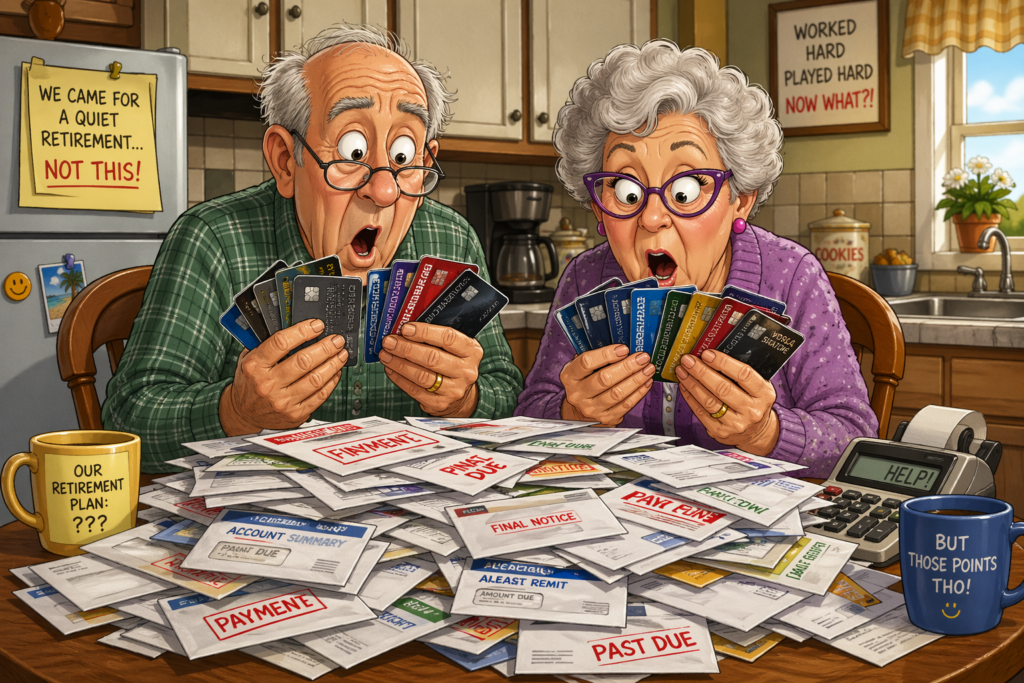

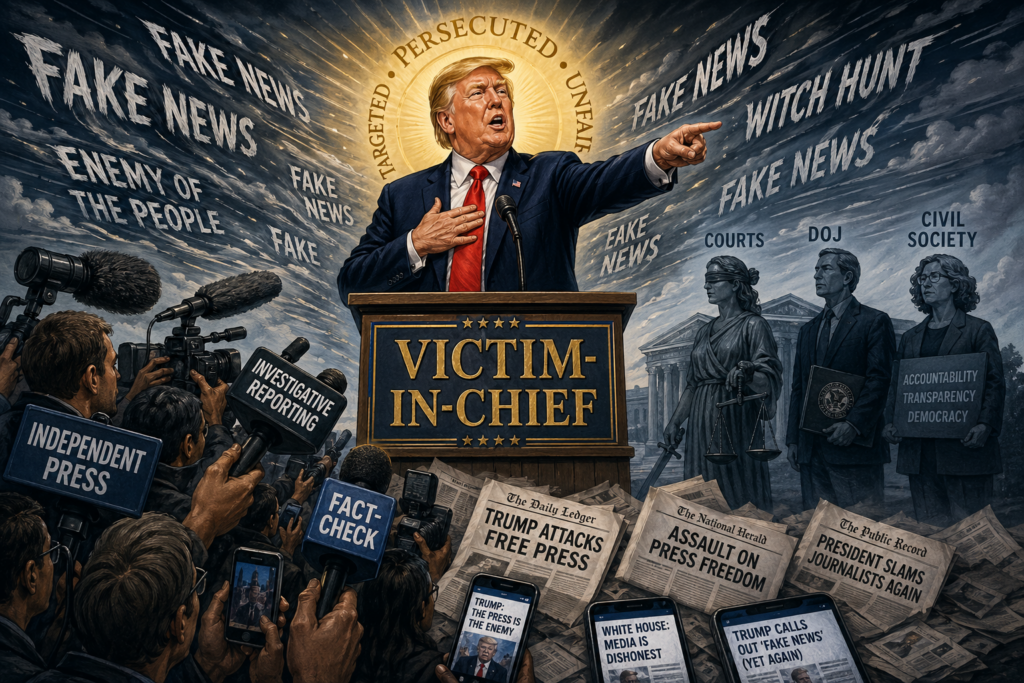
Two Wheels, Full Throttle, No License
By John Turley
On June 12, 2026
In Commentary
How Young Riders Are Turning E-Bikes Into Motorcycles — And Paying the Price
Walk around any suburban neighborhood, school parking lot, or boardwalk on a warm afternoon, and you’ll spot them — teenagers zipping past on e-bikes that look suspiciously like small motorcycles. They’re leaning into the throttle, barely touching the pedals, weaving through traffic with the confidence of experienced riders and the inexperience of kids who’ve never had a driver’s license. It’s a scene playing out all across America, and it’s landing more and more young people in emergency rooms.
E-bikes — short for electric bicycles — have exploded in popularity. According to the American College of Surgeons, more than 1.1 million e-bikes were sold in the United States in 2022, with projected annual growth of around 10 percent. They’re cheaper than cars, faster than regular bicycles, and — crucially — they don’t require a driver’s license or registration in most states. For teenagers who can’t yet get behind the wheel of a car, an e-bike can feel like the next best thing. Sometimes it’s marketed that way, too.
But the gap between what parents think they’re buying and what these machines can do is widening dangerously and regulators, pediatricians, and trauma surgeons are all sounding the alarm.
A Classification System Built for Adults, Ignored by Kids
Under federal guidelines, e-bikes fall into three classes. Class 1 bikes use pedal assist — the motor only kicks in when the rider is actually pedaling, and it cuts out at 20 mph. Class 2 bikes come with a throttle, meaning the motor engages without any pedaling at all, topping out at 20 mph. Class 3 bikes are pedal-assist only but allow speeds up to 28 mph. The American College of Surgeons and most safety advocates have noted that Class 2 bikes — the ones with throttles — most closely resemble mopeds in how they really function.
The throttle is the key word here. On a Class 2 e-bike, a rider can twist the grip, lean back, and let the motor do everything. There’s no need to pedal. No need to exert any physical effort. The bike simply goes. A teenager who’s never ridden anything faster than a 10-speed now has access to a motor vehicle — because legally, in most states, that’s not what it’s called.
Some e-bikes complicate things further by allowing riders to toggle between classes, sometimes without the rider or parent even knowing it. A California lawsuit alleged that one manufacturer falsely marketed a bike as Class 2 when it could easily be switched to Class 3 operation. Colorado state lawmaker Lesley Smith, who co-sponsored legislation addressing this, put it plainly: “The biggest issue is e-bikes that switch from a power-assisted bike to essentially a motorized scooter.”
And then there are outright counterfeits and gray-market products — machines marketed as e-bikes that are functionally electric motorcycles. Researchers at the American College of Surgeons noted that some controllers can be deactivated by a magnet or a few keystrokes, unlocking speeds above 37 mph. Conversion kits available online can boost motors to more than 1,000 watts — well above federal limits. These aren’t bicycles by any meaningful definition, but they’re being sold and ridden as if they were.
Nobody’s Pedaling — And That’s the Point
Ask any parent who’s watched their kid ride an e-bike for more than five minutes and they’ll tell you: the pedals are mostly decorative. Young riders, especially those on throttle-equipped Class 2 models, are operating these bikes like mini motorcycles — right hand on the throttle, both feet tucked back, no pedaling whatsoever. It’s intuitive, it’s fun, and it’s exactly what the design invites them to do.
Manufacturers market throttle operation openly. One company describes it this way: “Throttle mode lets you control speed with a handlebar twist or button, requiring no pedaling — similar to a motorcycle.” Another notes the throttle “works like a regular throttle on a motorcycle.” The pitch is freedom and convenience. What isn’t mentioned in the branding is the risk profile that comes along with operating a motor vehicle without any training, licensing requirement, or mandatory safety course.
The legal fiction that these are bicycles and therefore unregulated as motor vehicles is doing a lot of heavy lifting for the industry. E-bikes are not subject to the same federal oversight as motorcycles or mopeds. No driver’s license is required. No registration. No insurance. In most states, no helmet is mandated for adult riders. A 12-year-old can, in many jurisdictions, legally operate a machine that travels at 20-28 mph through traffic, with zero formal training.
KFF Health News, reporting in late 2025, found that federal oversight of e-bike safety has largely stalled, leaving a patchwork of state and county rules that vary wildly. More than half the states now restrict who can ride Class 3 bikes, but Class 2, the throttle-equipped, motorcycle-operation models that require zero pedaling, often has far lighter age restrictions, if any.
The Injury Numbers Are Alarming — and Getting Worse
Trauma surgeons across the country are watching the data accumulate with growing alarm. At Penn State Health Children’s Hospital, doctors treated more children for e-bike and e-scooter injuries in 2025 than in the prior three years combined. At Connecticut Children’s Medical Center, pediatric e-bike injuries nearly tripled in just one year, from 32 cases in the first half of 2024 to 92 during the same period in 2025. In May and June of 2025 alone, the Connecticut hospital saw 25 injuries, compared to just 3 the year before.
The injuries themselves tell the story. Dr. James Dodington of Yale Medicine described an “explosion” in serious pediatric trauma, saying that patients are arriving with injuries more consistent with motorcycle accidents than bicycle falls: severe head trauma, facial fractures, internal bleeding. This is confirmed an American College of Surgeons report that e-bike injuries are more severe than standard bicycle injuries, and that the rate of such injuries is increasing every year.
Perhaps the most striking data point comes from Marin County, California, where health officials found that children between ages 10 and 15 who crash their e-bikes require an ambulance at five times the rate of other age groups involved in e-bike crashes. These aren’t minor spills. These are serious, life-altering events.
Why Young Riders Are Especially at Risk
It’s not just that kids are riding fast machines — it’s that adolescent brains are not yet wired for the kind of risk assessment that operating a motor vehicle demands. The prefrontal cortex, which governs impulse control and judgment, is still developing well into a person’s mid-twenties. The American Academy of Pediatrics advises that children under 16 should not operate motorized e-bikes at all.
Research consistently shows that young riders under 25 take the most risks on e-bikes and e-scooters and are also four times more likely to engage in risky behavior. Add to that the social dynamics of adolescence — showing off for friends, going faster than is wise, taking shortcuts through traffic — and the risk profile compounds quickly.
Helmet use is another major gap. Research published in JAMA Surgery found that e-bike riders without helmets were nearly twice as likely to sustain head injuries as those who wore them. And yet helmet use among young e-bike riders remains inconsistent, often because helmets aren’t legally required for them and because the cultural norm for e-biking hasn’t caught up with the reality of what these machines can do. For Class 3 speeds of 28 mph, many safety experts now recommend motorcycle-rated helmets rather than standard bike helmets — a recommendation that most young riders have not heard of and probably wouldn’t follow anyway.
Distraction compounds the danger further. Dr. Bryanna Emr, director of pediatric trauma surgery at Penn State, noted that many riders have headphones on or are looking at their phones while riding — a behavior that is dangerous on a regular bicycle and potentially fatal on a machine traveling at near highway speeds without the safety cage of a car.
The Regulatory Gap: No One Is Clearly in Charge
Part of what makes this problem so difficult to solve is that e-bikes fall between regulatory agencies in a frustrating way. The Consumer Product Safety Commission oversees products sold to consumers, while the National Highway Traffic Safety Administration governs motor vehicles. E-bikes, classified legally as bicycles, fall primarily under CPSC — but the existing standards were written for traditional pedal bicycles and have been acknowledged as inadequate for e-bikes. Parents should also be aware that some bikes marketed as Class 2 can be easily toggled into higher-speed Class 3 operation — sometimes without the rider even realizing it.
Meanwhile, the regulatory landscape at the state level is a true patchwork. Some states follow the three-class system in full. Others have partial adoptions. A few set minimum ages for Class 3 bikes. Some localities have taken things into their own hands — Marin County in California, for instance, has banned children under 16 from operating Class 2 e-bikes entirely. Colorado, Minnesota, and Utah passed new laws in 2025 addressing battery fire risks and attempting to distinguish legal e-bikes from the faster “e-motos” that are being sold under the e-bike label.
The American College of Surgeons issued a formal statement in June 2025 calling for clearer federal definitions, age-based restrictions, mandatory helmet requirements, and enforcement against illegally modified bikes. The statement noted that e-bikes should be classified based on their maximum obtainable speed on flat ground — not just their advertised class — and that speed unlocks and modification kits need to be regulated or banned.
For the moment, the fastest-moving part of this landscape is the injury statistics, which are outpacing the regulatory response at an escalating rate.
What Parents and Policymakers Should Know
If you’re a parent considering an e-bike for a child who’s still years away from a driver’s license, here’s what the evidence says: the machine your child will operate is functionally a motorized vehicle. A throttle-equipped model requires no pedaling, no physical effort, and no prior training. At speeds of 20-28 mph, a crash produces injuries more similar to a motorcycle accident than a bicycle tumble. And the regulatory system, for now, is not keeping pace with the technology.
From a policy standpoint, the calls from the medical and trauma community are consistent: age-based federal minimums, mandatory helmet laws for all e-bike riders, clearer definitions that separate true bicycles from what are functionally motor vehicles, and enforcement mechanisms restricting conversion kits that bypass speed limiters.
Until those protections exist, the gap between a child’s excitement about a new e-bike and the reality of what that machine can do will keep filling emergency rooms.
Illustration generated by author using ChatGPT
Sources
1. American College of Surgeons — Statement on E-Bike Safety (June 2025): https://www.facs.org/about-acs/statements/statement-on-electric-bicycle-safety-and-injury-prevention/
2. ACS Bulletin — Electric Bikes Are Emerging as Public Health Hazard (July/August 2024): https://www.facs.org/for-medical-professionals/news-publications/news-and-articles/bulletin/2024/julyaugust-2024-volume-109-issue-7/electric-bikes-are-emerging-as-public-health-hazard/
3. KFF Health News — Kids and Teens Go Full Throttle for E-Bikes (December 2025): https://kffhealthnews.org/news/article/electric-e-bike-regulation-federal-states-counties-cpsc-nhtsa-colorado-injuries/
4. Penn State Health News — E-Bike and E-Scooter Injuries on the Rise in Kids (October 2025): https://pennstatehealthnews.org/2025/10/the-medical-minute-e-bike-and-e-scooter-injuries-are-on-the-rise-in-kids-what-every-parent-should-know/
5. Connecticut Law Blog — The Alarming Rise of E-Bike Accidents (December 2025): https://www.doddlawfirmct.com/2025/12/17/the-alarming-rise-of-e-bike-accidents-what-recent-injury-data-means-for-riders-and-drivers/
6. Safe Kids CT — E-Bike Injuries Are Rising Fast (August 2025): https://ctsafekids.org/blog/e-bike-injuries-are-rising-fast-heres-what-parents-need-to-know/
7. The Conversation — Young People Are Being Killed or Injured on E-Bikes (April 2026): https://theconversation.com/young-people-are-increasingly-being-killed-or-injured-on-e-bikes-its-time-for-governments-to-act-269095
8. UCSF News — Electric Scooter and Bike Accidents Are Soaring (July 2024): https://www.ucsf.edu/news/2024/07/428096/electric-scooter-and-bike-accidents-are-soaring-across-us
9. Johns Hopkins Bloomberg School — Evidence Synthesis on E-Bike Injuries (October 2024): https://publichealth.jhu.edu/sites/default/files/2025-03/BIGRS_Evidence-Synthesis-E-bikes-2025.pdf
10. ABC News — Kids and Teens Go Full Throttle for E-Bikes (November 2025): https://abcnews.com/Health/kids-teens-full-throttle-bikes-federal-oversight-stalls/story?id=127708920